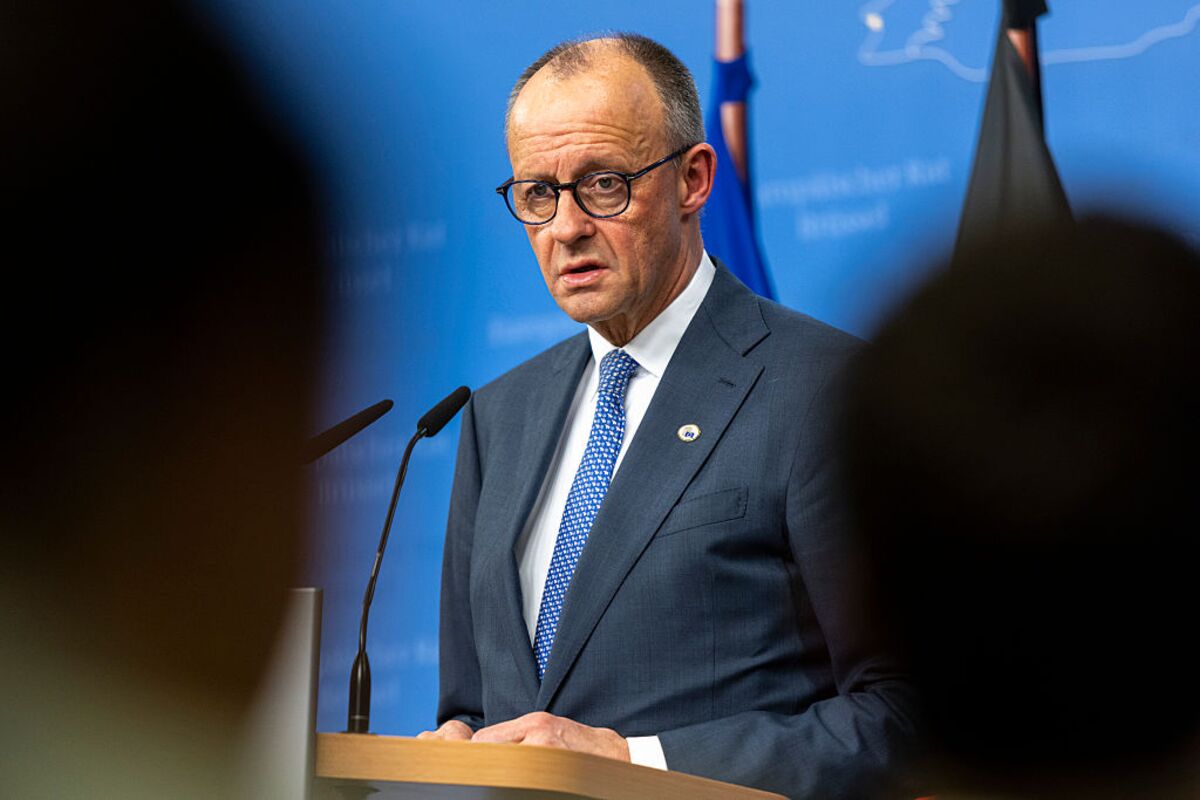
Christian Democratic Union victory in Rhineland-Palatinate dislodged the Social Democrats after 35 years, a stinging defeat that has prompted calls to reshuffle SPD leadership. The loss undercuts Friedrich Merz's effort to reboot Germany's economy and increases political uncertainty for the governing coalition, potentially complicating reform efforts and modestly raising near-term market volatility in German assets.
The immediate political ripple is twofold: higher near-term policy uncertainty that compresses capex decisions over the next 1-3 quarters, and an increased probability of pro-business reform narratives over 6-18 months if center-right momentum survives and forms a stable federal coalition. That dichotomy creates a classic dispersion trade — domestic-oriented sectors (public services, regional construction, social housing) suffer from budget and procurement uncertainty, while export-facing industrials and financials stand to benefit from deregulatory, M&A-friendly policies and any renewed push to boost competitiveness.
Rate and FX markets will price these scenarios differently: a credible reform path could lift the 10y Bund by ~15–40bp over 3–12 months as the growth premium and deficit-normalization expectations rise, whereas a prolonged coalition crisis or snap election could push the Bund lower as a safe-haven, tightening the cross-asset hedge between German sovereigns and EUR. The magnitude is path-dependent — market moves will be driven more by coalition math and credible ministerial appointments than by single local results, so political flow data (party coalition probabilities, polling velocity) will be high-value leading indicators.
Tail risks to monitor are a snap federal election (weeks–months) and an SPD leadership reset that re-centers center-left policy — either can reverse the constructive reform narrative quickly and inflict 10–20% downside on cyclicals. Reversal signals to watch: rapid polling gains for SPD/Greens, concrete coalition agreements that re-commit to large public spending, or public strikes that force policy concessions; any of these within 60–120 days would materially change the trade framework.
AI-powered research, real-time alerts, and portfolio analytics for institutional investors.
Request DemoOverall Sentiment
mildly negative
Sentiment Score
-0.30
