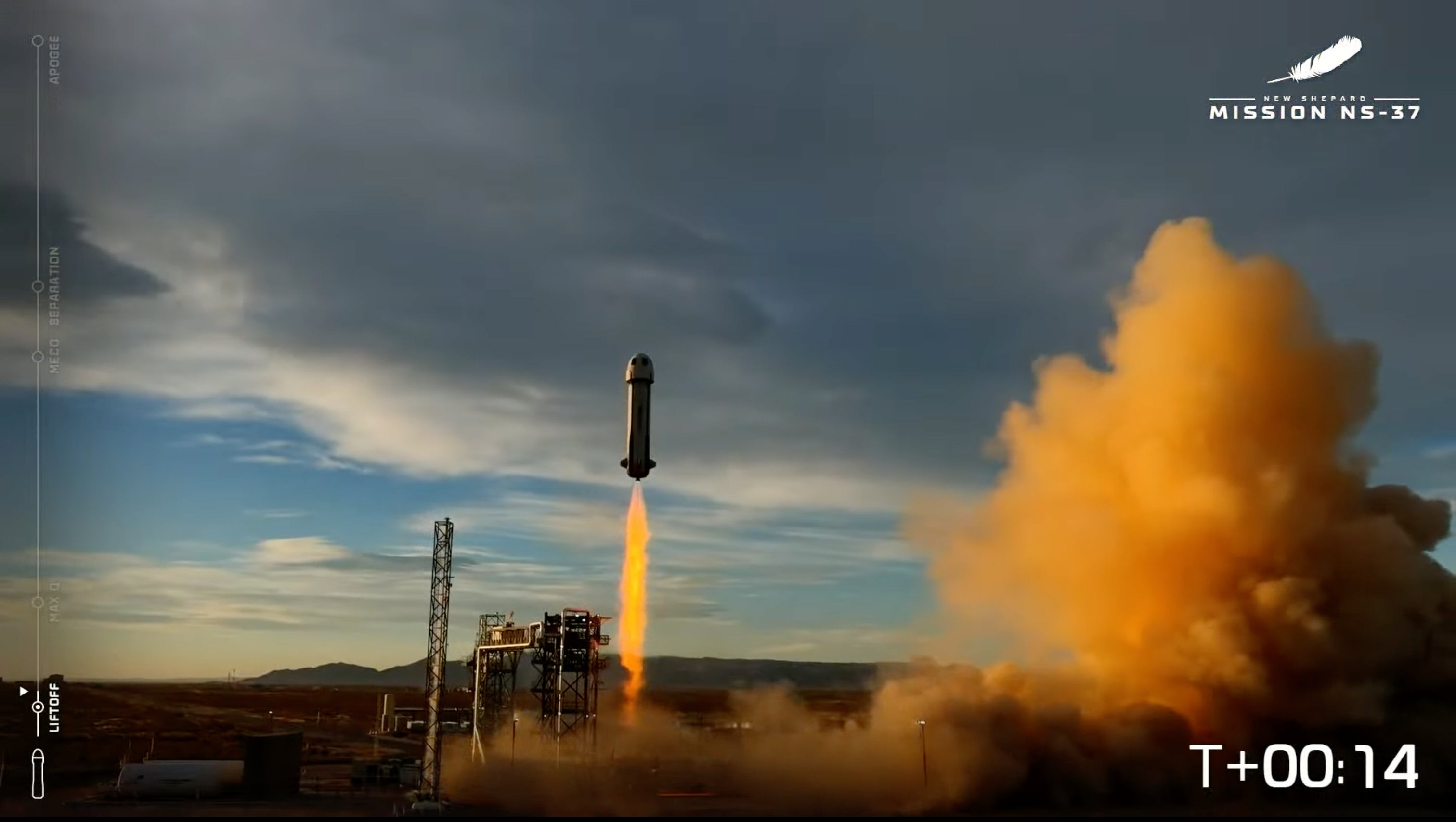
Blue Origin completed a roughly 10-minute suborbital flight from West Texas that reached over 65 miles altitude, carrying Michaela Benthaus — a paraplegic engineer — who became the first wheelchair user to float in space. The trip, arranged with retired SpaceX executive Hans Koenigsmann sponsoring and assisting, highlights Blue Origin’s capsule accessibility design and could provide reputational and marketing benefits for the private-space tourism sector, but contains no financial metrics and is unlikely to materially move markets.
Market structure: The successful Blue Origin flight with a wheelchair user is a demand-validation event for space tourism and inclusive access, expanding addressable customers beyond wealthy thrill-seekers. Near-term winners are operators that can scale cadence (launch-as-a-service providers) and suppliers of accessibility/ground-handling solutions; losers are single-product PR-driven names that rely on scarcity to preserve pricing. Supply remains the binding constraint — vehicle cadence and certification limit revenue growth for 12–36 months, so market share will flow to firms with repeatable launch cadence and lower per-flight marginal cost.
Risk assessment: Tail risks include a high-profile accident or restrictive regulator action (FAA/EASA safety orders) that could raise insurance and certification costs >20–50% and materially compress margins; probability low but impact multi-year. Immediate effect (days) is PR and booking interest; short-term (3–12 months) could show modest revenue uptick for public peers; long-term (2–5 years) depends on capex cycles, unit economics and subsidy behavior from private backers. Hidden dependency: private subsidies (Bezos/Elon) can mask true unit economics and crowd-out public competitors unless transparency on yields appears.
Trade implications: Favor public small-launch and reliable-execution names over PR-centric tourism stocks. Tactical plays: long RKLB (Rocket Lab) exposure to growing small-sat launches, paired with modest short in SPCE (Virgin Galactic) to hedge PR vs execution risk; use defined-risk option spreads (6–12 month call spreads) to express upside while limiting capital at risk. Rotate 1–2% toward defense primes (RTX, LMT) as defensive exposure to increased aerospace safety/parts demand.
Contrarian angles: Consensus will either crown space tourism winners or write them off; both can be wrong — TAM expansion is real but monetization is slow and capital intensive. Historical parallel: early airline luxury niches (Concorde) attracted headlines but consolidated; expect consolidation and margin compression, creating alpha via selection of operators with repeatable cadence, not PR. An overlooked risk: tighter consumer safety regulation could raise per-flight costs by >15% and favor large contractors with compliance scale.
AI-powered research, real-time alerts, and portfolio analytics for institutional investors.
Request DemoOverall Sentiment
neutral
Sentiment Score
0.10
