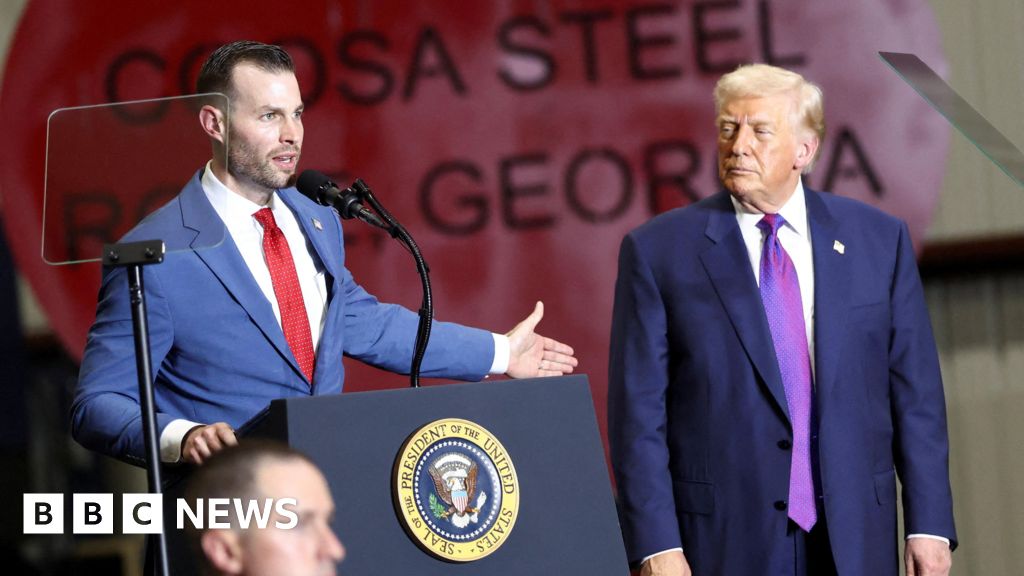
Clay Fuller, a Trump-endorsed Republican, is projected to have won Georgia's special runoff to replace Marjorie Taylor Greene, keeping the seat in Republican hands and preserving the House majority at 217-214. Fuller, a lieutenant colonel in the Georgia Air National Guard and former White House fellow, will serve the remainder of the term through next January and must immediately begin campaigning for the November midterms after a March 10 special election left no outright majority. The result reinforces Trump's influence in GOP primaries and marginally reduces near-term legislative risk given the razor-thin majority, but is unlikely to have a direct market impact.
This result modestly raises the probability that the House will advance more aggressive immigration and border-security measures in the near term, but the practical ability to convert proposals into durable law remains constrained by a margin that can be flipped by a handful of defections and by Senate/White House dynamics. Expect a cadence of high-frequency messaging and targeted appropriations riders across the next 3–6 months designed to set political frames rather than deliver large-scale, immediately funded programs.
Sector winners are likely to be niche and event-driven: private detention operators and firms that supply short-cycle border infrastructure (engineering contractors, specialty steel/aggregate suppliers) stand to see correlated upside on the order of single- to low-double-digit revenue inflections if incremental ICE/DHS funding is authorized. Offsetting forces include legal challenges, state-level pushback, and reputational/regulatory risk that limit multiple expansion — the runway for sustained cash-flow upside is measured in quarters, not years.
For markets, the clearest tradable effect is volatility around discrete appropriations and any House floor votes rather than a structural re-rating of entire industries. The next actionable windows are bill markups and the summer appropriations calendar: these are the catalysts where headline-driven re-pricing will occur and where short-dated option structures or event-driven flows will pay off. Longer-term investors should treat this as a political noise event unless the party consolidates a larger working majority or secures Senate alignment, which are lower-probability multi-month outcomes.
AI-powered research, real-time alerts, and portfolio analytics for institutional investors.
Request DemoOverall Sentiment
neutral
Sentiment Score
0.00
