
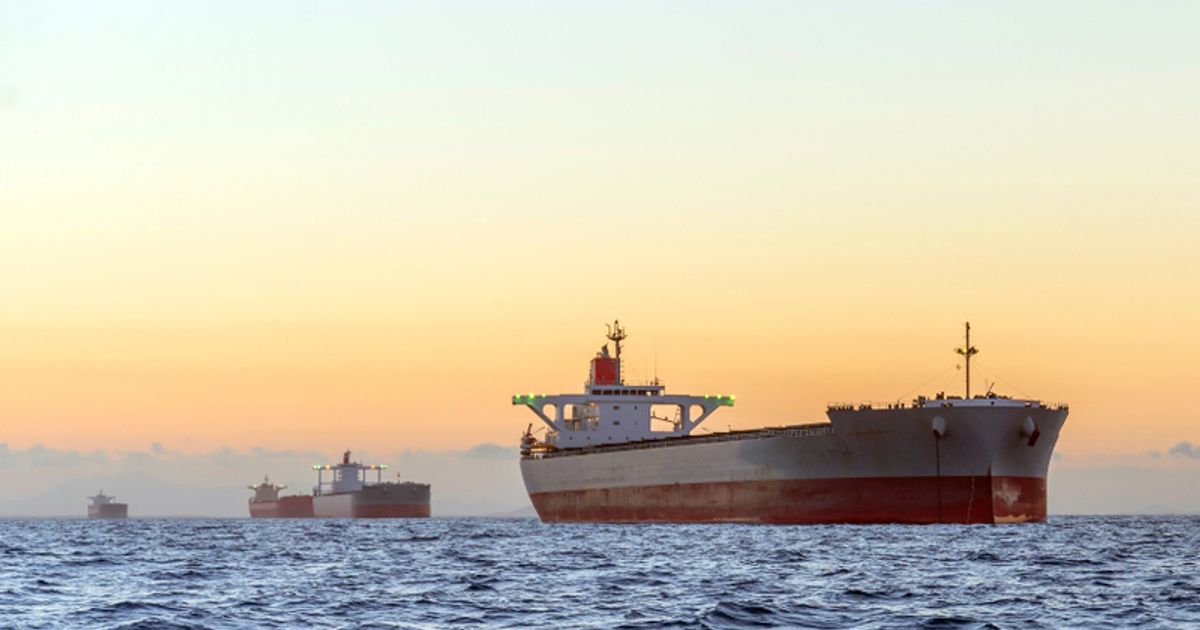
RBC Capital Markets warns that ongoing Iran-related hostilities have effectively put energy markets “in the crosshairs,” with the Strait of Hormuz functionally closed after vessel attacks and the withdrawal of war-risk insurance; tanker traffic fell from 56 vessels to seven tankers and one gas carrier over a weekend. The bank says prolonged disruption could push oil into the $100s per barrel, cites the halt at Saudi Ras Tanura refinery (550,000 bpd) and notes regional export constraints — Saudi East‑West (7m bpd) and UAE ADCOP (1.5m bpd) pipelines only partially mitigate risk — while Iraq’s 3.5m bpd southern exports and Russian supply face exposure; insurers are expected to terminate war-risk cover from March 5, and US gas is relatively insulated with ~96% export capacity utilization.
Market structure: Immediate winners are oil producers with spare export capacity, refiners able to process available crude (e.g., VLO, MPC), LNG exporters with spot exposure (Cheniere LNG), and owners of tanker capacity as freight spikes. Losers are airlines/airfreight (JETS, UAL), oil importers and trading houses reliant on Hormuz flows, shipping insurers/reinsurers and countries like Iraq (3.5 mbd southern exports exposed) that lack storage; Saudi East‑West (7 mbd) and ADCOP (1.5 mbd) can only partially substitute seaborne flows.
Risk assessment: Tail risk is a de facto Strait closure (5–12 mbd offline) that could lift Brent to $120–150 within weeks–months; March 5 war‑risk insurance exits are an immediate catalyst. Near term (days–weeks) expect tanker count volatility and freight dislocations; medium (1–6 months) risk is sustained oil >$100 with inflationary shock; long term (quarters–years) the shock accelerates capex reallocation to energy security and alternative routes. Hidden dependencies include insurance market liquidity, refinery feedstock flexibility and storage buffer exhaustion.
Trade implications: Prioritize volatility‑sized plays: buy convex upside in oil (3‑month Brent call spreads) and equity exposure to integrated majors (XOM/CVX) and refiners (VLO) while shorting high fuel‑sensitivity names (JETS, UAL) and trim duration (sell long Treasuries). Use pair trades (long VLO / short JETS) and gold miners (GDX) as geopolitical hedges; size positions to 1–3% of portfolio and scale on confirmed shipping disruptions (tankers <10 in Hormuz for 5+ days).
Contrarian angles: The market may be under‑positioned in oil (RBC: oil lags gas) — a lagged oil squeeze is plausible and underpriced. Conversely, an overdone spike could trigger demand destruction and coordinated SPR releases or OPEC easing, producing sharp mean reversion as in 2022; prefer option‑defined risk and staged entries rather than outright large directional exposure.
AI-powered research, real-time alerts, and portfolio analytics for institutional investors.
Request TrialOverall Sentiment
strongly negative
Sentiment Score
-0.65
Ticker Sentiment
