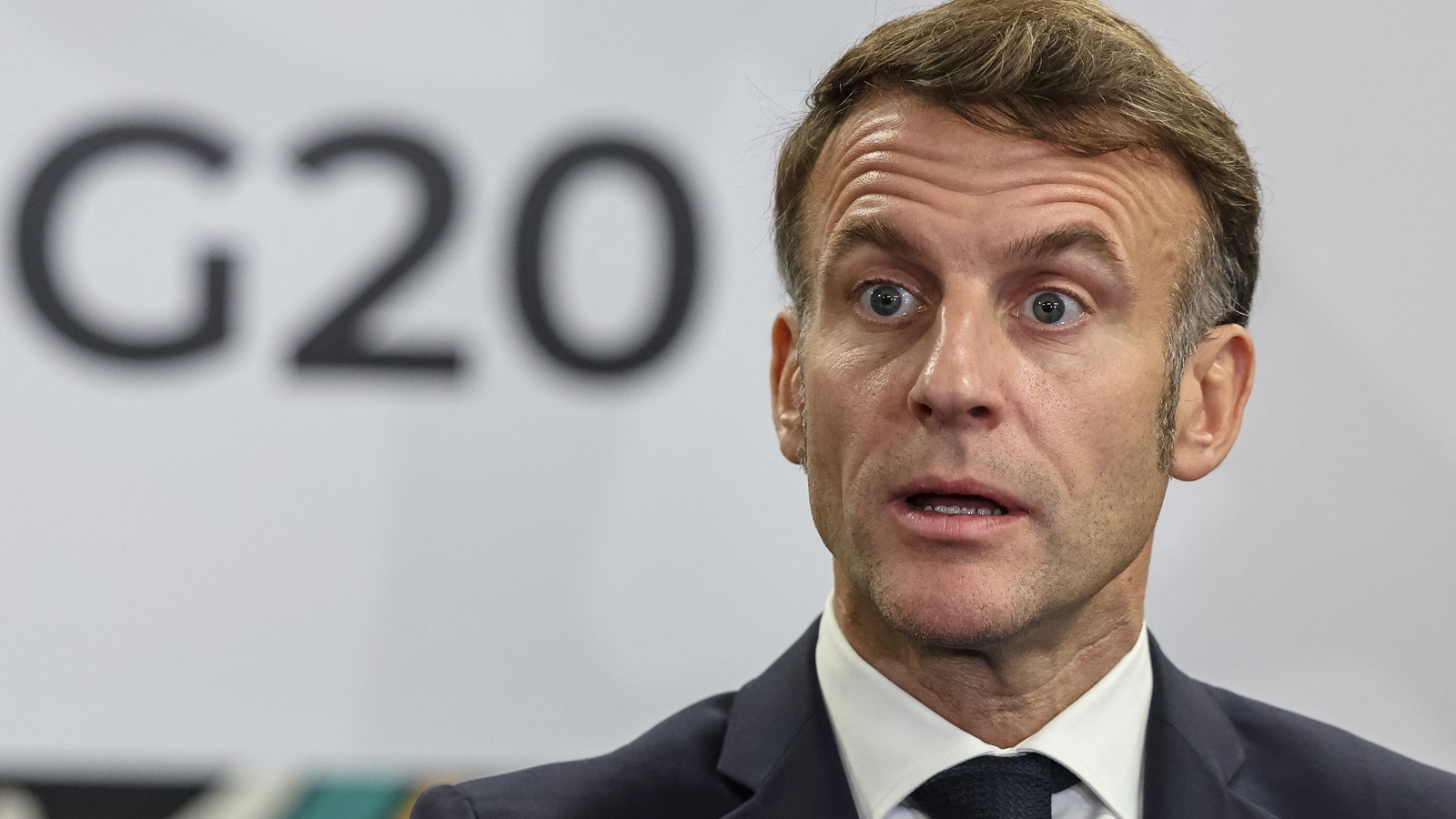
French President Emmanuel Macron said a 30-country “coalition of the willing” backing Kyiv will hold a video call after Geneva talks on the US peace plan for Ukraine, warning that forcing Ukraine to reduce its army would invite Russian backsliding; European leaders at the G20 pushed back against US President Donald Trump’s unilateral proposal as national security advisers from the E3, EU, US and Ukraine prepare to meet in Geneva and a European draft plan based on the US proposal has been shared with Washington and Kyiv. US envoys including Army Secretary Daniel Driscoll, Special Envoy Steve Witkoff and Secretary of State Marco Rubio are due in Geneva, underscoring intense diplomatic coordination even as the G20 exposed a wider transatlantic rift—from the US boycott and climate-policy divergence to the EU’s €7 billion pledge for African renewables—raising questions about policy continuity and geopolitical risk as the US presidency transition approaches.
French President Emmanuel Macron said a 30-country "coalition of the willing" backing Kyiv will hold a video call on Tuesday following Geneva talks on the US peace plan, warning that forcing Ukraine to reduce its army would invite Russia to "come back" and betray promises. National security advisers from France, Britain and Germany (the E3), EU, US and Ukrainian officials are due to meet in Geneva, with US Army Secretary Daniel Driscoll already landed and US envoys Steve Witkoff and Marco Rubio expected to arrive.
European leaders at the G20 pushed back publicly against President Trump’s unilateral proposal while a European draft peace plan based on the US proposal was reportedly shared with Washington and Kyiv, signaling coordination amid transatlantic disagreement. The article highlights broader G20 fractures — including a US boycott and the EU’s €7 billion pledge for African renewables — and accompanying signals rate sentiment as mildly negative (-0.25) with a modest market impact score (0.3), indicating elevated geopolitical risk but limited immediate market shock.
For investors, the situation implies sustained political and policy uncertainty: outcomes from Geneva could materially affect deterrence language, defense spending expectations and regional risk premia, while EU renewable commitments and multilateral debt discussions may shift sectoral flows. Key near-term catalysts to watch are the Geneva meeting outcomes, any formal EU defense or aid commitments, and follow-through on the EU’s renewables funding to Africa, all of which would influence allocations to defense, energy and emerging-market exposures.
AI-powered research, real-time alerts, and portfolio analytics for institutional investors.
Request DemoOverall Sentiment
mildly negative
Sentiment Score
-0.25
