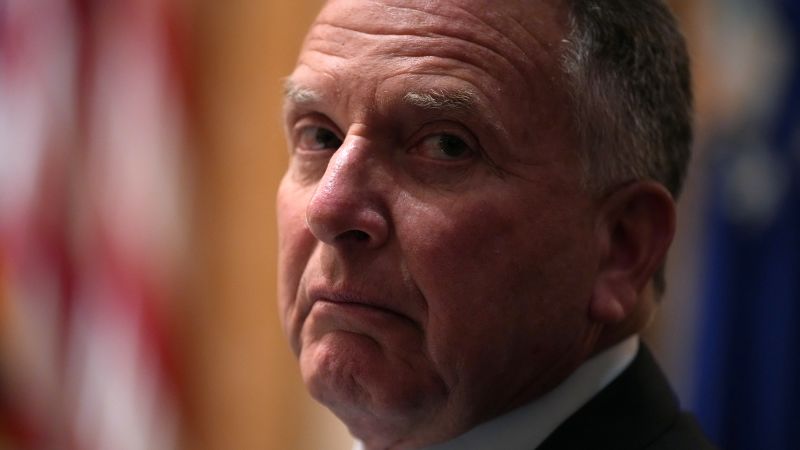
A Bloomberg-transcribed Oct. 14 call indicates President Trump’s special envoy Steve Witkoff advised Kremlin adviser Yuri Ushakov on sequencing and selling a 28-point Russia–Ukraine peace proposal, including urging a Putin–Trump call ahead of President Zelensky’s White House meeting. The leak has drawn GOP criticism, Kremlin pushback and concerns it could derail negotiations; Witkoff is expected to travel to Moscow soon and the plan remains fluid, raising political risk that could heighten volatility in defense, regional and risk-sensitive asset classes.
Market structure: A credible US-Russia-Ukraine negotiation that includes territorial concessions would be a net positive for global energy supply and a negative for defense cyclicals. If sanctions are loosened or compliance enforcement drops, expect incremental Russian hydrocarbon flows to exert ~$3–$8/bbl downward pressure on Brent within 1–3 months and a 10–20% ruble appreciation vs USD in stressed scenarios. Conversely, a collapse of talks would re-price a geopolitics risk premium into oil (+$5–$15/bbl) and safe-haven assets.
Risk assessment: Near-term (days–weeks) volatility is the primary risk as leaks and political pushback in Congress can rapidly reverse sentiment; medium-term (3–12 months) outcomes hinge on formal diplomatic milestones and US domestic politics. Tail risks include a leak-triggered breakdown that sparks renewed sanctions or escalations (low probability, high impact); monitor three binary catalysts: formal US-Russia memorandum, congressional sanctions vote, and measurable Russian oil export delta >5% MoM.
Trade implications: Positioning should be conditional and event-driven. Tactical ideas: short aerospace & defense (LMT, NOC, RTX or ETF ITA) size 1–3% if a binding ceasefire is announced within 60 days; long energy exposure via XLE or selective E&P names (e.g., OXY/COP) 2–4% on confirmed sanction relief or a >3% drop in Brent from current levels; maintain a 1–2% GLD/GLD call-spread hedge for downside tail risk over 3–6 months.
Contrarian angles: Consensus underestimates US domestic political friction—Congress is likely to resist sanction rollbacks, so market may be pricing a premature “peace” rally that could reverse. Historical parallels (Minsk 2014) show temporary risk-on rallies followed by renewed conflict; trade with tight triggers (news-confirmed milestones) and stop-losses to avoid being caught by policy reversals or secondary sanctions on counterparties.
AI-powered research, real-time alerts, and portfolio analytics for institutional investors.
Request DemoOverall Sentiment
moderately negative
Sentiment Score
-0.30
