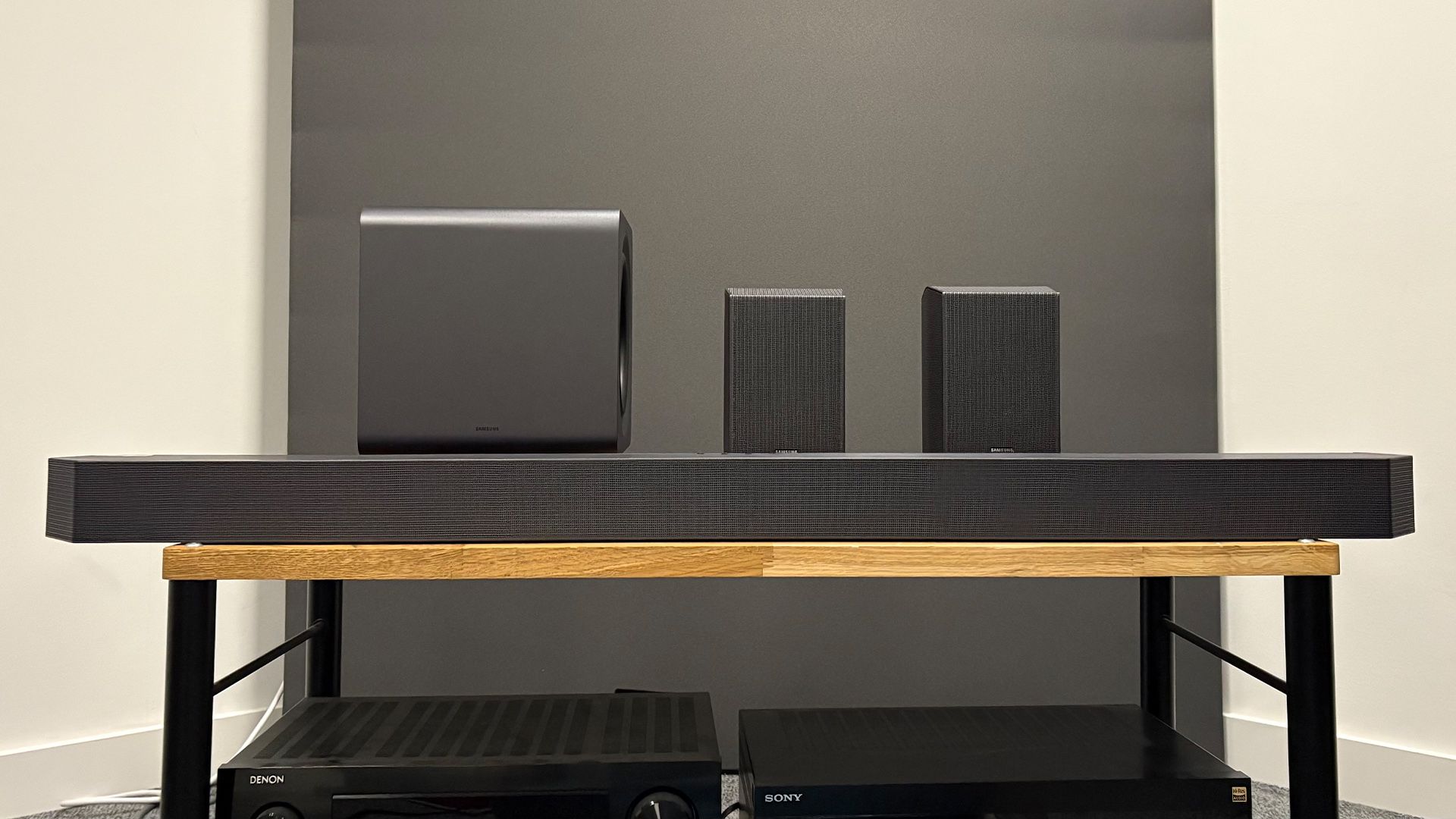
Samsung unveiled two new premium soundbars at CES: the Q990H, positioned as the successor to the award-winning Q990F, with a 7.0.2 main bar, 4.0.2 rear speakers and a dual 8-inch built-in compact active subwoofer plus features like Sound Elevation and Auto Volume; and the all‑in‑one HW‑QS90H with a Convertible Fit, gyro-based channel adaptation, 7.1.2 channels, 13 drivers (nine wide-range) and a Quad Bass Woofer aimed at competing with the Sonos Arc Ultra. No pricing or release dates were disclosed; the launches signal intensified competition in the high-end soundbar segment but are unlikely to move equities materially until pricing, availability and early sales data emerge.
Market structure: Samsung’s new premium soundbars directly pressure niche high-margin players (Sonos/SONO) in the $500–$1,000+ segment and favor large OEMs and scale suppliers (chipmakers, driver manufacturers). Expect a modest 1–5% share shift in the premium soundbar subsegment over 12 months if Samsung prices competitively; retailers (BBY) gain negotiating leverage but independent boutique brands could see margin contraction.
Risk assessment: Tail risks include a competitive price war compressing OEM margins (10–20% gross margin squeeze in worst case), supply-chain shocks (chip or subwoofer driver shortages) and potential antitrust scrutiny if Samsung bundles with TVs. Immediate risks (days–weeks) center on CES reviews and pricing; short-term (3–6 months) depends on launch timing and holiday promos; long-term (12–24 months) depends on ecosystem lock-in and software/voice assistant integration.
Trade implications: Direct long exposure to scale players and component suppliers (KR-listed Samsung/005930.KS or SSNLF OTC, Cirrus Logic CRUS, Dolby DLB) and selective short on SONO captures asymmetric risk. Options: use short-dated (3–6 month) put spreads on SONO to hedge downside if reviews/pricing hurt demand; use call overwrites on Samsung exposure to monetize low implied vol before earnings.
Contrarian angles: Consensus underestimates Samsung’s distribution advantage—if Samsung undercuts price by 10–20% it could force consolidation among premium audio independents, creating M&A targets. Conversely, Sonos’ ecosystem and brand loyalty could keep churn under 2–3%; if that proves true, short SONO could be crowded and costly, so size and hedges must be disciplined.
AI-powered research, real-time alerts, and portfolio analytics for institutional investors.
Request DemoOverall Sentiment
mildly positive
Sentiment Score
0.28
Ticker Sentiment
