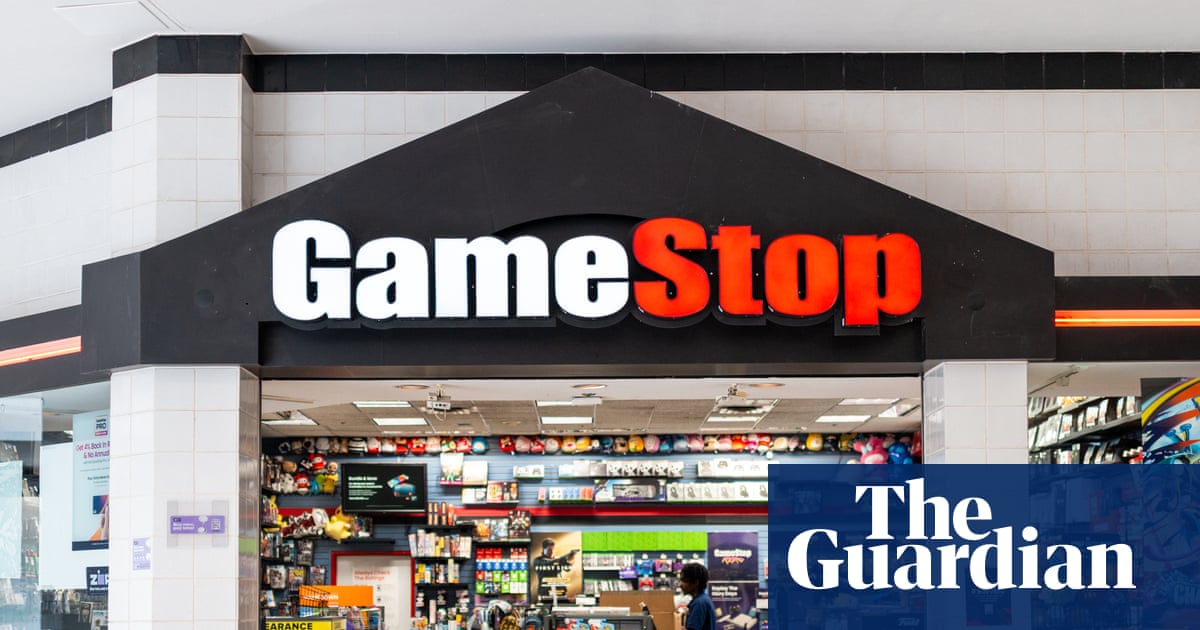
GameStop’s unsolicited $55.5bn bid for eBay is the central event, but the deal appears financially uncertain, with the company acknowledging a need for $16bn in additional funds and its stock falling 10% after Ryan Cohen’s CNBC interview. Cohen’s eBay storefront stunt and the temporary account suspension add to the volatility, while Michael Burry’s decision to dump GameStop shares signals weakening investor confidence. eBay has said it received the offer and is reviewing it with advisers.
This is less a takeover bid than a liquidity theater event, and the market should treat it that way. The real short-term winner is the attention economy around GME: the more absurd the financing optics, the more the stock trades as a retail sentiment derivative rather than a fundamentals story, which keeps borrow demand and intraday volatility elevated even if the bid has low completion odds. EBAY is likely to trade like a busted-deal arb name: downside is capped by the probability-weighted cash value of the proposal, but upside is constrained by the market’s low belief in execution.
The second-order effect is on governance credibility, not just valuation. If management is using stunt-like capital formation rhetoric, the longer-horizon discount rate applied to any strategic alternative rises, because counterparties will assume process risk, financing slippage, and board resistance. That is particularly relevant for EBAY, where even a modestly higher takeover probability can be offset by a larger multiple compression if investors conclude the strategic review is now a distraction rather than a catalyst.
The contrarian piece is that the stock moves may be overreacting to the binary headline while underpricing the duration of the meme feedback loop. The event can keep GME mechanically bid for days to weeks if retail sees it as “proof” of optionality, while fundamental funds may be forced to cover into thin borrow. Conversely, the deal itself looks more like a catalyst for volatility selling than directional long exposure: if no financing clarity emerges within 2-6 weeks, the market will likely shift from M&A optimism to dilution risk and execution skepticism.
CHWY is the stealth beneficiary because the market is being reminded that prior asset sales funded a highly successful consumer internet outcome, which may pull some nostalgia-driven capital back into the name on any Chewy-related headlines. AMZN is only indirectly affected: the Amazon-comparison framing is more about signaling than actual competitive threat, but it can still put a temporary sentiment overhang on the large-cap retail/marketplace complex if traders read this as heightened attention to marketplace economics.
AI-powered research, real-time alerts, and portfolio analytics for institutional investors.
Request DemoOverall Sentiment
mildly negative
Sentiment Score
-0.20
Ticker Sentiment
