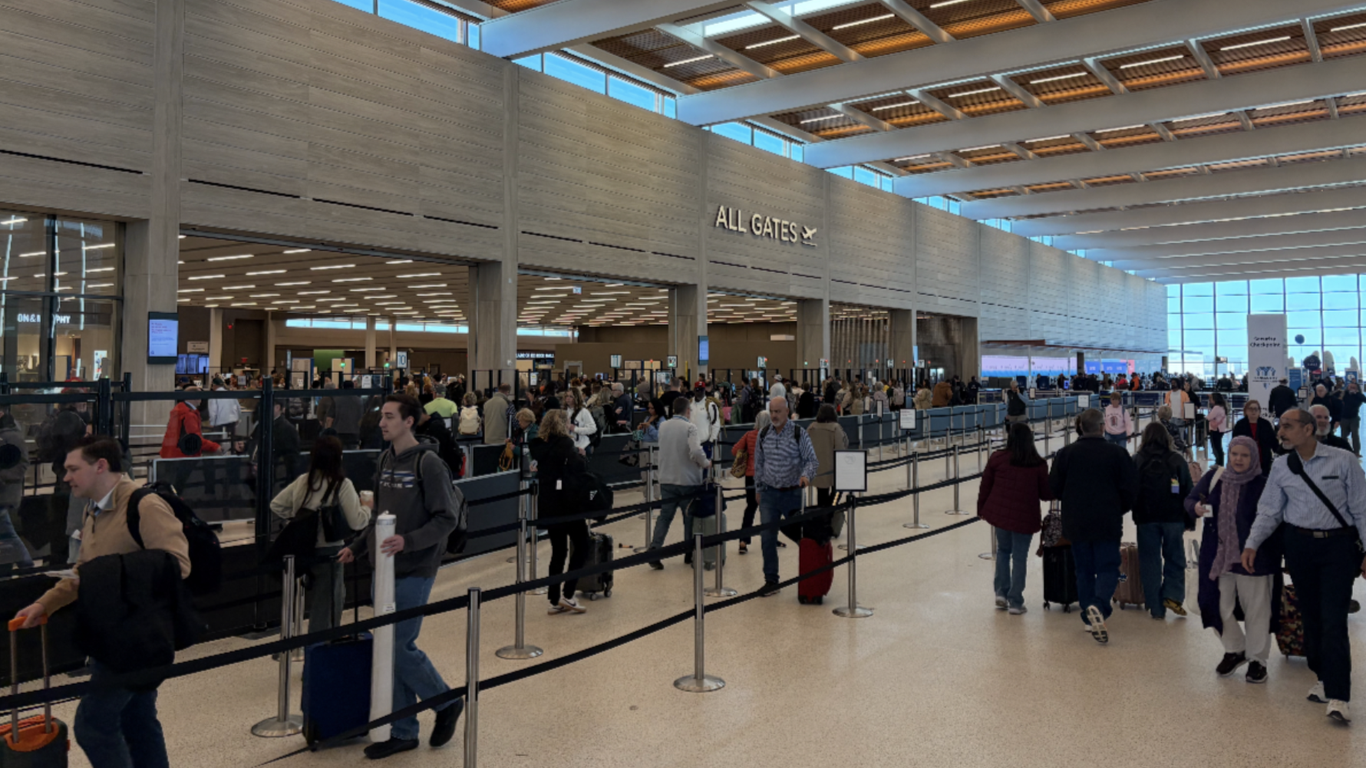
More than a dozen airports (including Houston, Atlanta and Chicago) received ICE agents to help manage crowds during the partial DHS shutdown, but Kansas City International Airport will not because its checkpoints are staffed by contractor VMD Corp under TSA's Screening Partnership Program. TSA officers are working without pay and 'hundreds' have quit or called out, causing hours-long waits and checkpoint closures at some hubs; contractor-operated airports (e.g., SFO, Orlando Sanford, Sarasota Bradenton) remain unaffected. Travelers should expect longer lines at affected airports and build in extra time for connections or returns.
The immediate market implication is that variation in checkpoint employer models creates a new, investible dispersion in operational reliability across U.S. airports. I estimate contractor-run checkpoints reduce the probability of multi-hour terminal checkpoint failures during federal staffing shocks by roughly 10–20% versus federal-run counterparts, which compresses short-term delay volatility for carriers and local commerce that rely on those airports.
Second-order effects are commercializable: airports and carriers can market “operational resilience” to attract route frequency or negotiate lower rates with ground handlers and concessionaires. If federal staffing instability persists, expect a 12–36 month window where a meaningful share of mid-sized airports (plausibly 20–50 facilities) push RFPs for outsourced screening or hybrid models, increasing TAM for firms that implement and operate checkpoint programs and for technology vendors that automate throughput.
Tail risks are binary and time-sensitive. A rapid budget resolution or temporary surge hiring would erase the near-term advantage of contractor models within days–weeks; conversely, protracted labor disputes or chronic understaffing could catalyze policy decisions favoring privatization within a 6–24 month horizon. Key catalysts to watch are DHS/TSA guidance, municipal RFP filings, and quarterly commentary from major Homeland Security contractors — any of which could flip the trade thesis quickly.
AI-powered research, real-time alerts, and portfolio analytics for institutional investors.
Request DemoOverall Sentiment
neutral
Sentiment Score
0.00
