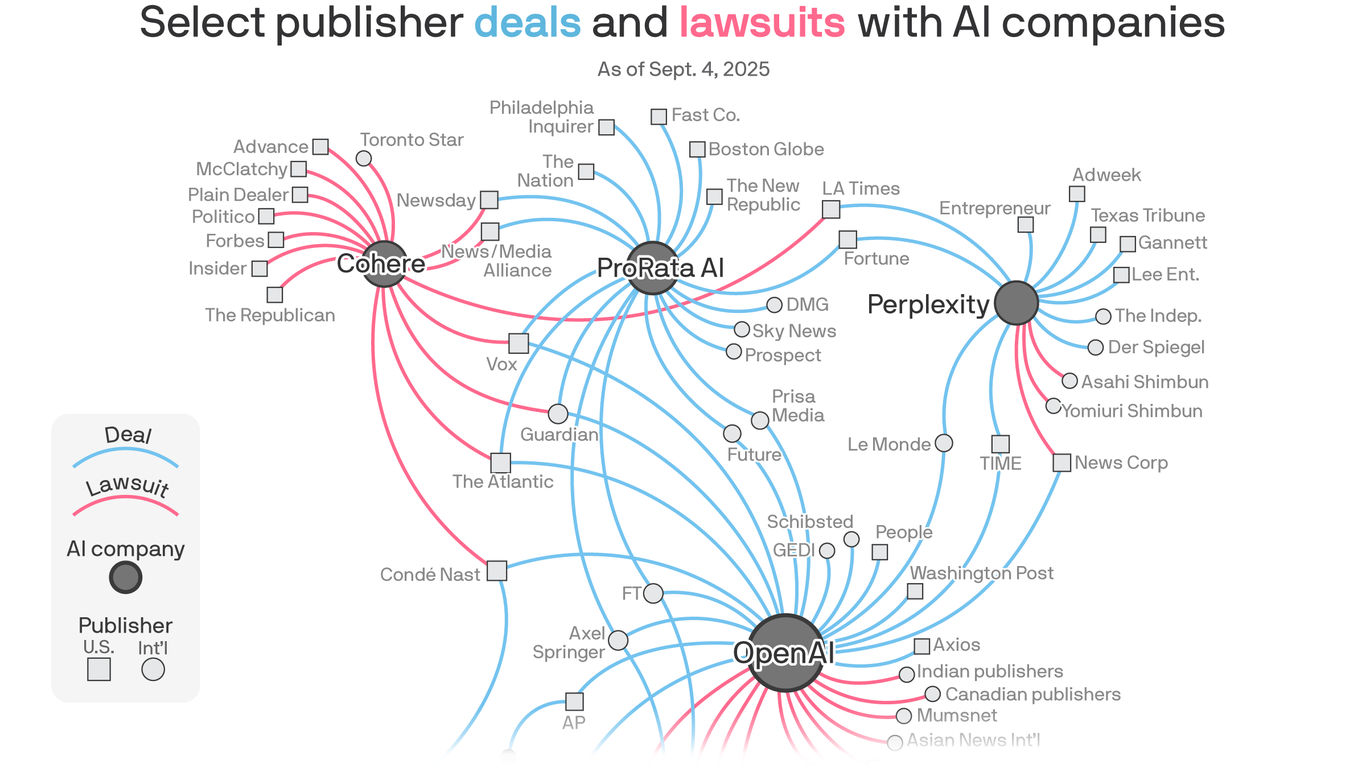
The significant volume of deals and lawsuits between publishers and AI companies indicates a fundamental shift from the Web 2.0 era to the 'Agentic Web.' Intellectual property owners now possess a stronger copyright case against AI firms compared to social media giants, empowering them to pursue litigation or demand larger payouts from Big Tech, thereby reshaping the economic and legal landscape for content utilization in the AI industry.
The digital content landscape is undergoing a structural shift from the Web 2.0 model to an 'Agentic Web,' characterized by a significant increase in both commercial deals and legal disputes between content publishers and artificial intelligence companies. The core of this shift is the strengthened legal position of intellectual property owners, whose copyright infringement claims against AI firms are considered fundamentally stronger than those previously levied against social media platforms. This enhanced leverage empowers publishers to either pursue litigation with a higher probability of success or demand substantially larger financial payouts from technology firms for the use of their content in training AI models. This dynamic introduces a material new variable for the technology sector, potentially increasing operating costs and legal liabilities for AI developers, while simultaneously creating a significant new revenue opportunity for owners of large content libraries.
AI-powered research, real-time alerts, and portfolio analytics for institutional investors.
Request DemoOverall Sentiment
mixed
Sentiment Score
-0.10
