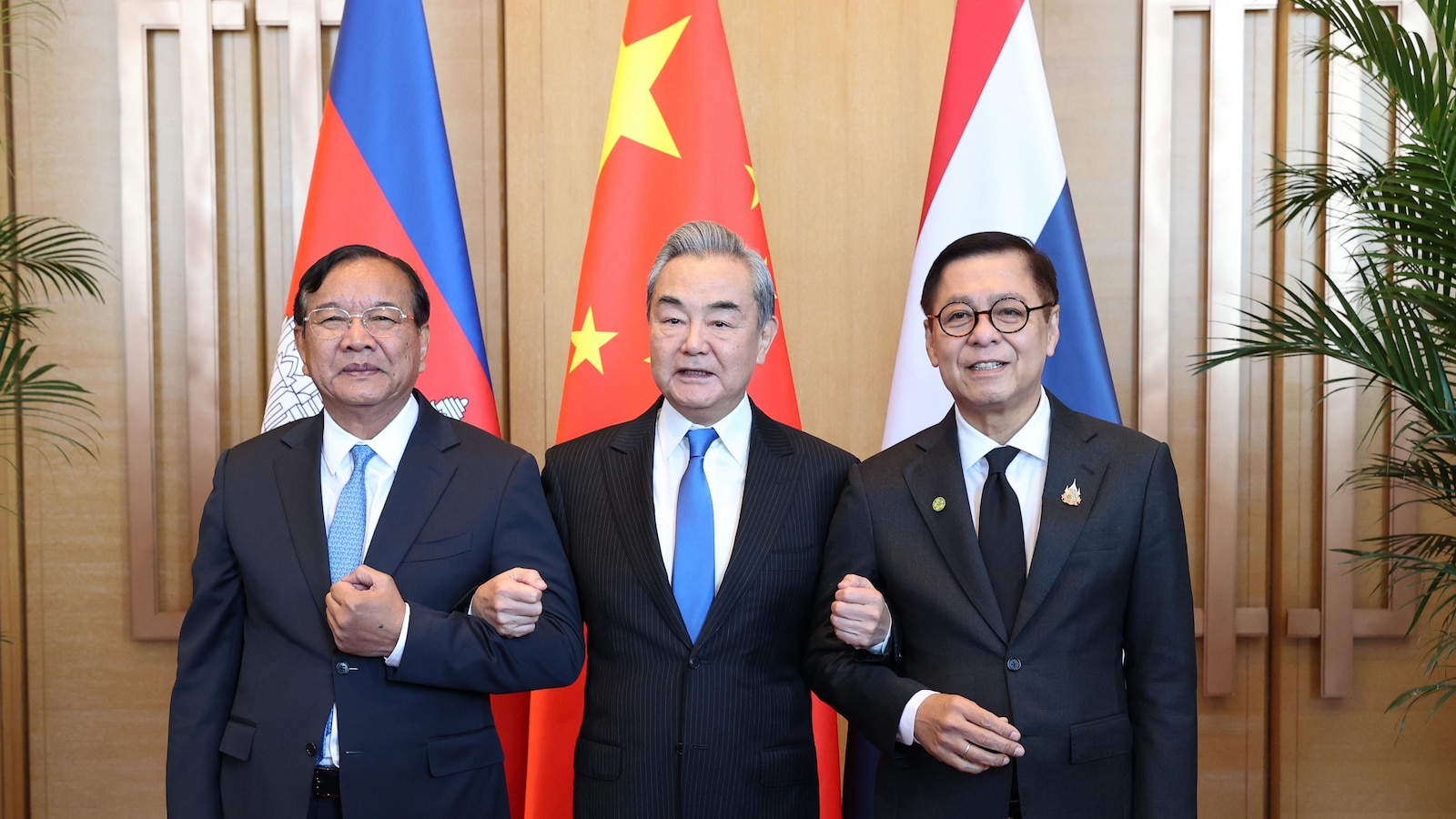
Chinese Foreign Minister Wang Yi convened trilateral talks in Yunnan with Cambodian and Thai counterparts following a new ceasefire that ended weeks of fighting that killed more than 100 people and displaced hundreds of thousands. The three sides agreed to maintain the ceasefire, pursue stepwise restoration of ties, allow China to provide humanitarian aid, and implement measures including Thailand's conditional repatriation of 18 Cambodian soldiers after 72 hours of calm; if sustained, the détente should modestly reduce regional political risk for Southeast Asian assets and reduce downside tail risks for trade and investment in border areas.
Market structure: China’s visible mediation reduces immediate tail-risk for cross-border commerce, tourism and agricultural trade between Thailand and Cambodia, lowering regional risk premia. Expect a 100–300bp compression in short-term CDS/spread-implied funding for frontier exposures and 2–5% upside potential for listed Thai tourism/airport names if the ceasefire holds 30+ days. Chinese state-led humanitarian and security support increases probability Chinese infrastructure contractors win follow-on reconstruction work (meaningful revenue uplifts if projects >$200–500m).
Risk assessment: Key tail risks: ceasefire collapse (low-probability but high-impact), China extracting geopolitical concessions that reshape procurement toward PRC firms, or domestic political shifts in Bangkok/Phnom Penh reversing progress. Time horizons: immediate (days) volatility in local FX and stocks; short-term (weeks–months) normalization if ceasefire holds 72–96 hours and 30 days pass with no incidents; long-term (6–24 months) structural shift toward Chinese-backed infrastructure and security arrangements. Watch thresholds: renewed clashes >3 incidents/week or absence of prisoner repatriation within 7 days as triggers for downside.
Trade implications: Favor tourism/exposure to border reopening (Thai airports, hotels) and selective Thai banks that should see NPL/stress easing; be cautious on small-cap Cambodia-linked exporters and Western defense contractors vying for Thai contracts. Use directional equity positions sized 1–3% and FX forward/NDF positions (THB) sized 0.5–2% notional with tight stops. Options: implement call-spreads to cap premium outlay when buying regional tourism exposure and buy short-dated puts as tail hedges.
Contrarian angles: Consensus underestimates upside from sustained China-led stabilization — markets treat Beijing’s mediation as symbolic, not commercial; if China funds reconstruction >$300m expect a re-rating of construction/engineering suppliers (e.g., CSCEC). Reaction can be overdone on the downside if a short flare-up occurs; therefore prefer option-defined risk to outright shorts. Unintended consequence: stronger Chinese influence could crowd out Western contractors, creating a 12–24 month sectoral winners/losers reallocation.
AI-powered research, real-time alerts, and portfolio analytics for institutional investors.
Request DemoOverall Sentiment
mildly positive
Sentiment Score
0.25
