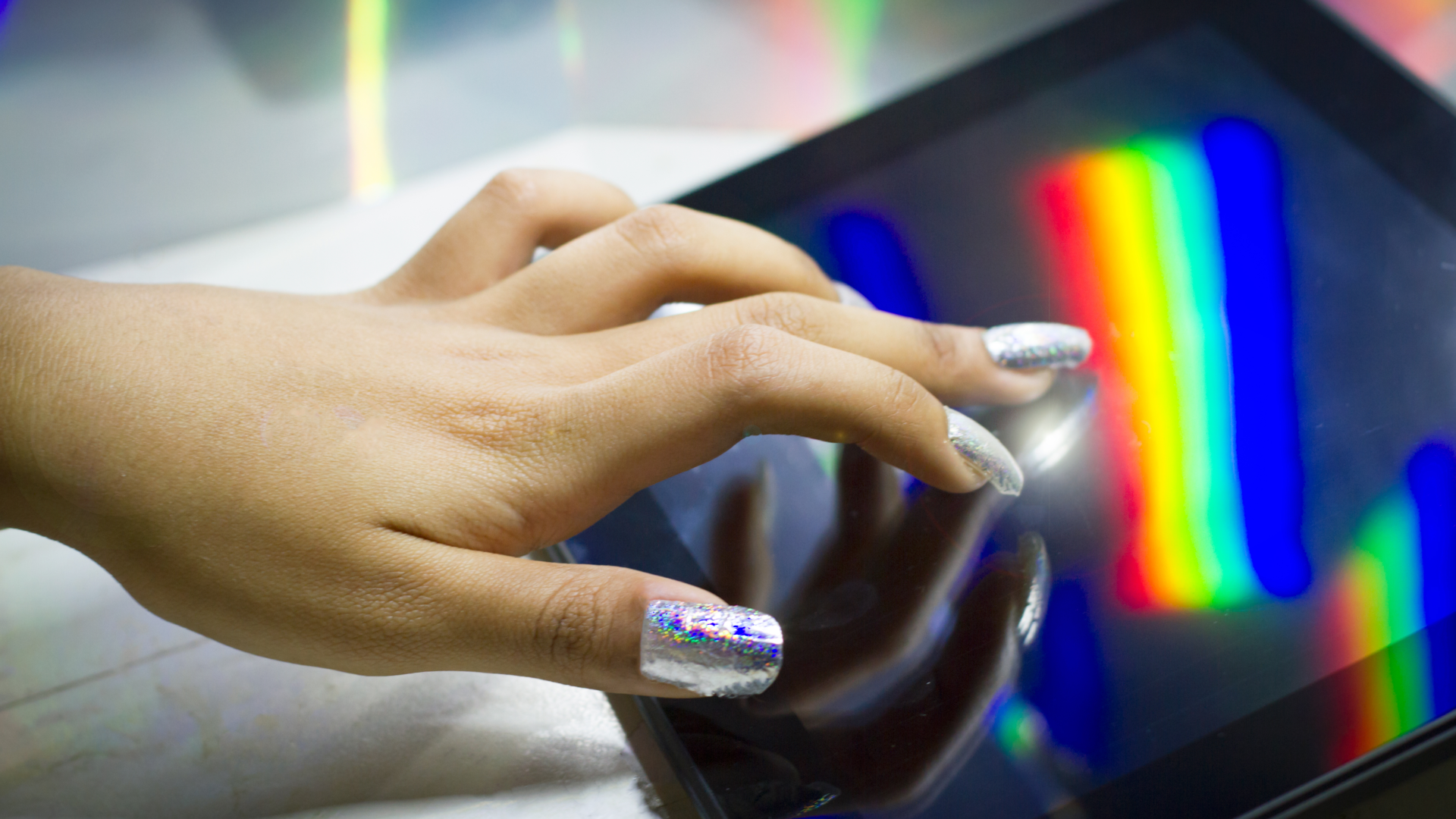
A college student and faculty mentor developed a proof-of-concept clear, nontoxic nail polish that enables fingernails to act as capacitive touch-screen styluses; they tested 13 commercial clear top coats and more than 50 additives and identified a taurine + ethanolamine combination that registers as a touch. The formula relies on proton-exchange acid-base chemistry rather than metal or nanotube additives, and the team filed a provisional patent after presenting at the American Chemical Society meeting on March 23. Major limitations remain: current formulations lose efficacy after hours or days (target is days–weeks) and the least-toxic version has an undesirable gritty finish, so commercial availability is not imminent.
This is a classic micro-innovation with outsized optionality for ingredient and specialty-coatings suppliers rather than handset OEMs or mass-market cosmetics brands. The real value accrues if the formulation scales to durable, cosmetically-acceptable films (days→weeks of conductivity) and passes safety testing — that upgrades a lab curiosity into a recurring B2B ingredient/licensing revenue stream.
Key near-term bottlenecks are durability and regulatory clearance: improving wear resistance by an order of magnitude (currently hours/days → target weeks/months) requires formulation changes and manufacturing scale that drive capex and lead times of 6–24 months. A provisional patent is positive but offers limited near-term exclusivity; meaningful IP-driven licensing value only materializes after granted claims and demonstrable, reproducible performance under real-world abrasion/cosmetic conditions.
Second-order winners: small, high-margin specialty chemical/coatings companies and contract formulators that can integrate proton-conducting additives into stable topcoats — they can capture 5–20% premium on specialty SKUs and command licensing fees. Losers (or neutral): large device OEMs can ignore this if they tweak touch firmware or ship bundled stylus solutions, and fast-moving consumer accessory makers (conductive stickers, styluses) are low-cost substitutes that could cap price points.
Catalyst schedule to watch: third-party durability data, a granted patent (12–36 months), and any announced licensing deals with major cosmetic houses or formulators. Failure modes that would kill upside: inability to extend lifetime, toxicology/regulatory red flags, or a cheaper hardware/UI fix from handset makers within 12 months.
AI-powered research, real-time alerts, and portfolio analytics for institutional investors.
Request DemoOverall Sentiment
mildly positive
Sentiment Score
0.20
