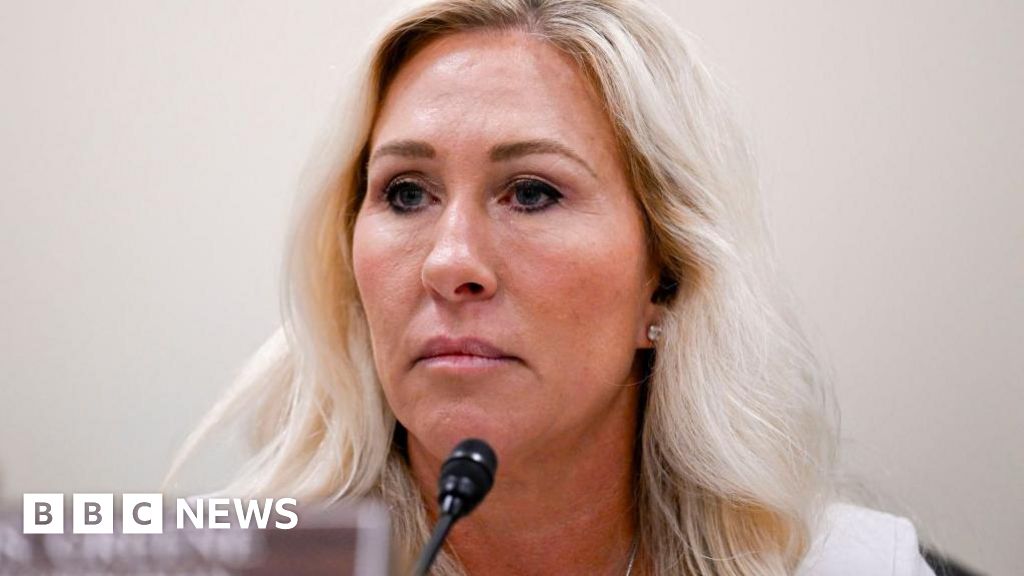
A Tuesday runoff will decide who replaces Marjorie Taylor Greene in Georgia's 14th district. The outcome matters for House control: Republicans hold 217 seats versus 214 for Democrats (one Independent caucuses with Republicans) with three vacancies, so a flip could affect tight legislative votes. The winner will serve through January 2027 but must immediately begin campaigning for the November midterms. Republican Clay Fuller (Trump-aligned) faces Democrat Shawn Harris after a March 10 special election produced no majority winner, making turnout and independent votes pivotal.
Single-seat contests often act as force-multipliers for legislative bargaining: the winner’s vote becomes a commodity that leadership can convert into concessions on riders, appropriations timing, and confirmations. Expect a near-term increase in micro-targeted policy carve-outs (immigration enforcement language, procurement riders) as each side seeks to lock in outcomes while the margin is fungible; these maneuverings typically crystallize within weeks around the next funding and confirmation calendar.
Markets most sensitive to that bargaining are high-duration equities and sectors reliant on discrete federal appropriations — defense, select healthcare providers, and regional infrastructure contractors. A small move in perceived legislative stability can swing 10-year Treasury yields by several basis points, which mechanically re-rates long-duration growth names and can drive 3–6% intraday moves in rate-sensitive ETFs if the vote becomes the focal point of broker positioning.
There is a predictable, short-lived flow of political advertising and data spending into local media, digital platforms, and voter-targeting vendors; that spending bilaterally boosts small-market broadcasters and ad-tech CPMs for a 6–12 week window, then dissipates. Campaigns with compressed timelines also increase the value of incumbency optics, raising the probability that the eventual officeholder will prioritize high-visibility, short-term legislative wins over longer-term policy compromises.
Tail risks: an unexpected external shock (geo‑political or macro) can wipe out the political story in 48–72 hours, and a large out‑of‑district spending surge can flip probabilities overnight. The most actionable market moves will compress into the days immediately before key floor votes and the following 2–6 weeks as appropriations and confirmations are renegotiated.
AI-powered research, real-time alerts, and portfolio analytics for institutional investors.
Request DemoOverall Sentiment
neutral
Sentiment Score
0.00
