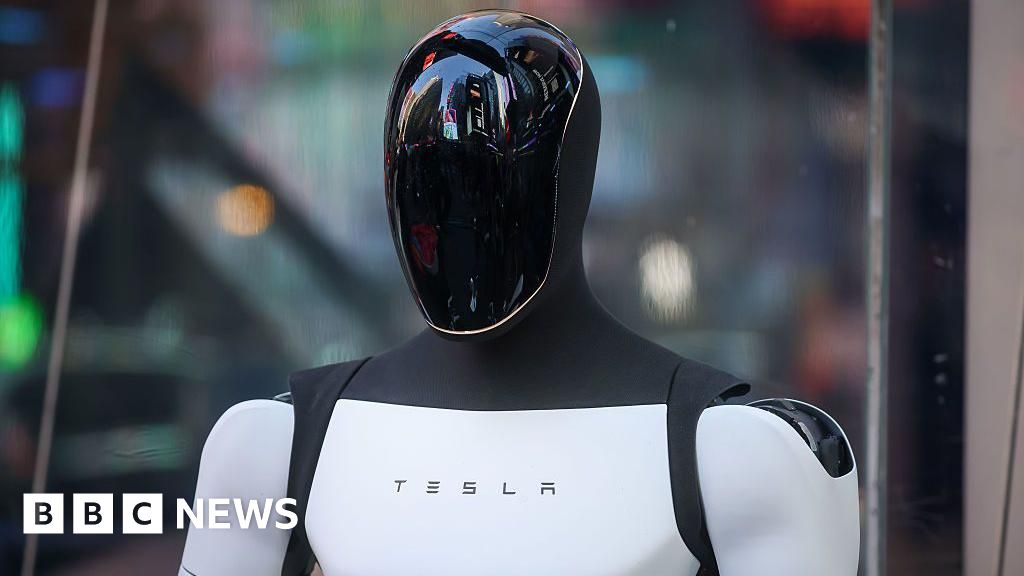
Elon Musk's strategic vision for Tesla's Optimus humanoid robot is a core component of the company's future growth, with the recent approval of his $1 trillion-valued pay package tied to delivering a million AI bots over the next decade. Musk asserts Optimus could become Tesla's most significant product, surpassing its vehicle business and playing a vital role in advancing artificial general intelligence. This ambitious push reflects a broader industry trend, as Morgan Stanley forecasts Apple alone could potentially earn $133 billion annually from humanoid robots by 2040, and analysts predict these robots will disrupt numerous physical-service industries by 2030 due to improving AI and declining component costs.
Tesla's strategic focus is increasingly shifting towards humanoid robotics, with Elon Musk articulating an ambitious vision for Optimus to become the company's most significant product, potentially surpassing its vehicle business and playing a crucial role in advancing artificial general intelligence (AGI). The recent approval of Musk's $1 trillion-valued pay package is directly tied to delivering one million AI bots over the next decade, underscoring the high stakes and corporate commitment to this initiative. This move positions Tesla at the forefront of a speculative, yet potentially transformative, market segment.
The broader industry sentiment, while mixed overall, indicates significant long-term potential for humanoid robots, with Morgan Stanley forecasting Apple could generate $133 billion annually from this sector by 2040. Analysts like Forrester's Brian Hopkins predict these robots could disrupt numerous physical-service industries by 2030, driven by falling component costs and advancements in AI and robot dexterity. This suggests a burgeoning market beyond Tesla's immediate plans.
However, the endeavor is not without considerable skepticism, particularly from roboticists who question the practical efficiency of human-shaped designs compared to wheeled alternatives. Despite this, the positive per-ticker sentiment for TSLA (0.7) suggests investors are largely buying into Musk's vision, viewing Optimus as a high-potential, albeit speculative, growth driver for the company. The overall tone remains speculative, reflecting the nascent stage and inherent risks of this technology.
AI-powered research, real-time alerts, and portfolio analytics for institutional investors.
Request DemoOverall Sentiment
mixed
Sentiment Score
0.15
Ticker Sentiment
