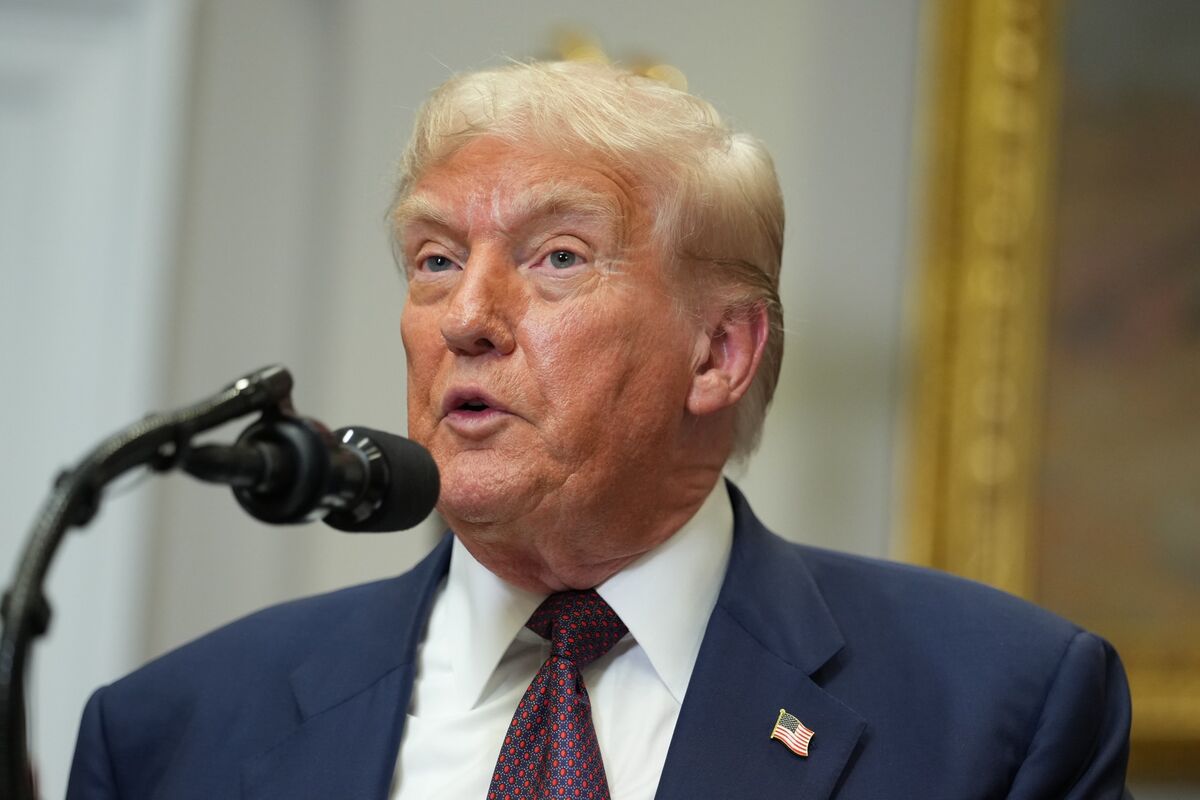
US President Donald Trump stated that Canada must "pay a fair rate" to secure a trade agreement, as US-Canada trade talks approach a critical deadline. Trump confirmed no direct communication with Canadian Prime Minister Mark Carney today, despite Carney's outreach, signaling persistent US demands for concessions in the ongoing negotiations.
US-Canada trade negotiations are facing significant uncertainty as they approach a critical deadline. President Trump's statement that Canada must “pay a fair rate” signals a continued hardline stance from the US, demanding material concessions to reach an agreement. The situation is characterized by a communication stall, with the President noting “we haven’t spoken to Canada today” despite an acknowledged outreach from Canadian Prime Minister Mark Carney. This, combined with the non-committal phrase “we’ll see,” reinforces the uncertain tone and moderately negative sentiment (-0.4 score) surrounding the talks. The impasse injects risk into North American supply chains and cross-border commerce, directly impacting sectors governed by existing trade frameworks and raising the possibility of new tariffs as a negotiation tactic.
AI-powered research, real-time alerts, and portfolio analytics for institutional investors.
Request DemoOverall Sentiment
moderately negative
Sentiment Score
-0.40
