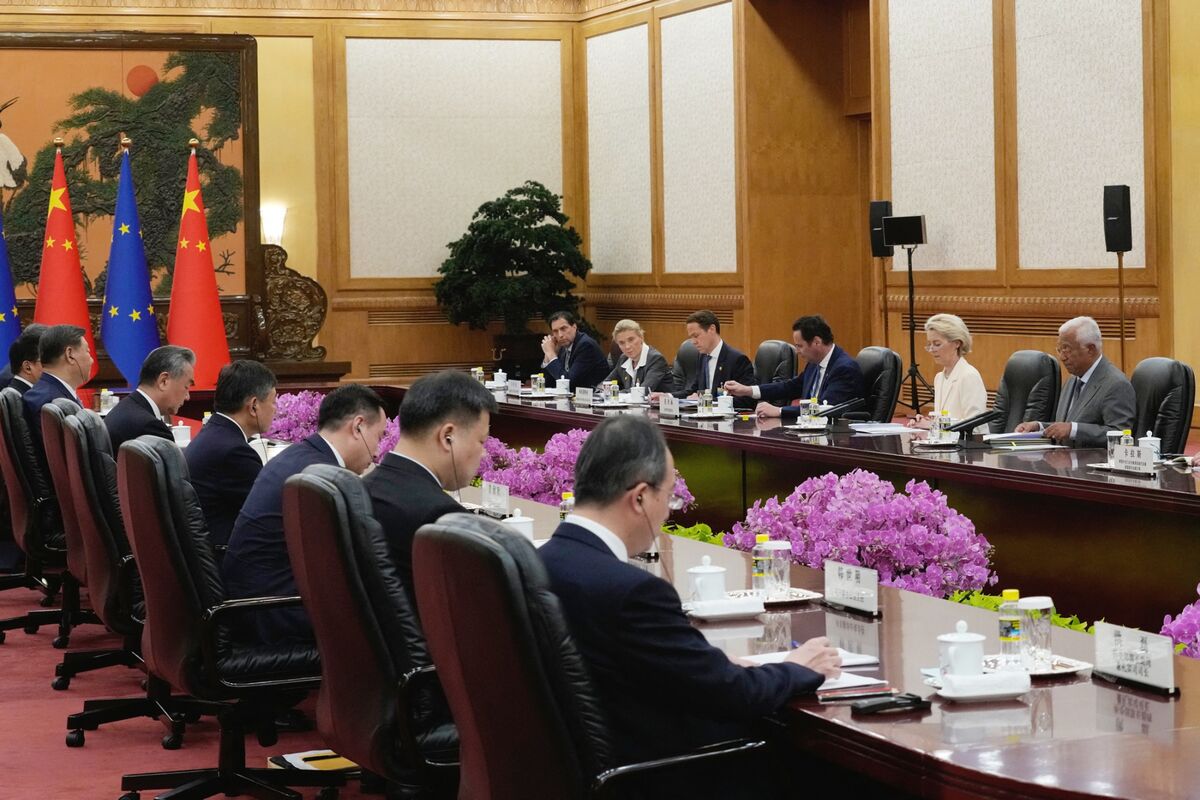
The recent EU-China summit concluded with minimal progress, as European Commission President Ursula von der Leyen pressed Beijing to address market openness and manufacturing over-capacity. Von der Leyen explicitly warned that the European Union's current level of market openness would be difficult to sustain unless China rectifies these concerns, signaling potential future trade friction or protectionist measures if meaningful changes are not implemented.
The recent EU-China summit concluded with minimal progress, escalating the risk of future trade frictions between the two economic blocs. European Commission President Ursula von der Leyen's direct warning that the EU's "current level of openness" is contingent on Beijing addressing manufacturing over-capacity and market access issues marks a significant hardening of the European stance. The lack of a resolution, reflected in the moderately negative sentiment score (-0.5), signals a heightened probability of the EU implementing protectionist measures, such as tariffs or quotas, to shield its domestic industries. This geopolitical development directly impacts themes of trade policy and supply chain stability, suggesting that investors should anticipate increased regulatory and tariff risk for sectors with high exposure to EU-China trade flows.
AI-powered research, real-time alerts, and portfolio analytics for institutional investors.
Request DemoOverall Sentiment
moderately negative
Sentiment Score
-0.50
