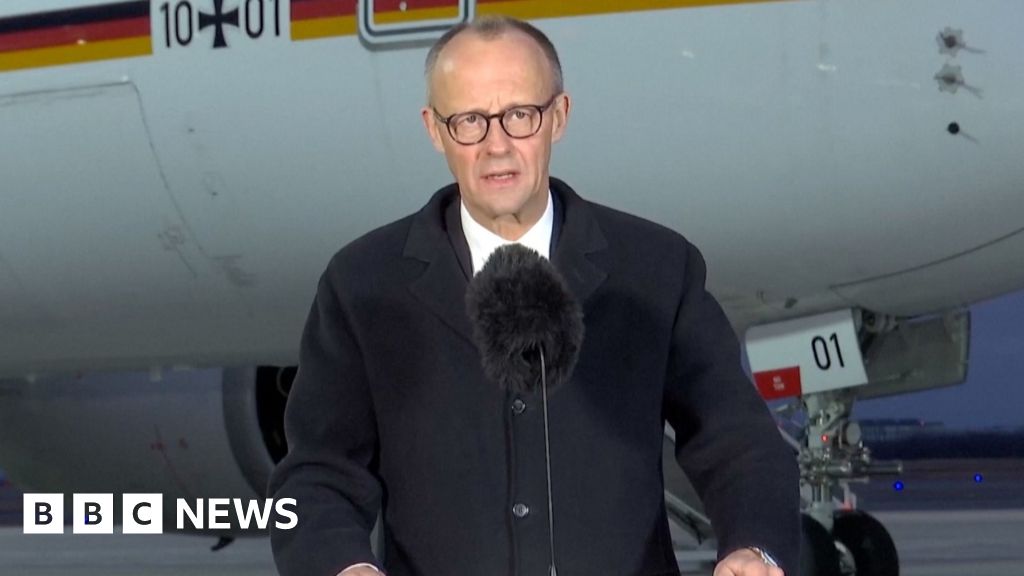
German Chancellor Friedrich Merz arrived in Beijing amid alarm over a widening trade imbalance: 2025 imports from China into Germany reached €170.6bn (+8.8%) while exports to China fell 9.7% to €81.3bn, prompting business and policy pressure around subsidies, alleged currency undervaluation and overcapacity in China. German industry groups warn the gap is eroding core sectors—notably autos, machinery and chemicals—while Berlin presses for a 'balanced, reliable' partnership, continued de-risking (not decoupling), and potential trade defence measures including anti-dumping, tariffs and export controls on critical materials. Investors should monitor EU/German trade-policy actions, sector-specific protection measures and any escalation toward tariffs or tighter export controls that would materially affect European industrial and automotive names.
Market structure: Germany’s >2x trade deficit with China (imports €170.6bn vs exports €81.3bn in 2025) fast-tracks market share loss for German autos, machinery and chemicals where China’s price advantage and overcapacity matter. Expect downward pricing pressure on EU industrial goods and margin compression for OEMs over 6–24 months as Chinese exports rise ~9% YoY; winners are Chinese exporters and non-Chinese raw-material suppliers of critical inputs (rare earths, battery metals).
Risk assessment: Key tail risks are abrupt EU anti-dumping rulings or an EU/US coordinated tariff regime (low probability, high impact) and Chinese export restrictions on rare earths or EV components (medium probability, high impact) that could spike prices 30–100% in 1–3 months. Near-term moves (days–weeks) will be driven by Merz’s communique and any immediate policy announcements; structural effects play out over 12–36 months as “de-risking” policies and reshoring subsidies roll out.
Trade implications: Short German auto/industrial exposures and buy non-China rare-earth/battery miners; favor European/US capital equipment leaders (chip equipment, automation) that benefit from reshoring. Use options to hedge event risk around EU anti-dumping decisions (30–90 day windows) and size positions to 1–3% NAV per idea given policy uncertainty.
Contrarian angles: Consensus assumes gradual de-risking; underestimate speed of Chinese policy reaction and EU capacity subsidies. Mispricings: rare-earth miners and MP Materials (MP) and Lynas (LYC) are under-owned insurance against a supply shock; German OEM weakness may be priced for 10–20% downside if EV transition and Chinese competition accelerate.
AI-powered research, real-time alerts, and portfolio analytics for institutional investors.
Request DemoOverall Sentiment
moderately negative
Sentiment Score
-0.50
