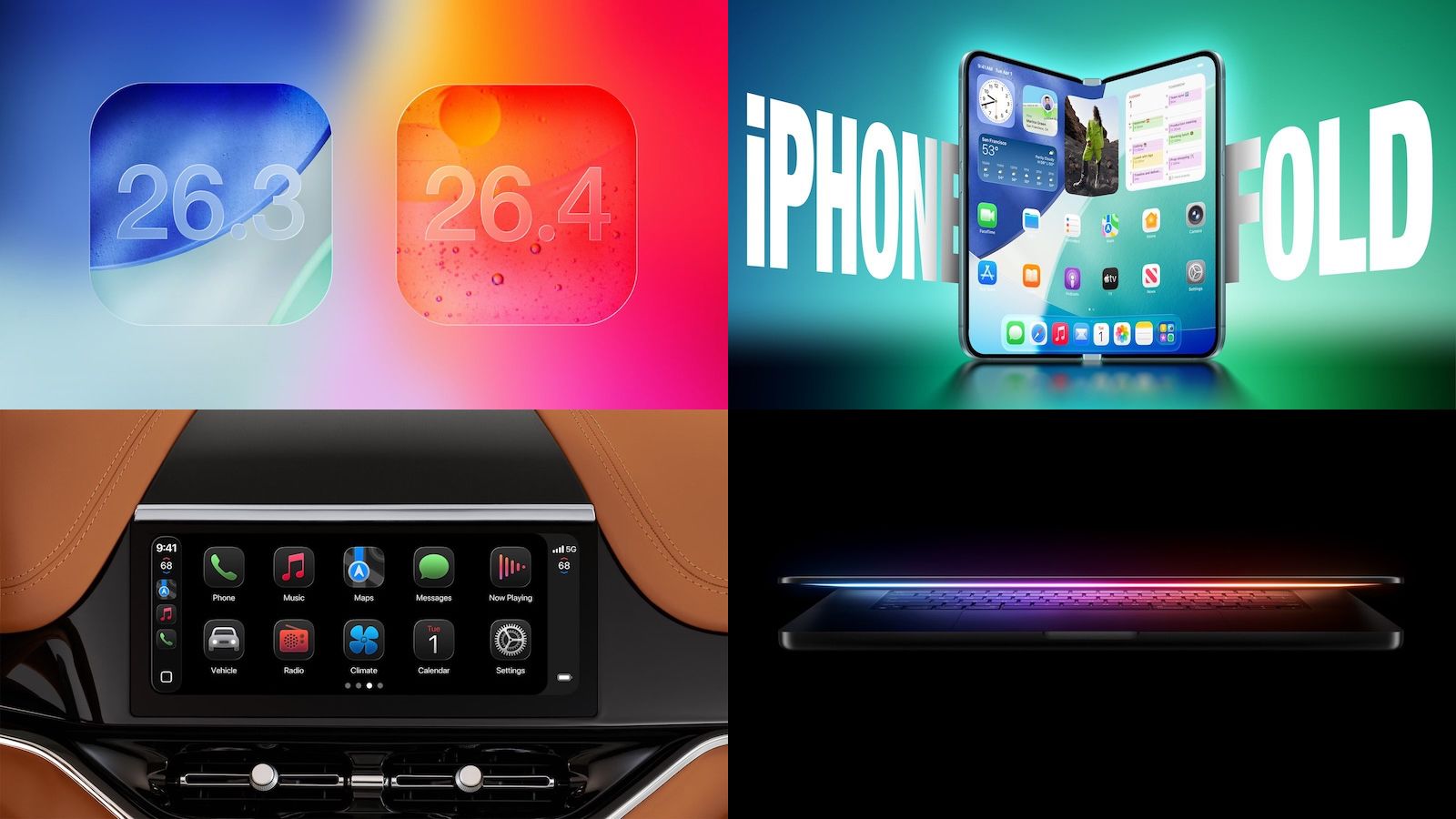
Apple is rolling out incremental software updates with an iOS 26.3 Release Candidate now in beta and iOS 26.4 expected for public release in March–April, while macOS 26.3 is the targeted software window (Feb–Mar) for new M5 Pro and M5 Max MacBook Pro models (codenames J714/J716). Leaks indicate a first foldable iPhone with relocated controls and a record battery above 5,500 mAh, CarPlay Ultra is set to expand to Hyundai/Kia/Genesis in H2 2025, Apple has changed Mac ordering to full configuration, and users must upgrade the Home app by Feb 10, 2026 to avoid accessory and security issues—items that are strategically relevant for product, supply-chain and aftermarket-service planning.
Market structure: Apple’s near-term product cadence (macOS 26.3 + M5 Pro/Max MacBook Pros in Feb–Mar and CarPlay Ultra rollout in H2 2025) should transiently increase demand for high-margin Macs and in-vehicle software partners, tightening channel inventory for older models and supporting ASPs. Component winners are wafer foundries (TSM), high-end displays, and battery suppliers; OEM PC peers (HPQ/DELL) face pricing pressure and potential share loss in premium segments. FX and rates: stronger AAPL revenue and USD receipts argue for modest upward pressure on USD and tech equity outperformance vs. bonds, compressing implied volatility after launches.
Risk assessment: Tail risks include production delays for foldable iPhone (software/hinge/battery safety), regulatory scrutiny (EU digital markets/antitrust), and China/Taiwan supply shocks; each could wipe 5–15% off consensus 12‑month EPS. Immediate window (days) has event risk around macOS 26.3; short-term (weeks–months) covers sell-through and launch commentary; long-term (>12 months) is adoption risk for new categories (foldable iPhone, CarPlay Ultra). Hidden: tight supplier concentration (TSM/Samsung Display) amplifies operational risk and second-order pricing effects on gross margins.
Trade implications: Direct bullish in AAPL into macOS 26.3 cycle (Feb–Mar) with defined‑risk option exposure to capture upside; pair trades favor long Apple and TSM vs. short mid/low‑end PC OEMs (HPQ/DELL) to play premiumization. Volatility strategy: buy-call-spreads 45–75 days to capture post-release upside while selling short-dated strangles 3–7 days after launch if IV spikes. Rotate modestly into battery/display suppliers and LIT‑style lithium exposure ahead of foldable iPhone supply chain ramp.
Contrarian angles: Consensus overweights product-unit narratives; adoption of foldables could be slower (18–24 month replacement cycle) and larger batteries raise cost/weight tradeoffs that compress margins by 100–200bps if ASPs don’t rise. The Mac configurator change may boost AOV but also lengthen sales cycles and increase cancellation rates, muting near-term revenue; market may underprice regulatory litigation risk tied to CarPlay/automotive partnerships that could reduce incremental services revenue.
AI-powered research, real-time alerts, and portfolio analytics for institutional investors.
Request DemoOverall Sentiment
mildly positive
Sentiment Score
0.25
Ticker Sentiment
