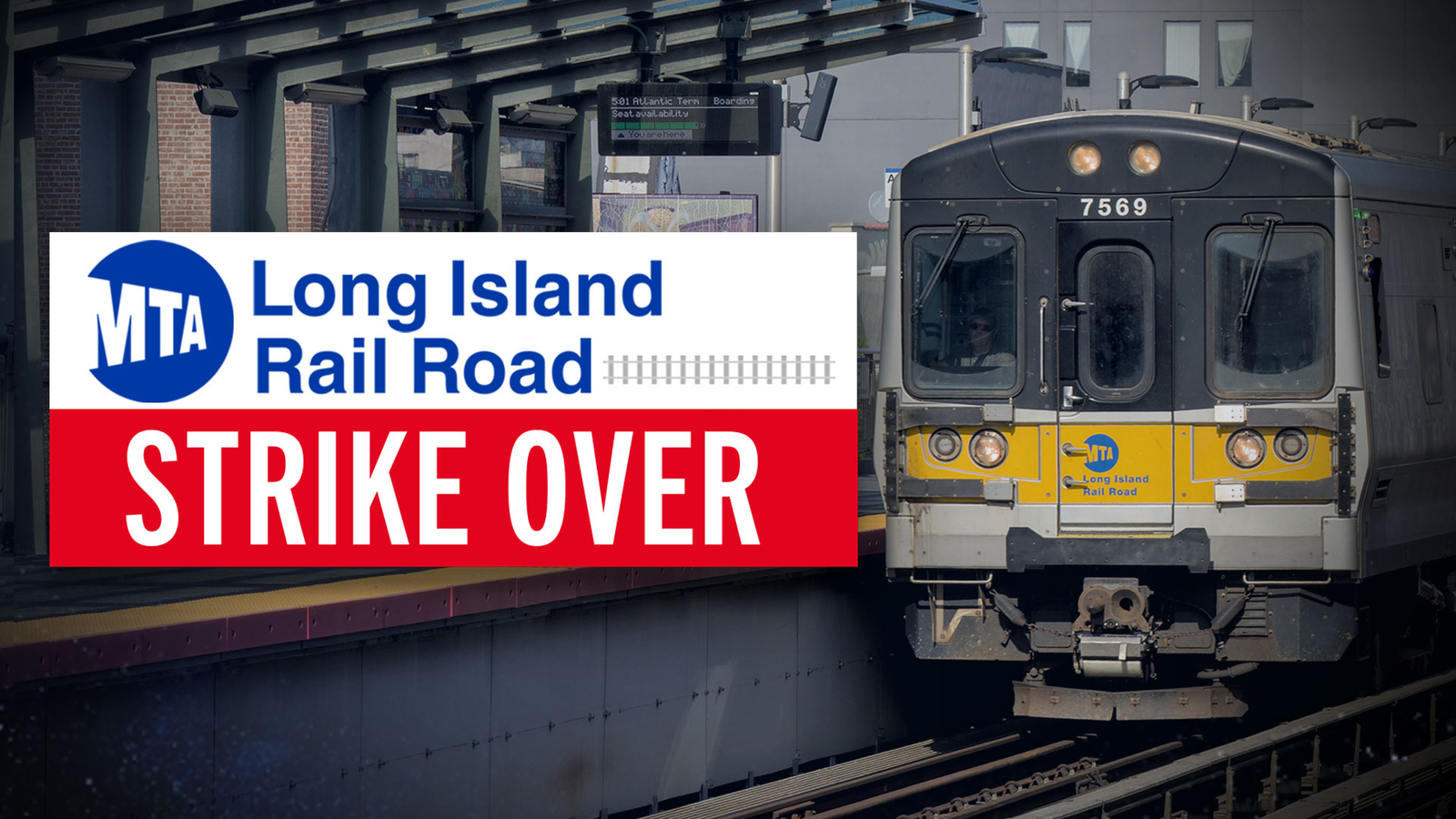
LIRR service is set to resume Tuesday at noon after the MTA and five unions reached a deal to end the strike that shut down North America's largest commuter rail system for three days. The stoppage disrupted roughly 250,000 weekday commuters, with only about 2,100 people using emergency bus service on Monday. Remaining contract friction centered on wages and healthcare contributions for future hires, but the immediate operational impact is the restoration of rail service.
The immediate market read-through is not the strike resolution itself, but the asymmetry in how quickly displaced commuter demand normalizes. A multi-day outage forces a portion of riders to permanently re-optimize toward remote work, carpooling, and highway transit, which means the revenue recovery for the rail system may lag the service resumption by weeks even if ridership headlines snap back in days. The bigger second-order effect is on adjacent mobility competitors: buses, parking operators, rideshare, and toll-road traffic likely retain some incremental usage after the strike ends, while the rail operator absorbs the political cost of demonstrating labor fragility without a meaningful near-term balance sheet benefit.
From a governance perspective, this is a template event for other public transit systems: once labor sees that a shutdown creates political pressure on elected officials, bargaining leverage shifts structurally. That raises the probability of a larger wage/benefit reset over the next 12 months, not just for this operator but for municipal transportation authorities broadly. The key risk is that a “deal” can still leave open the healthcare-cost issue for future hires, which preserves long-duration margin pressure and can reappear in the next contract cycle or in arbitration-like disputes.
The contrarian view is that the market may overprice the idea that reopening equals normalization. The operational disruption has already revealed low elasticity in emergency mitigation, so any future labor action could be more damaging because commuters now know alternatives are imperfect and planners may face lower compliance with contingency measures. If management is forced into a richer labor settlement, the medium-term effect is not just expense inflation; it is also an incentive to accelerate automation and limit headcount growth where feasible, which is supportive for technology vendors and negative for legacy labor-heavy service models.
AI-powered research, real-time alerts, and portfolio analytics for institutional investors.
Request DemoOverall Sentiment
neutral
Sentiment Score
-0.05
Ticker Sentiment
