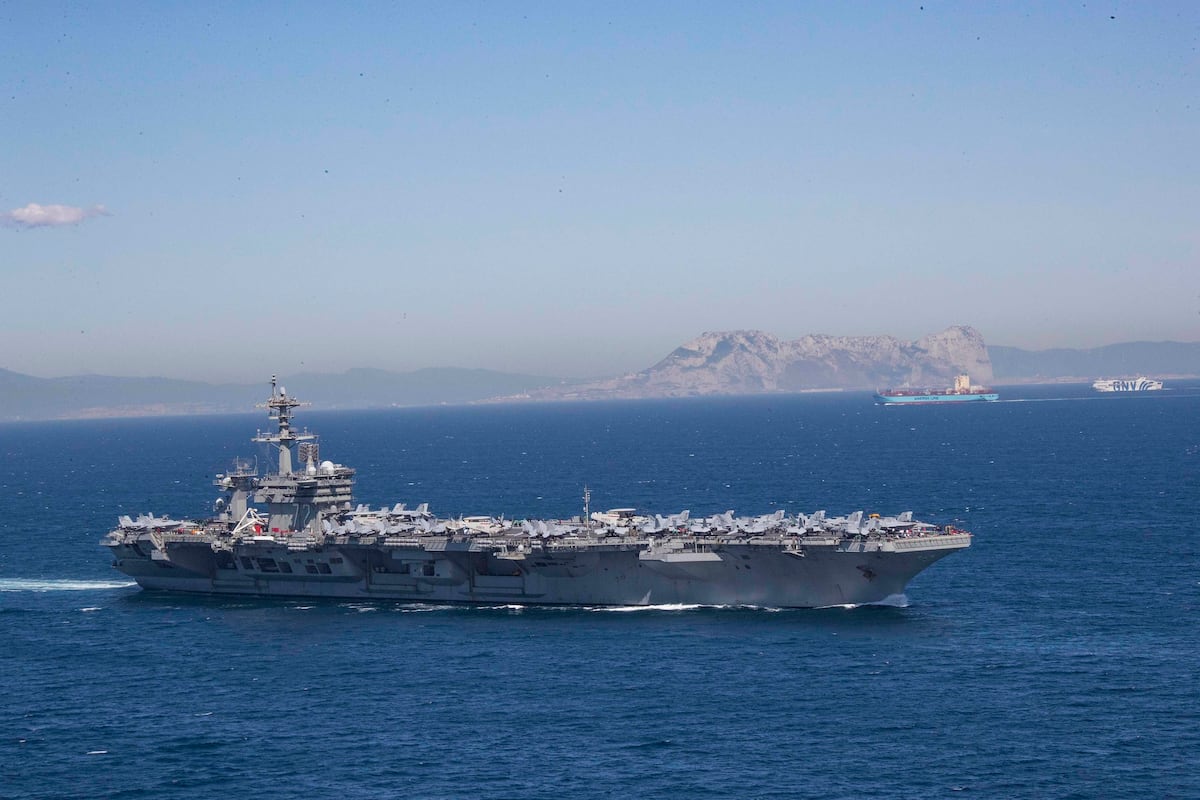
Tensions between the U.S. and Iran have sharply escalated as U.S. officials signal imminent strikes unless Tehran meets demands to cease uranium enrichment, limit its ballistic missile stockpile, and end support for proxy groups, while Iran warns of immediate and massive retaliation. Washington has surged assets into the region — including the carrier USS Abraham Lincoln and other warships — and cites 30,000–40,000 U.S. troops in range of Iranian UAVs and short-range missiles; Riyadh has refused U.S. basing or airspace for strikes. The standoff, set against large anti-regime protests and a deadly crackdown inside Iran, heightens downside risk to regional stability and energy markets and raises potential upward pressure on oil prices and defense exposure.
Market structure: Immediate winners are defense primes (LMT, NOC, GD, RTX) and upstream energy producers (XOM, CVX, PBR) as demand for weapons and crude hedging rises; losers include global airlines (UAL, AAL, DAL), shipping owners and EM exporters reliant on Gulf oil flows. Pricing power shifts toward OPEC+ and US defense contractors; a supply shock of just 1–2 mbpd outage would likely lift Brent +10–25% within weeks and raise bunker and insurance costs materially.
Risk assessment: Tail scenarios include a sustained Gulf closure pushing Brent >$150/bbl and insurance rates for Strait transits rising 200–500%, triggering stagflation and EM sovereign stress; immediate (days) risk is volatility spikes, short-term (weeks–months) is commodity-driven inflation, long-term (quarters) is elevated defense budgets and supply-chain reconfiguration. Hidden dependencies: Saudi refusal to host US strikes limits kinetic options and raises probability of asymmetric attacks on shipping and regional proxies, amplifying second-order trade disruptions.
Trade implications: Tactical plays should favor quality defense names with backlog (LMT/NOC) and selective energy longs (XOM) while shorting consumer-discretionary travel names and EM beta. Use options to control tail exposure (VIX calls, 3–6m XOM call spreads) and prefer USD/Gold hedges to protect real capital as yields and inflation signals duel.
Contrarian angles: Consensus may overstate permanence of price moves—historical oil shocks often revert in 3–6 months once shipping adapts and spare capacity is deployed—so avoid outright long-dated single-stock leverage. Defense multiples may already price in a rally; favor names with contract visibility and use spread trades to avoid idiosyncratic risk.
AI-powered research, real-time alerts, and portfolio analytics for institutional investors.
Request DemoOverall Sentiment
strongly negative
Sentiment Score
-0.65
