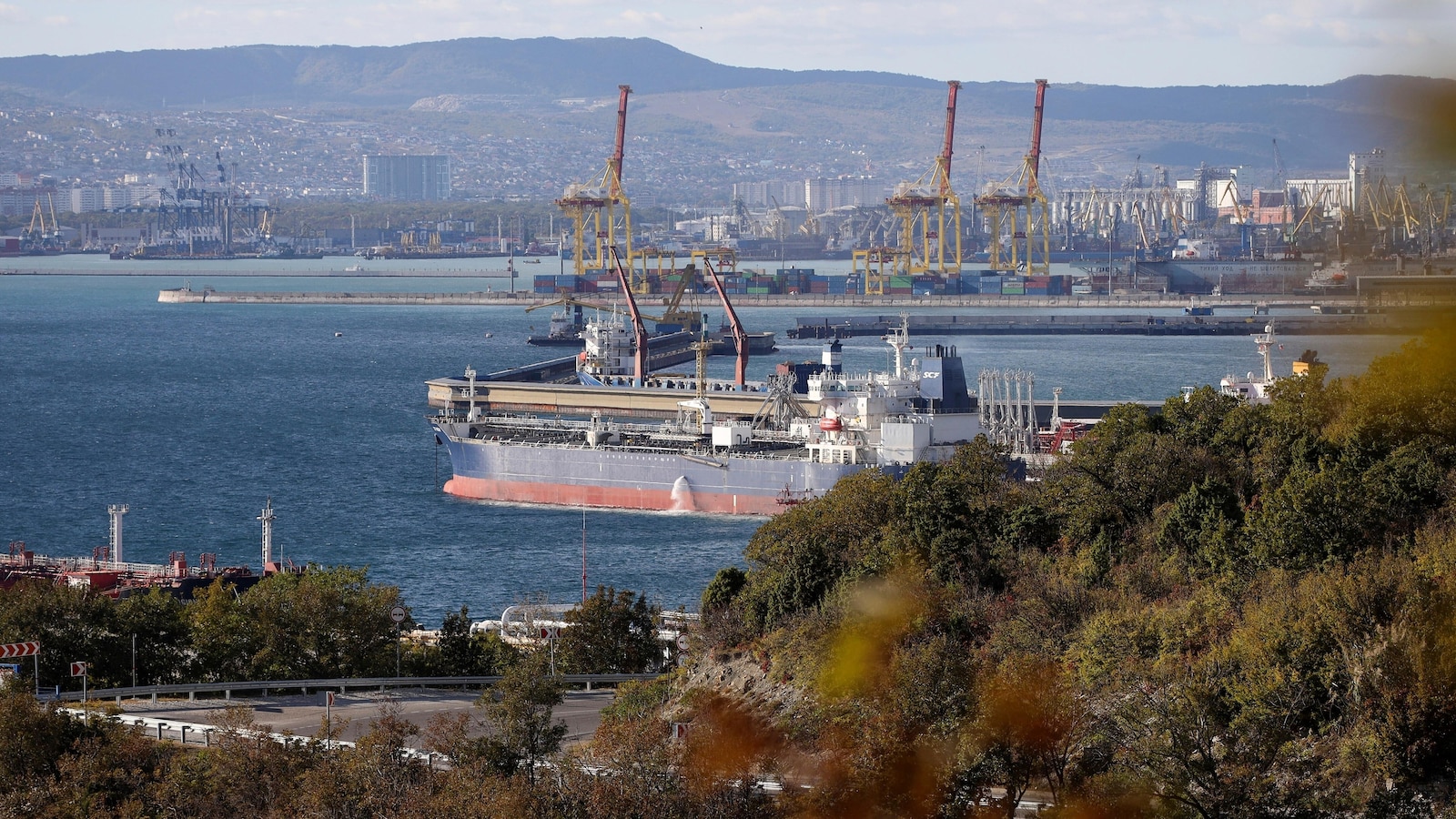
The MIDVOLGA-2, a tanker reportedly carrying sunflower oil from Russia to Georgia, was attacked about 130 km off the Turkish coast; all 13 crew were unharmed and the ship did not request assistance. Coming days after Ukrainian drone strikes on the Kairos and Virat inside Turkey’s exclusive economic zone, the incident — with OpenSanctions linking such vessels to a sanctions-evasion “shadow fleet” — raises upside risks to shipping disruption, sanctions enforcement and Black Sea trade flows and prompted Turkish government warnings about navigational and environmental safety.
Market structure: Attacks on Black Sea tankers increase war-risk premia for voyages in and near the Black Sea and raise short-term TC (time-charter) rates for tankers by an estimated 10–30% if sustained; beneficiaries are large, flexible tanker owners (e.g., FRO, EURN) and war-risk insurers, losers are commodity traders, ports, and shippers reliant on Black Sea corridors. Competitive dynamics tilt toward owners with global fleets who can reassign vessels to higher-paying routes; shadow-fleet operators face seizure/sanctions risk that could reduce sanctioned supply by a non-trivial share (5–15%) of regional flows. Cross-asset effects: upward pressure on vegetable-oil spreads (sunflower oil), modest near-term bullishness in oil-related shipping equity indices, small safe-haven flows into gold and sovereign credit (10–20 bps tighter for front-end TIPs on risk-off days), and RUB downside on escalation.
Risk assessment: Tail risks include a Turkish closure of transit corridors, direct NATO/Turkey-Russia escalation, or broader sanctions enforcement that freezes the shadow fleet — each could spike freight and energy prices 30–100% within weeks. Immediate (0–7 days): volatility spikes and insurance notices; short-term (1–3 months): rerouting costs and commodity spread widening; long-term (3–18 months): structural re-routing, permanent higher war-risk premia and compliance costs. Hidden dependencies: tanker rate moves depend on available capacity elsewhere; insurance losses depend on cargo composition (oil vs. food) and legal determinations. Catalysts: additional strikes (>2 in 30 days), Turkish policy change, or IO sanctions enforcement would accelerate moves.
trade implications: Direct: establish tactical long positions in large tanker owners (Frontline FRO, Euronav EURN) and commodity processors (ADM, BG) to capture freight and edible-oil spread widening; use small, defined-risk options to express views. Pair trade: long FRO vs short a euro-area container operator with Black Sea exposure (e.g., ZIM) to isolate tanker rate upside. Options: buy 3-month call spreads on FRO (buy 10% OTM, sell 30% OTM) sized 1–2% portfolio notional to capture a freight spike while limiting premium. Sector rotation: trim leisure/cruise (CCL/RCL) exposure by 10–25% and reallocate into defense names (RTX/LMT) and GLD as tail hedges. Entry/exit: initiate within 48–72 hours, trim if no escalation in 60 days or if tanker indices fall 20% from peaks.
contrarian angles: Consensus expects only temporary disruption; miss is that permanent re-routing and higher compliance costs can structurally lift tanker earnings for 6–18 months — not just weeks. Reaction may be underdone for small-cap tanker owners and overdone for food traders who have diversified sources; sunflower-oil tightness could be real and persist >90 days, pricing a 10–20% premium. Historical parallel: post-2014 Black Sea sanctions tightened shipping and raised TC rates for >12 months; unintended consequence: higher freight profits attract new tonnage in 6–12 months, which would cap upside — plan exits at 12–18 month horizon or on a 30% rally.
AI-powered research, real-time alerts, and portfolio analytics for institutional investors.
Request DemoOverall Sentiment
moderately negative
Sentiment Score
-0.35
