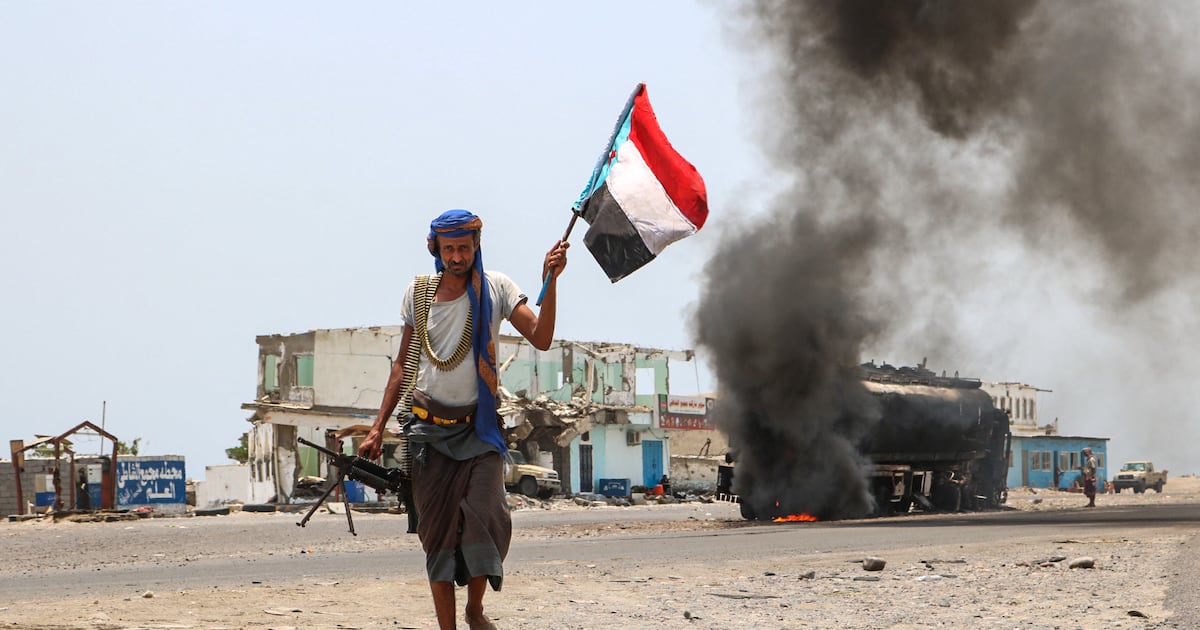
The Southern Transitional Council has deployed forces into oil-rich Hadhramaut to crush a tribal-led rebellion after provincial undersecretary Amr bin Habrish’s men entered oilfields, prompting companies to halt operations. The STC says the operation is to secure the province and prevent Houthi or extremist exploitation, while the Presidential Council warned escalation would damage services and raise security risks. The confrontation threatens local oil production and regional stability, presenting downside risk to energy supply sentiment though immediate global market impact appears limited.
Market structure: STC moves in Hadhramaut are a localized supply shock with asymmetric winners — short-term beneficiaries include oil-price longs, war-risk insurers and private security contractors; losers are local E&P contractors, regional logistics/shipping and any operators with onshore Yemeni assets. Hadhramaut output is small (likely <0.2 mbpd) so direct global supply impact is limited, but a contagion to Red Sea shipping or expanded Houthi attacks could add a 0.5–1.0 mbpd risk premium, moving Brent materially (est. $1–$5/bbl on escalation within weeks).
Risk assessment: Tail risks include escalation to international shipping interdiction, Saudi or UAE kinetic intervention, or a prolonged insurgency that freezes investment — low probability today but high impact on oil-insensitive assets and EM credit. Immediate (days) risk: forced shut-ins and insurance premium spikes; short-term (weeks–months): production offline and credit spread widening; long-term (quarters+): underinvestment reducing regional capacity by 5–15% versus baseline. Hidden dependencies: operator nationality, force‑majeure clauses, and insurance layer triggers could abruptly shift cash flows.
Trade implications: Tactical strategies favor convex, time‑limited longs on oil exposure and explicit hedges: buy Brent upside (3‑month call spreads) rather than spot to control cost, overweight XLE for a 3–6 month horizon, and purchase short-dated volatility (VIX calls or VXX calls) as crash insurance. Avoid unilateral long positions in MENA-focused services and regional shipping names; increase cash allocation or high-quality duration (TLT) if escalation signs cross thresholds (see triggers).
Contrarian angles: Consensus may overprice risk given Yemen’s historically transitory disruptions; past Yemen flare-ups produced sub‑5% Brent moves unless shipping lanes were hit. Mispricings: war‑risk and P&I insurance premiums often overshoot by 30–70% then mean-revert within 4–8 weeks — tradeable via specialty insurers and reinsurance spreads. Key catalyst to act: confirmation of >100 kbpd sustained outage or one reported Houthi strike on Red Sea shipping within 7 days.
AI-powered research, real-time alerts, and portfolio analytics for institutional investors.
Request DemoOverall Sentiment
moderately negative
Sentiment Score
-0.40
