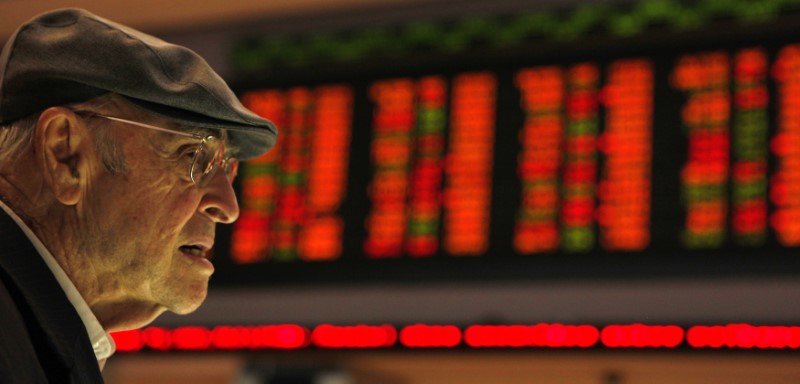
Brazil's Bovespa fell 0.86% to a new 1-month low, with decliners outnumbering advancers 564 to 378 as risk appetite weakened. The article also showed rising volatility, with the CBOE Brazil ETF Volatility Index up 2.01% to 32.41, while crude oil jumped 4.28% to $102.27 and the USD/BRL was flat at 4.89. Several stocks saw sharp moves, led by Braskem up 29.02% and Natura & Co down 5.62%.
The market is repricing a more persistent inflation impulse, and the second-order effect is not just higher discount rates but a renewed squeeze on duration-sensitive and import-dependent business models. If inflation is being reinforced by energy rather than just sticky services, the adjustment tends to be broader and slower to fade, which argues for continued relative underperformance in high-multiple growth, consumer discretionary, and industrial names with weak pricing power over the next several weeks. The sharper move in oil is the more important catalyst than the headline CPI print because it can bleed into freight, plastics, packaging, and input costs with a lag of 4-10 weeks. That creates a relative advantage for upstream energy, select commodity-linked EM assets, and balance-sheet-clean companies that can pass through costs, while pressuring retailers, airlines, chemicals, and small caps that lack margin buffers. In Brazil specifically, a firm USD/BRL and higher global energy prices are a poor mix for domestic cyclicals and long-duration equities; they also raise the odds of tighter financial conditions even if the central bank does not move immediately. The broader read-through is that rates may need to stay restrictive longer, which is why volatility is underpricing the risk of another leg lower in equities if the next inflation or labor print fails to cool. The consensus is likely still treating this as a one-day macro shock, but the risk is a regime shift where commodities, not just wages, keep headline inflation sticky into the next quarter. That would make dip-buying in expensive tech less attractive until real yields stabilize and oil momentum breaks. For the single named ticker, there is no direct fundamental edge in BAK from this tape, but the macro backdrop is mildly supportive for Brazil-linked commodity exposure versus domestic demand proxies. The cleaner expression is to own cost-passing commodity winners and avoid sectors with weak pricing power until volatility compresses.
AI-powered research, real-time alerts, and portfolio analytics for institutional investors.
Overall Sentiment
moderately negative
Sentiment Score
-0.22
Ticker Sentiment
