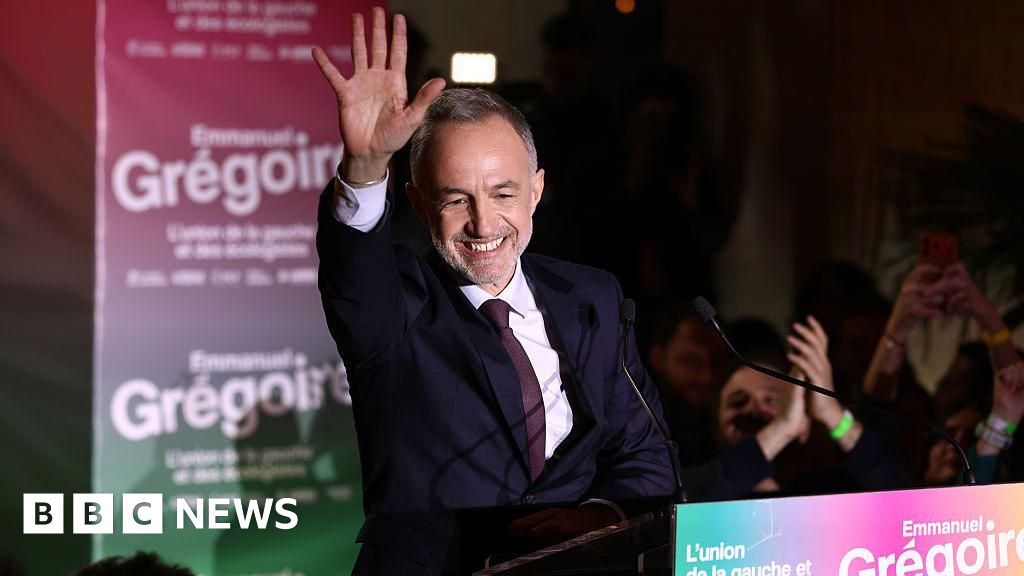
Four major French cities (Paris, Marseille, Lyon, Lille) remained under Socialist control while mainstream parties also won high-profile cities such as Bordeaux and Le Havre; the far-right RN and far-left LFI scored localized victories in Nice, Roubaix and several provincial towns. The outcome reinforces centrist/mainstream resilience ahead of the 2027 presidential cycle but also highlights a growing foothold for extremes in peripheral areas, increasing political uncertainty that may influence investor sentiment heading into the campaign period.
The municipal results reduce near-term policy tail-risk in France: mainstream wins in major cities lower the probability of abrupt, large-scale redistributive measures or disruptive nationalizations, which should compress French credit spreads versus Germany by an estimated 15–30bp over 3–6 months if the centre holds into 2027. The mechanism is simple — lower sovereign/political-risk premia reduces banks’ funding costs and raises asset valuations for domestically-focused large caps (banks, insurers, utilities), while also improving market access for corporates that rely on OAT-based funding.
Second-order, city-level policy stability preserves structural winners and losers. Continued anti-car and low-emission urban policies in Paris/Marseille lock in secular upside for public transport operators, micromobility players and commercial real-estate with ESG premiums, while keeping pressure on auto retailers, parking operators and short-distance car rental margins; expect differential performance between central-LVMH-style retail and suburban auto-dependent SMEs across 6–18 months. Meanwhile RN/LFI advances in provincial towns raise political fragmentation risk: if these translate into national polling strength, we could see episodic flight-to-safety episodes that widen spreads and hit EUR liquidity.
The key catalysts to watch in the next 6–12 months are consolidation of centrist alliances (tightening spreads), polling shifts toward RN/LFI (spike in volatility and sovereign spreads), and any second-round electoral alliances or corruption trials that reshuffle voter alignments. Tail risks remain asymmetric: a presidential run-off with two extreme candidates would likely trigger a >10% EUR drawdown and 25–40% peak-to-trough selloff in French small/mid caps within weeks; conversely, a sustained centrist narrative supports 8–15% upside for France-heavy indices over 12 months.
AI-powered research, real-time alerts, and portfolio analytics for institutional investors.
Request DemoOverall Sentiment
neutral
Sentiment Score
0.00
