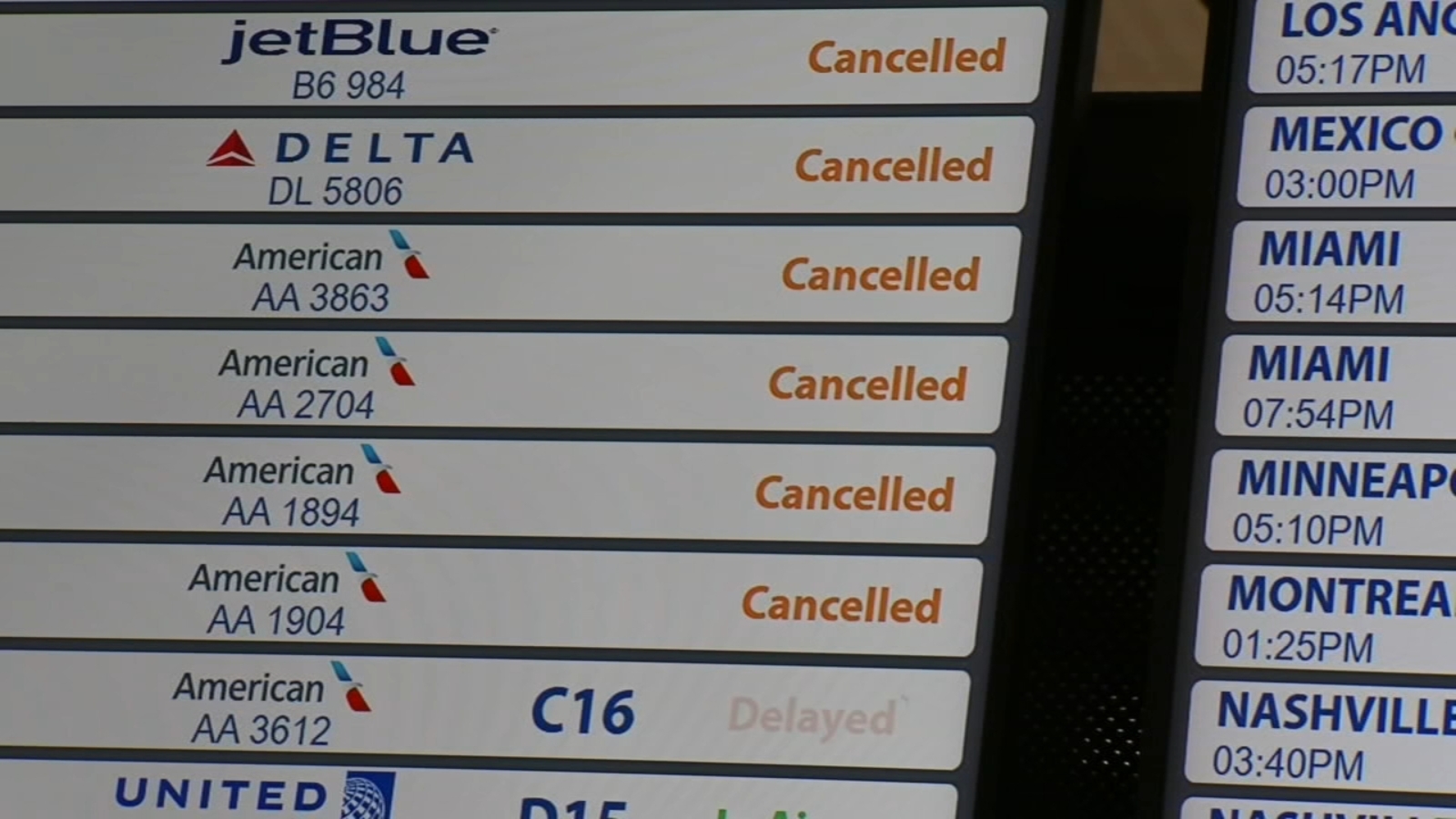
Severe winter weather caused major travel disruption at Raleigh‑Durham (RDU) and nationwide, with more than 70 cancellations at RDU and over 8,000 flights canceled across the U.S.; American Airlines canceled 37% of its flights on Sunday and LaGuardia experienced 85% cancellations. Carriers including American, Delta, JetBlue, Southwest, Spirit and United have waived change fees and federal rules require full refunds for canceled flights, while RDU crews deployed runway treatments and de‑icing resources. The disruptions imply near‑term revenue loss, higher operating and recovery costs, and potential short‑term pressure on airline margins and customer metrics.
Market structure: Weather-driven cancellations (8,000+ nationwide; AA 37% of flights, LGA 85%) create immediate revenue and ancillary-losses for legacy carriers concentrated in hub airports (AAL, UAL). Winners include point‑to‑point low‑cost carriers with simpler recovery (LUV, JBLU) and travel-insurance/OTA channels that capture rebooking fees; ground-service suppliers and de‑icing chemical providers see short spikes in demand. Expect day/week revenue hit of low‑single to mid‑single digits for affected majors, localized capacity reductions, and higher near‑term unit opex from de‑icing and crew re-accommodation.
Risk assessment: Tail risks include regulatory/consumer litigation around refunds (DOT enforcement), multi-day airport closures, or cascading systems failures producing multi-week revenue losses for hub carriers. Immediate (days) risk is cash flow pressure from refunds and rebook costs; short-term (weeks–months) is elevated opex and potential margin compression; long-term (quarters) is reputational churn and possible fare increases if capacity is constrained. Hidden dependency: hub concentration and crew-placement rules magnify operational contagion across networks.
Trade implications: Short-dated option volatility on AAL should rise; consider bearish exposure sized to 1–3% of book via defined‑risk put spreads (4–8 week expiry) rather than naked shorts. Pair trades (short AAL, long LUV) exploit structural resilience of point‑to‑point carriers; size 1–2% each with staggered exits over 1–3 months. Monitor FlightAware cancellation metrics, DOT waiver notices, and airline IV; these are timing catalysts.
Contrarian angles: The market often overprices persistent damage; historical winter-storm shocks (2018–2019) saw airline equities recover in 4–12 weeks as bookings reprice and demand rebounds. If cancellations normalize within two weeks and forward bookings resume, oversold majors could mean‑revert; downside is regulatory fines or prolonged weather patterns that would validate bearish positions.
AI-powered research, real-time alerts, and portfolio analytics for institutional investors.
Request DemoOverall Sentiment
moderately negative
Sentiment Score
-0.35
Ticker Sentiment
