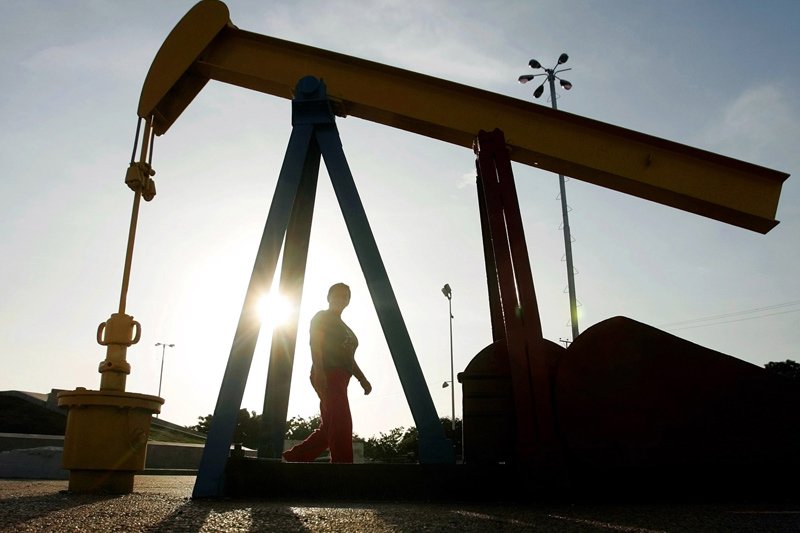
Russian state oil and gas revenues fell 43% year-on-year in March to 617 billion roubles ($7.72B), down from 432.3 billion roubles in February, driven by lower oil prices and a stronger rouble. Oil and gas receipts make up roughly a quarter of Russia's budget, and the country ran a 5.6 trillion rouble (2.6% of GDP) deficit in 2025 amid high military spending, widening fiscal pressure.
Market action is being driven by a classic risk-off rotation: a stronger dollar is compressing dollar-priced commodities and lifting the financing value of FX reserves for commodity exporters, which mechanically reduces reported export receipts in local-currency terms and forces budget arithmetic changes. For commodity-producing governments with large budgetary military draws, the immediate response is predictable — fiscal adjustments that show up as deferred capex, higher export duty tinkering, or accelerated sales at discounts to raise cash quickly; each has distinct market implications for supplies and near-term price formation.
Second-order supply effects matter: if producers with constrained fiscal space opt to sell more crude at discounts into world markets to shore up cash, global crude balances can shift from tight to surplus in 3–6 months, pressuring Brent/WTI and rewarding long-duration downside exposure in oil. Conversely, if policymakers choose capital controls or cut export flows to stabilize FX receipts, the opposite — a sudden tightening and commodity rally — is a credible tail outcome.
Cross-asset mechanics amplify the move: a stronger dollar increases real debt servicing for EM sovereigns, raising sovereign default / liquidity risk and making EM assets acutely sensitive to geopolitical headlines. That magnifies volatility in both sovereign credit and related commodity curves, creating opportunities for asymmetric option structures across FX, energy, and EM equity baskets.
Time horizons: expect FX-driven safe-haven moves to dominate days–weeks; fiscal-induced supply shifts to play out over 1–6 months; and structural fiscal sustainability consequences (higher taxation, capex reallocation) to unfold over years. Key catalysts to watch: coordinated export policy changes from large producers, central-bank FX interventions, and any rapid escalation that flips safe-haven flows back into commodities.
AI-powered research, real-time alerts, and portfolio analytics for institutional investors.
Request DemoOverall Sentiment
strongly negative
Sentiment Score
-0.60
