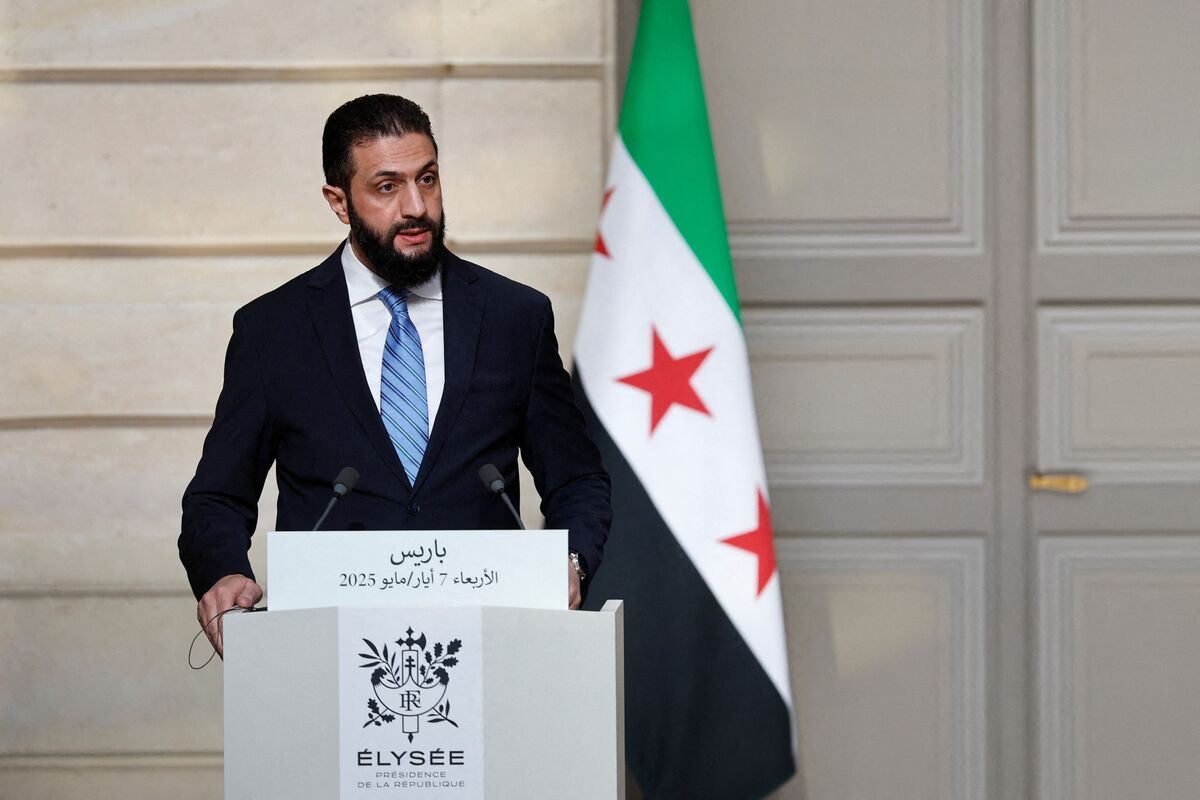
President Trump urged Israel to maintain dialogue with Syria after a deadly military operation on the border deepened tensions, praising Syria's new president Ahmed Al-Sharaa and calling for a prosperous bilateral relationship. The comment signals a U.S. preference for de‑escalation; it is a geopolitical development worth monitoring for regional risk exposure (notably energy and defense sectors) but is unlikely to drive significant immediate market moves.
Market structure: Short-term winners are defense primes (LMT, NOC, RTX) and niche EM/Israel exposures (EIS, private security contractors) as risk premia and near-term procurement budgets tilt toward readiness; losers are cyclical tourism/airlines in the region and marginal oil producers if sanctions or transport disruptions widen. Competitive dynamics favor large defense contractors with integrated supply chains (Lockheed, Northrop) improving pricing power for near-term orders; smaller suppliers face margin squeeze and delivery risks. Cross-asset: expect a modest flight-to-safety — US 10y yields down 10–25bp, USD and gold tick up 1–2%, VIX +20–40% intraday; Brent could move ±$3–7/bbl on headlines but structural supply unchanged absent escalation.
Risk assessment: Tail risks include a regional escalation that disrupts Mediterranean shipping or Syrian oil (+$15–$25/bbl shock) and a US policy shift leading to sanctions or expanded aid that materially changes defense capex; such events would knock EM equities -5% to -15% and spike volatility for 2–8 weeks. Time horizons: immediate (0–7 days) = headline-driven volatility; short (1–3 months) = order flow into defense and havens; long (3–18 months) = normalization/détente could reverse defense rerating and lift Israeli domestic cyclicals. Hidden dependencies: US domestic politics (administration posture), Russian/Iranian involvement, and defense supply-chain lead times (3–12 months) that determine revenue recognition. Catalysts: major incident, US congressional aid votes, election outcomes, or energy-transport disruptions will accelerate moves.
Trade implications: Tactical (0–3 months) — establish 1–2% portfolio longs in LMT and NOC (split) for upside from elevated order flow; hedge with 1–2% VIX call exposure (30–60 days) to protect tail risk. Relative plays — pair long EIS (2%) vs short RTX (1%) over 3–12 months assuming potential regional normalization benefits Israel’s domestic recovery while primes’ defense premium mean-reverts. Fixed income — add 2–3% TLT on dips if 10y < 3.7% as volatility hedge. Options — buy 3-month LMT 5% OTM call spreads (debit, size 0.5–1% notional) to limit capital at risk while capturing >20% upside scenarios.
Contrarian angles: Consensus will overweight defense; that may be underdone if Trump-style encouragement toward talks leads to détente — Israeli equities (EIS) and regional travel/tourism cyclicals could re-rate +10–20% over 6–12 months while defense order visibility drops. Historical parallels: episodic Middle East skirmishes (2012–2014) produced short-lived defense spikes and longer dampened premium; use thresholds (Brent > $95, VIX >25, or 10y yield <3.2%) as triggers to flip bias. Unintended consequence: over-hedging into defense now risks being caught in a peace-driven multiple expansion of non-defense sectors; keep position sizes small (1–3%) and use explicit stop-losses (8–12%).
AI-powered research, real-time alerts, and portfolio analytics for institutional investors.
Request DemoOverall Sentiment
neutral
Sentiment Score
0.00
