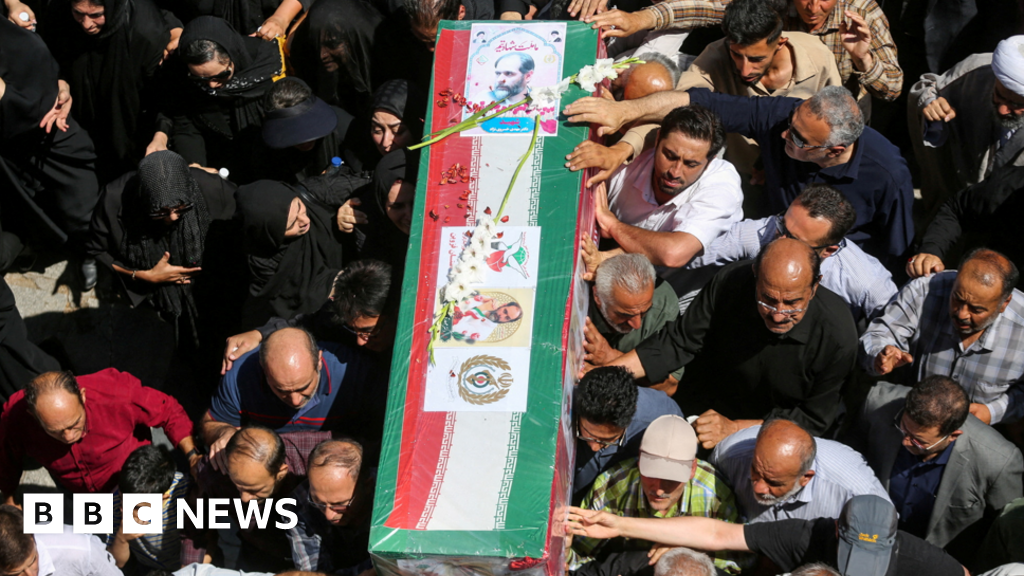
Iran held a state funeral for military commanders and nuclear scientists killed in a recent 12-day conflict with Israel, which involved US bombing of key Iranian nuclear sites. This event coincides with former President Trump's threat of further strikes if Iran enriches uranium to concerning levels, claiming he halted sanctions relief efforts due to Iranian rhetoric, while Iran's Foreign Minister acknowledged "excessive" damage to nuclear sites. The IAEA, however, notes the full extent of damage to Iran's nuclear capabilities remains unknown, asserting that military action alone cannot definitively resolve the issue, underscoring the need for a diplomatic agreement.
The recent 12-day conflict between Iran and Israel has materially escalated regional geopolitical risk, marked by direct US military intervention targeting Iran's nuclear infrastructure and the killing of high-ranking officials, including Armed Forces Chief of Staff Mohammad Bagheri and IRGC commander Hossein Salami. While a ceasefire is in place, the situation remains highly volatile, underscored by former President Trump's threats of further military action and his claim to have halted potential sanctions relief. A critical uncertainty for markets stems from the unknown state of Iran's nuclear program; while Iran's Foreign Minister acknowledged "excessive and serious" damage, the International Atomic Energy Agency (IAEA) stated it cannot confirm the extent of capabilities destroyed or moved. This information vacuum, coupled with the IAEA's assessment that a military solution is not definitive, suggests that the potential for miscalculation and renewed conflict is high, creating a precarious outlook for regional stability and global energy markets.
AI-powered research, real-time alerts, and portfolio analytics for institutional investors.
Overall Sentiment
strongly negative
Sentiment Score
-0.80
