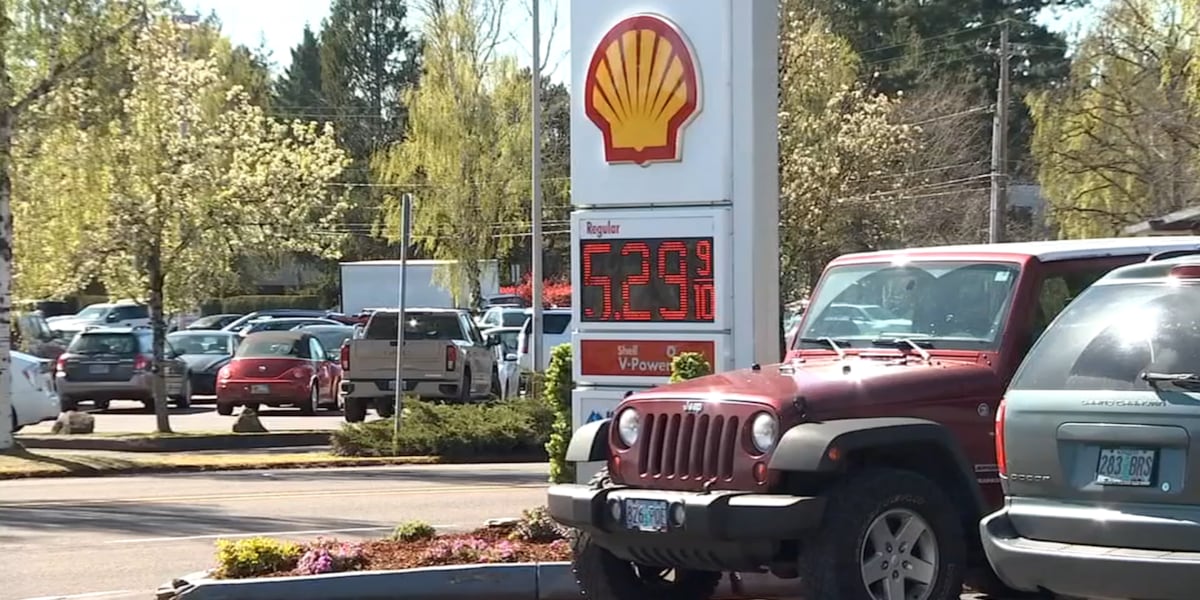
Average gasoline in Oregon is $4.87/gal with stations charging $5.04–$5.60/gal; rideshare drivers report fuel costs rising roughly $10–$15 more per day and are altering behavior (turning off engines, declining long pickups). Uber and Lyft have not implemented gas surcharges, leaving margin pressure on drivers. AAA flags further upside risk to pump prices due to the war in Iran and notes Oregon's prior peak average of $5.55/gal in 2022.
A persistent, externally-driven rise in fuel cost functions as a per-trip tax on gig drivers and creates a supply shock on the margin: drivers rationally reduce deadhead miles, decline short trips, and shorten shift lengths. That mechanically reduces available capacity during normal and peak windows, raising wait times and effective fares for longer rides while selectively starving short-haul liquidity — a two-tier collapse in service density that is not linear with headline ride volumes.
Platforms will face a squeeze from both sides: higher variable driver costs push them toward either raising driver incentives (increasing COA) or allowing higher rider fares (hitting demand elasticity). Uber’s more diversified mix (delivery, freight, ad revenue) gives it optionality to absorb margin pressure; pure-ride plays are far more exposed to a sustained fuel-driven supply contraction and have less structural leverage.
Key catalysts and timeframes are clear and actionable: in days-to-weeks we should watch platform incentive adjustments and any announced “fuel surcharge” mechanics that transfer cost to riders; in 1–6 months monitor energy-market drivers (geopolitical headlines, refinery throughput) that re-price fuel expectations; in 1–3 years, accelerated EV adoption of the driver fleet and used-EV price compression are the structural reversals that materially reduce operating cost risk for the platforms.
This dynamics set up asymmetric trades: short-duration negative exposure to pure-ride operators and a directional hedge into energy. The path to profit is binary — policy/product moves by platforms (surcharges, targeted incentives) or a meaningful energy price retracement will both materially change P&L assumptions within a quarter, so position sizing and defined-risk option structures are preferred.
AI-powered research, real-time alerts, and portfolio analytics for institutional investors.
Request DemoOverall Sentiment
mildly negative
Sentiment Score
-0.30
Ticker Sentiment
