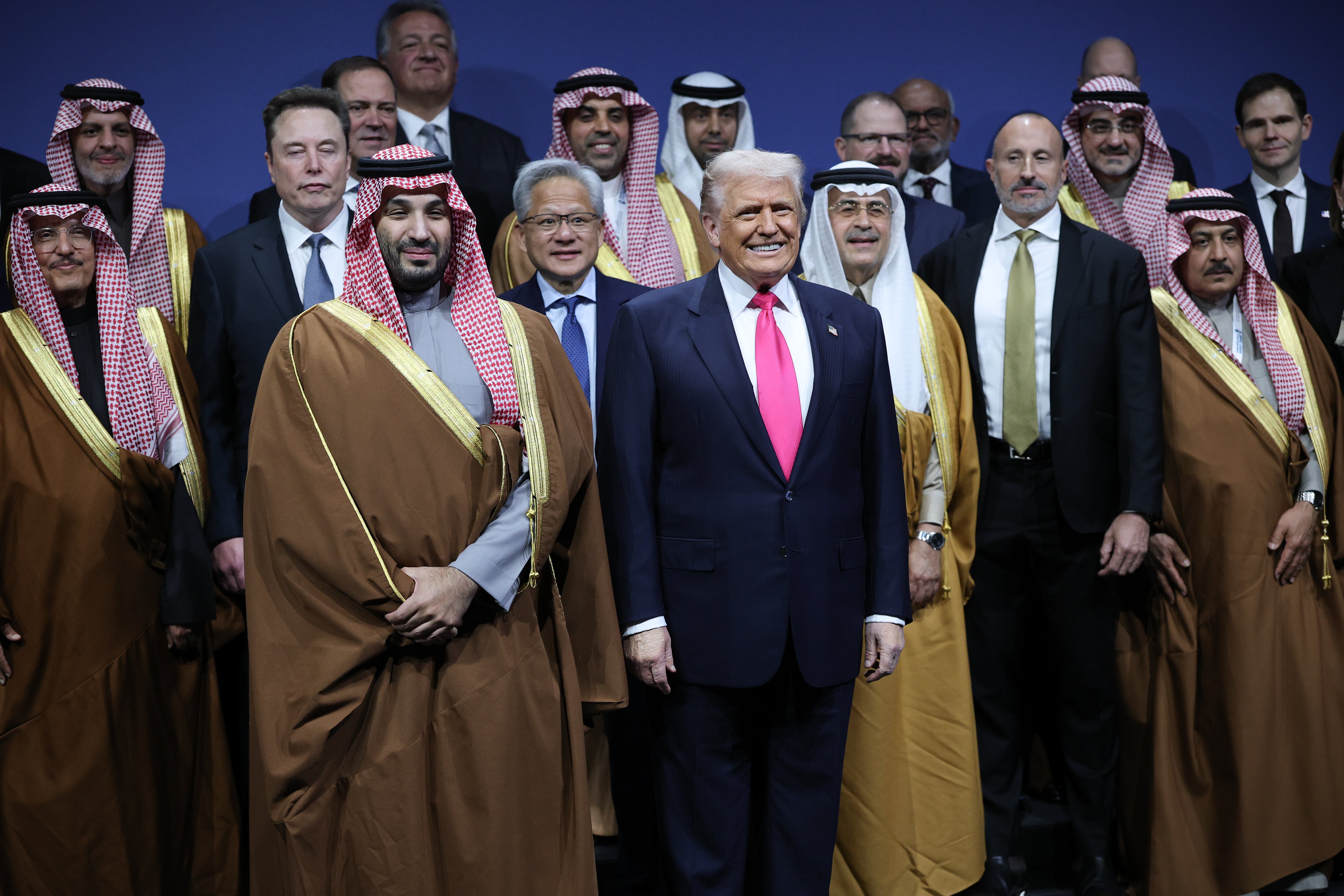
Trump paused Project Freedom after Saudi Arabia reportedly denied U.S. access to Prince Sultan Airbase and Saudi airspace, forcing a reversal just 48 hours after the operation was announced. The dispute underscores how regional military cooperation is critical to securing shipping through the Strait of Hormuz, a key route for global oil and commodity flows. While the move is diplomatic rather than economic, it raises near-term geopolitical risk and potential volatility in energy and freight markets.
This is less a headline about Gulf security and more a reminder that any “strait security” premium is now hostage to coalition management, not just force projection. The market should treat the near-term path as higher volatility in freight, tanker insurance, and prompt crude differentials rather than a clean, sustained risk-on/risk-off move in broad equities. The second-order effect is that Gulf states will demand pre-clearance on any future US move, which raises the odds of delayed execution and operational friction in any escalation scenario.
The biggest beneficiary is not energy outright, but optionality around supply-chain disruption: VLCC rates, marine insurers, and firms with real-time inventory exposure can reprice quickly if vessels start rerouting or waiting. The obvious loser is any part of the market assuming the US can unilaterally secure maritime lanes at low political cost; that assumption now has a discount factor. For energy, the signal is that the risk premium can spike on headlines, but without a durable closure of Hormuz the move is likely to mean-revert faster than in a true supply shock.
The contrarian read is that this may actually lower the probability of immediate kinetic escalation, because the political constraint on US action is now visible. If diplomacy remains the chosen path, implied volatility in oil may be overpriced versus realized volatility over the next 2-6 weeks. That creates a setup where headline-driven bid/offer dislocations are tradable, but outright long-crude exposure should be smaller and shorter-dated than usual unless there is confirmed physical disruption.
The most important catalyst is whether Saudi coordination problems spill into broader base-access restrictions or airspace denials across other Gulf partners; that would move this from a one-off embarrassment into a structural degradation of US response time over the next 1-3 months.
AI-powered research, real-time alerts, and portfolio analytics for institutional investors.
Request DemoOverall Sentiment
mildly negative
Sentiment Score
-0.15
