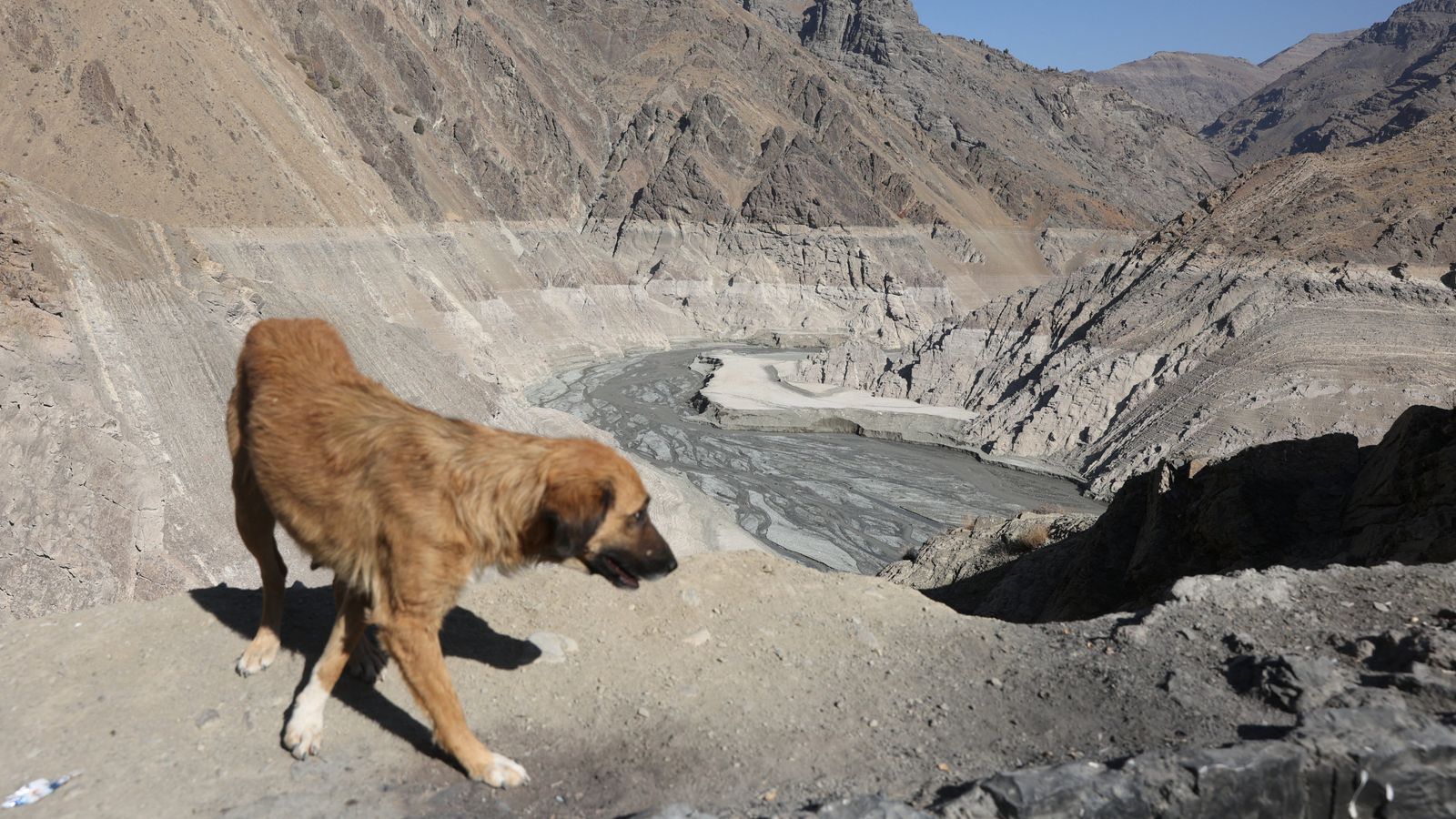
Tehran faces an acute urban water crisis with reservoirs that supply the city's 15 million residents nearly empty and the Karaj dam at just 8% capacity; water rationing and overnight flow stoppages have begun and officials warn parts of the city may need evacuation. Rainfall from September–November was 89% below the long-term average, five years of drought plus rising temperatures and decades of mismanagement have driven heavy reliance on aquifers (supplying 30–60% of tap water) that are being depleted by ~101 million cubic metres per year, while metropolitan population roughly doubled (4.9m in 1979 to 9.7m) and consumption quadrupled (346m m3 in 1976 to 1.2bn m3 now). The situation raises sovereign and regional risk considerations for utilities, agriculture and infrastructure spending, and could prompt policy intervention or capital reallocation in water-intensive sectors.
Market structure: Acute urban water stress in Tehran (Karaj dam ~8% full; aquifer drawdown ~101M m3/yr) benefits suppliers of water infrastructure, leak detection, desalination and industrial water treatment while pressuring local agriculture, real-estate and EM sovereign credit in Iran and similar arid metros. Expect pricing power for capex-oriented names (meters, pumps, membranes) to rise over 12–36 months; municipal and industrial demand will shift from commodity water to technology and service contracts.
Risk assessment: Tail risks include rapid social unrest or forced evacuation in Tehran (10–30% conditional probability if next two seasons remain <50% rainfall) that could create regional supply shocks affecting oil (upside $5–10/bbl) and EM spreads; regulatory nationalization of water assets is low-probability but high-impact for private operators in-region. Immediate (days) — sentiment and EM credit widening; short-term (weeks–months) — capex reallocation; long-term (years) — structural re-rating of water-tech firms and commodity inflation for food.
Trade implications: Prefer long exposure to global water infrastructure and treatment (XYL, AWK, VEOEY) and inflation-protected/commodity exposure (TIP, WEAT) while trimming EM sovereign duration (reduce EMB exposure by 25–50%). Use 6–12 month call spreads on XYL/AWK to capture rerating and buy 3–6 month put spreads on EMB to hedge EM risk; size initial positions 1–3% NAV per idea and scale on rainfall data surprises.
Contrarian perspective: Consensus fixes on desalination and capex; overlooked are rapid low-cost efficiency plays (smart metering, leak detection SaaS) that scale fast and command higher margins. Pricing overreaction in UK/US regulated utilities is unlikely — those stocks are likely under-owned by water-tech winners; consider pairing long niche water-tech vs short broad EM cyclical exposure for asymmetric risk-reward.
AI-powered research, real-time alerts, and portfolio analytics for institutional investors.
Request DemoOverall Sentiment
strongly negative
Sentiment Score
-0.60
