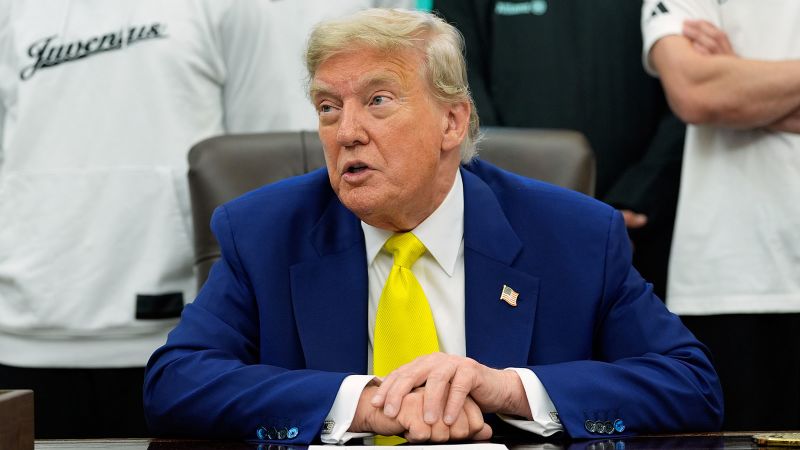
President Trump is weighing potential US military involvement in Iran following Israeli strikes on Iranian nuclear facilities, with discussions focused on limiting the scope and avoiding a full-scale war. While receptive to arguments about the need for US intervention to curb Iran's nuclear ambitions, Trump is wary of prolonged conflict and is considering options ranging from limited strikes to non-offensive support for Israel. Allies are urging caution, citing the risk of Iranian retaliation, including potential disruption to global oil flows, while Trump administration officials have pointed to the Soleimani strike as a model for de-escalation.
The current geopolitical climate is marked by significant uncertainty as President Trump deliberates potential US military involvement in Iran, subsequent to Israeli strikes on Iranian nuclear facilities. The administration is navigating a complex scenario, seeking to potentially neutralize Iran's nuclear capabilities—a goal emphasized by Trump's statement, "I only want one thing: Iran cannot have a nuclear weapon"—while concurrently attempting to avoid a full-scale, prolonged conflict, a stance reflective of his previous commitments. Discussions among top officials are exploring limited strike options, with figures like former ambassador David Friedman suggesting targeted actions such as using MOABs on facilities like Fordow, drawing parallels to the 2020 Soleimani strike as a model for contained escalation. However, this approach is countered by warnings from experts like Trita Parsi, who anticipate that any US attack could trigger a full-scale war. US allies are reportedly urging caution, highlighting severe potential repercussions including Iranian retaliation, a possible blockade of the Strait of Hormuz which would disrupt global oil flows, and an acceleration of Iran's nuclear program. The situation is fluid, with Trump stating, "I like to make the final decision one second before it’s due," underscoring the prevailing ambiguity. This geopolitical tension is reflected in a strongly negative sentiment score of -0.75 and a high market impact score of 0.85, indicating substantial downside risk and potential for market volatility. US military leaders, such as Gen. Michael Kurilla, are reportedly advocating for increased resources to support Israel and prepare for contingencies, aligning with the identified theme of "Infrastructure & Defense."
AI-powered research, real-time alerts, and portfolio analytics for institutional investors.
Request DemoOverall Sentiment
strongly negative
Sentiment Score
-0.75
