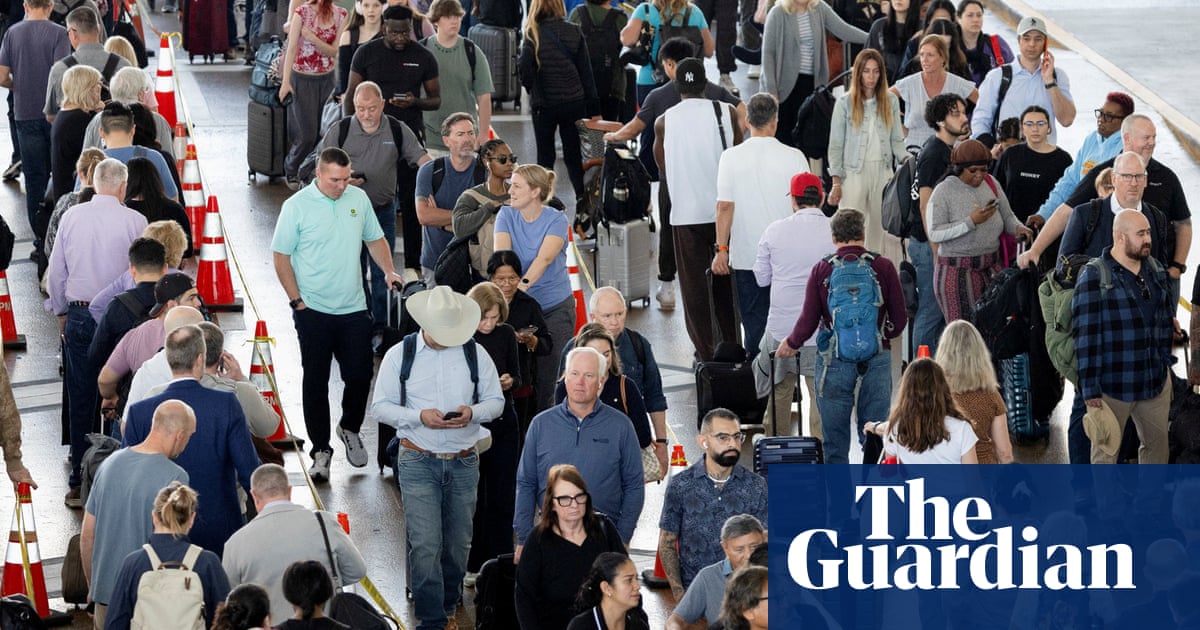
TSA reports 'highest wait times in TSA history' as staff absences surge amid the partial DHS shutdown now in its sixth week, with workers missing roughly $1bn in pay. New TSA officers require 4–6 months of training, so hires will not be ready before the 2026 World Cup in under 80 days, creating a significant operational risk of severe delays for millions of passengers and pressure on airlines, airports, and travel-related services.
The immediate consequence is an operational squeeze: staffing-driven delays amplify crew and block-time inefficiencies, which flow straight through to unit costs and on-time completion factors. In a scenario where cancellations/delays tick modestly higher (low-single-digit %), hub-centric carriers can see a 1–3 percentage-point erosion in quarterly operating margins driven by extra crew overnighting, recovery flights and passenger reaccommodation costs. Ancillary revenue (bags, seat assignments) is also at risk because long queues depress impulse spend and force airlines to absorb more compensation costs.
Second-order winners are vendors that can be deployed fast or replace labor with tech: firms supplying expedited screening kits, checkpoint automation and short-cycle government contractors stand to capture emergency procurement dollars on a 30–90 day clock. Ground-transport and last-mile providers can capture displaced passenger flows (higher per-trip take rates and surge pricing), while large integrated carriers with diversified route networks are better positioned to reallocate capacity and recapture yield versus smaller, hub-dependent peers. Freight is a subtle channel — passenger-belly capacity changes will tighten airfreight capacity on certain lanes, supporting short-term premium pricing for urgent shipments.
Catalysts and time horizons are layered: near-term outcomes hinge on political/appropriations moves and emergency deployments (days–weeks), operational mitigations (schedule trimming, interline support) play out over weeks, and structural fixes (recruitment + training or automation) operate on a multi-month horizon. Tail risks include a high-visibility safety incident or class-action litigation that could force protracted operational constraints and regulatory scrutiny. Conversely, a quick emergency staffing supplement or temporary contracting authority would materially compress the downside in days.
The consensus is skewed toward headline panic; some of the pain is manageable by commercial levers (yield management, schedule simplification, temporary service cuts) and creates tradeable dispersion. That makes short-dated volatility and targeted longs in technology/contractor names preferred ways to capture upside from emergency responses while keeping directional exposure to airlines conservative and hedged.
AI-powered research, real-time alerts, and portfolio analytics for institutional investors.
Request DemoOverall Sentiment
strongly negative
Sentiment Score
-0.60
