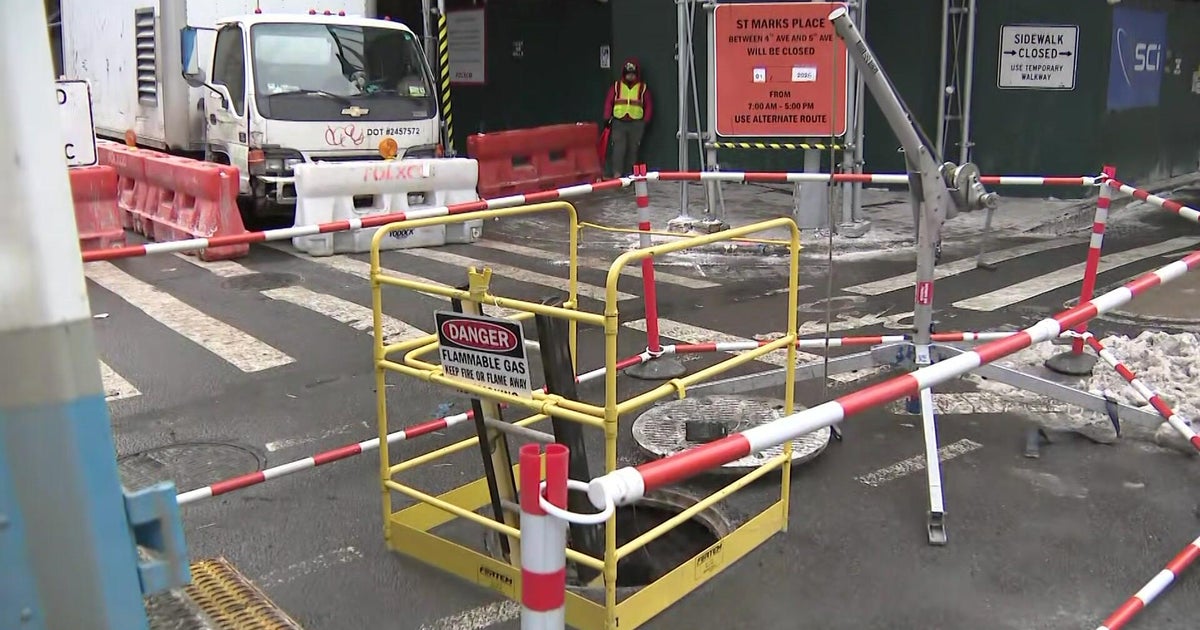
Con Edison customers in Park Slope have been without power for four days after manhole fires on Saturday, which the utility attributes to melting snow and road salt corroding underground cables; Con Ed expects restoration for affected Park Slope customers by Tuesday afternoon with repair work concentrated between St. Mark's Place and Dean Street from Third to Fifth Avenues. The prolonged outage creates localized operational and reputational risks for the utility, potential short-term business interruption in the neighborhood, and highlights infrastructure resilience issues that could lead to incremental repair and maintenance costs.
Winners are firms that supply undergrounding, cable replacement and emergency grid services (e.g., PWR - Quanta Services) and battery/storage OEMs (AES, TSLA) because localized corrosion from salt implies recurring remediation capex in the low hundreds of millions across NYC over 12–36 months. Losers in the short term are the regulated utility (Consolidated Edison, ED) and local small-business operators that face outage losses; political and PR risk can depress ED equity by 5–15% if public scrutiny forces slower cost recovery within 3–6 months.
Competitive dynamics favor specialist contractors and vertically integrated installers versus incumbent utilities: if regulators accelerate undergrounding, utilities outsource execution (increasing PWR-like firms’ revenue share by an estimated 5–10% of their US grid-services backlog over 12 months). Supply/demand for cable, splice gear and emergency crews will tighten seasonally (next 3–9 months) pushing project pricing/margins up by several hundred basis points for small-cap installers; commodity copper exposure is minor but ordering lead times will rise.
Cross-asset: expect modest widening of utility and NYC muni spreads (20–50bp) if rate-case uncertainty increases; options vol for ED and mid-cap contractors should spike near regulatory announcements (target windows 30–90 days). Tail risks include a high-profile regulatory disallowance or large fine (> $100M) within 90 days, or an accelerated policy shift to distributed energy resources (DERs) over 12–36 months that re-rates both utilities and DER suppliers.
Catalysts to watch: NYC PSC statements and ConEd filings in next 30–60 days, PWR contract awards and Prysmian/Nexans order books in next 90 days, and any municipal bond rating guidance within 60–120 days. These will determine whether this is a short-lived operational headache or the start of a multi-year resilience capex cycle.
AI-powered research, real-time alerts, and portfolio analytics for institutional investors.
Request DemoOverall Sentiment
mildly negative
Sentiment Score
-0.30
