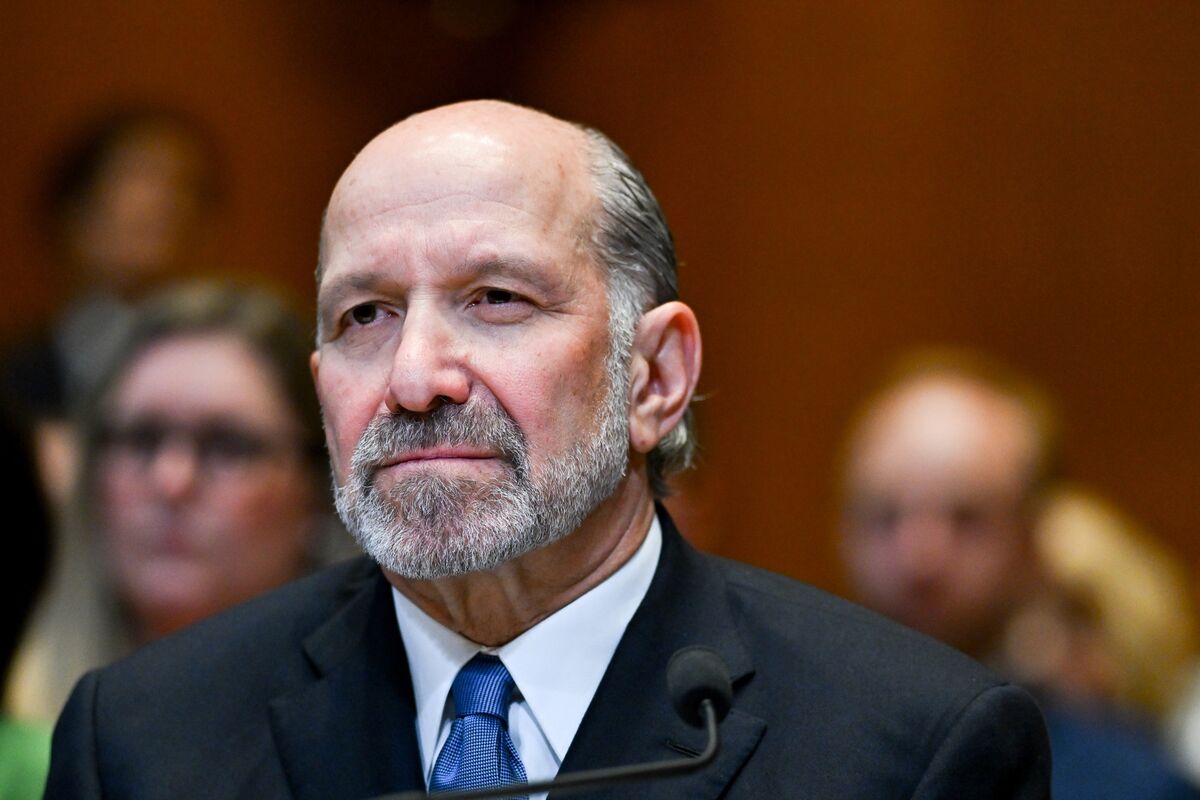
Commerce Secretary Howard Lutnick will testify before a US House panel investigating Jeffrey Epstein, making him the first sitting cabinet member to appear in the probe. The article highlights his past ties to Epstein, including a 2012 visit to Epstein’s Caribbean island disclosed in Justice Department documents. The news is primarily political and reputational, with limited direct market impact.
This is less a direct market event than a governance overhang that can leak into adjacent decision-making channels. The immediate market impact is likely concentrated in discretionary media cycle risk, but the second-order effect is that any cabinet official with active exposure to investigations becomes less able to spend political capital on contentious regulatory or enforcement priorities, especially where agency credibility matters more than policy detail. The bigger implication is for the governance premium across politically sensitive sectors: defense contractors, banks, telecoms, and federally regulated industries can all see short-lived multiple compression when Washington is distracted by ethics headlines and document disclosures. That usually shows up first in event-driven vol rather than fundamentals, with small-cap and equal-weight baskets more vulnerable than mega-caps because they lack balance-sheet and liquidity insulation. Catalyst risk is asymmetric over the next 1-3 weeks: additional document releases, committee follow-up, or commentary from the White House could extend the news cycle and keep the issue alive. Over a 3-6 month horizon, the real question is whether this becomes a broader personnel or ethics issue for the administration; if not, the tape should mean-revert quickly because the underlying macro transmitters are weak. The contrarian view is that the market may be overestimating policy impact and underestimating exhaustion risk. In a crowded news environment, scandals without budget or legislative consequences often generate a brief volatility spike, then fade; the better trade is usually to sell the headline premium rather than express a strong macro view.
AI-powered research, real-time alerts, and portfolio analytics for institutional investors.
Request DemoOverall Sentiment
mildly negative
Sentiment Score
-0.20
