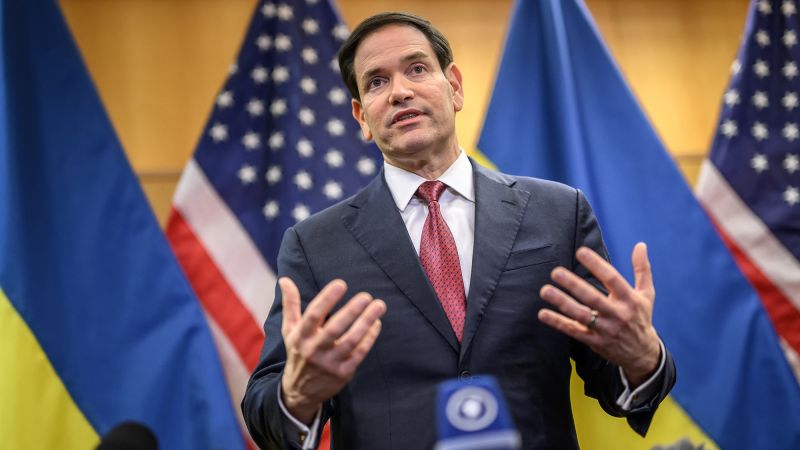
US administration officials cast negotiations with Russia over Ukraine as near resolution, but a senior Ukrainian source says major gaps remain on at least three deal-breakers: surrendering annexed Donbas territory (including a proposed Russian-administered demilitarized zone), limiting Ukraine's military to the 600,000 figure in the leaked 28-point US plan (Kyiv seeks a higher cap), and permanently renouncing NATO membership (rejected by Kyiv). The dispute underscores continued political and security risk: concessions would meet Kremlin conditions to end the war but would be politically perilous for Ukrainian leaders, leaving the outcome—and market-relevant implications for regional stability—highly uncertain.
Market structure: A credible near-term peace narrative compresses tail-risk premia — losers: large defense primes (LMT, RTX, NOC, GD, ITA ETF) and energy/commodity exporters (Brent, TTF gas, wheat/WEAT) as flows to safe-haven oil/gas and defense risk premia unwind; winners: European cyclicals, airlines (UAL, AAL), and importers that benefit from lower energy costs. Pricing power shifts away from commodity/defense suppliers toward industrials and consumer sectors in Europe; if onshore Russian exports normalize, expect Brent to move down $5–$15/bbl and European gas TTF volatility to fall >30% over 1–3 months.
Risk assessment: Tail risks include deal collapse or partial deal that triggers renewed sanctions or a spike in hostilities; probability-weighted scenario: 25% chance of breakdown in 90 days causing >20% jump in defense equities and >$10/bbl oil move. Hidden dependencies: NATO and EU domestic ratification, US Congressional buy-in, and Ukrainian political stability — any veto can reverse markets quickly. Catalysts to watch: official signing, NATO communiqués, EU/US legislative votes in next 30–90 days.
Trade implications: Tactical plays: (1) size 1–3% portfolio 3-month put purchases on LMT (10% OTM) and ITA to hedge defense exposure if deal confirmed; (2) establish 2–3% long in VGK or IEV (European equities) and add 1–2% long in UAL/AAL if Brent drops >5% within 30 days; (3) buy 3–6 month put spread on Brent (sell 1 higher strike, buy 1 lower) to monetize lower oil skew. Use stop-losses of 12–18% and reduce positions by 50% on confirmed treaty within 14 days.
Contrarian view: Consensus underprices longer-term secular rearmament and supply-chain rebuilding: even with a ceasefire, baseline defense budgets across NATO could stay +20–30% vs pre-2022 levels over 3–5 years, creating an attractive dip-buy opportunity in LMT and NOC after a 15–25% dislocation. Also, a superficially optimistic headline can be reversed quickly; option hedges are cheap now and buying them offers asymmetric payoff. Monitor wheat (WEAT) and European gas for early signs of deal failure as high-conviction reversal signals.
AI-powered research, real-time alerts, and portfolio analytics for institutional investors.
Request DemoOverall Sentiment
moderately negative
Sentiment Score
-0.45
