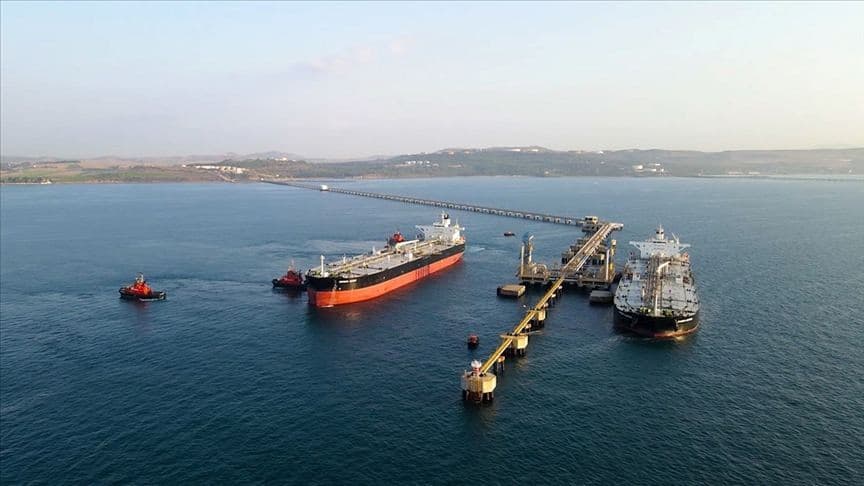
Brent crude jumped 2.99% to $101.40/bbl and WTI rose 3.18% to $92.52/bbl after Iran's IRGC seized two commercial vessels in the Strait of Hormuz and fired on a third. Standard Chartered said Brent around $95/bbl reflects an uneasy balance between de-escalation hopes and tightening physical supply, with the curve in strong backwardation and front-month pricing repeatedly clustering near that level. The article also notes that gas markets remain comparatively subdued, with Henry Hub at $2.85/MMBtu and European gas around €43/MWh despite ongoing Middle East disruption.
The market is pricing a new regime where the marginal barrel is no longer set by supply alone but by route security. That matters because the Strait of Hormuz is not just a pricing headline; it is a choke point that forces buyers to pay up for optionality, inventory, and freight, which mechanically supports backwardation and boosts prompt benchmarks relative to deferred contracts. The biggest second-order winner is not just upstream producers but any business with flexible logistics, excess storage, or non-Middle East feedstock access.
The more important signal is that the physical market is now leading the paper market. Tight prompt differentials and a flattening dislocation between dated and futures prices suggest refiners and merchants are already paying for immediate reliability, which tends to widen crack spreads for complex refiners that can source advantaged barrels while punishing those dependent on Gulf supply. If this persists for weeks rather than days, expect tanker rates, marine insurance, and storage economics to reprice materially before outright crude makes its next major leg.
The contrarian risk is that the current move may be more about path dependence than durable scarcity: once shipping firms reroute, inventories rebuild, or diplomacy reduces blockade risk, a large part of the geopolitical premium can unwind quickly. But the floor is probably higher than consensus assumes because this episode reinforces strategic stockpiling behavior and encourages commercial hoarding, which creates self-fulfilling tightness even if flows normalize. That makes the asymmetry better in deferred structures than in naked outright longs.
A broader underappreciated effect is that gas has not reacted with the same intensity, which could shift relative-value flows toward oil-linked exposure and away from broad commodity baskets. If Middle East gas remains better supplied than oil, integrated energy names with strong liquids exposure should outperform gas-heavy equities, while Europe remains vulnerable to summer storage competition and freight-sensitive LNG basis spikes.
AI-powered research, real-time alerts, and portfolio analytics for institutional investors.
Request TrialOverall Sentiment
mildly positive
Sentiment Score
0.15
