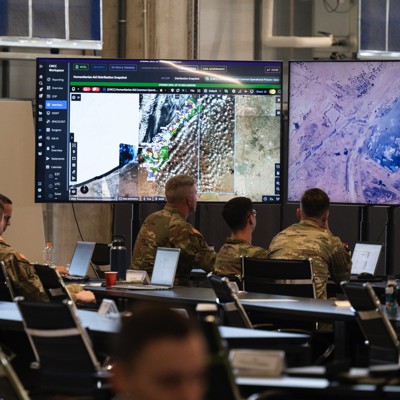
Pentagon's rapid deployment of commercial LLMs risks degrading commanders' ability to distinguish fact from fiction as research shows LLM use can homogenize thinking, reduce scrutiny, and produce 'cognitive surrender.' Anthropic has been designated a supply-chain risk and was reportedly used to help plan a Jan. 3 raid into Venezuela; the Pentagon is working to replace its tools but they remain in use. There is little evidence of systematic training, monitoring, or governance, creating operational and procurement risks for defense planners and frontier AI firms.
The market will bifurcate between commercial, consumer-facing AI and a smaller ecosystem of “assured AI” — vetted stacks, on‑prem hardware, explainability tools and human‑in‑the‑loop workflows. That bifurcation creates durable pull-through for defense primes, systems integrators and cloud vendors offering sovereign options; expect procurement cycles to lengthen but average contract size and implementation services revenue to rise, lifting margin profiles for incumbents over 6–24 months.
A second‑order supply shock will hit specialized silicon and server OEMs: classified and contested workloads cannot be hosted on ephemeral multi‑tenant models, so demand will shift toward certified GPUs, ruggedized servers and air‑gapped deployments. NVIDIA and enterprise hardware partners should see a multi‑year TAM expansion, but upside will be lumpy (RFP cadence) and highly correlated with geopolitical events — a single incident can accelerate multi‑quarter procurement waves.
Near term (weeks–months) the primary risks are governance shocks — bans, audits or procurement freezes that create scramble dynamics and short‑term volatility. Over 6–24 months, watch budget reallocation: more dollars to assurance, monitoring, and human‑centric training rather than raw model licensing, which favors consulting and cybersecurity vendors. Contrarian angle: the street underprices the services and monitoring layer; the winners won’t be the flashily valued model creators but the firms that operationalize, certify and audit AI in mission contexts.
AI-powered research, real-time alerts, and portfolio analytics for institutional investors.
Overall Sentiment
mildly negative
Sentiment Score
-0.30
