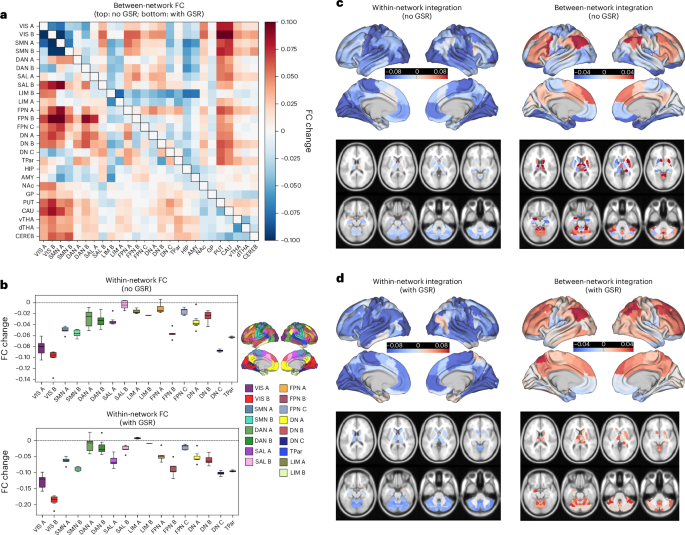
Mega-analysis of 11 rsfMRI datasets (267 participants, >500 scans) identifies a reproducible cross-drug fingerprint: increased functional connectivity between transmodal association networks (default, frontoparietal) and unimodal sensorimotor/visual networks, and intensified striatal (putamen, caudate)–cortical coupling; Bayesian hierarchical modeling finds only selective, weak-to-moderate within-network reductions. Results are robust for psilocybin and LSD but show greater uncertainty for DMT and ayahuasca; methodological heterogeneity (scanner, denoising, GSR) and small samples limit drug-specific conclusions, prompting recommendations for standardized, prospective multisite trials to advance therapeutic development.
This harmonized neuroimaging synthesis materially lowers a key technical hurdle for psychedelics: heterogeneity of mechanism evidence. That implies a near-term lift to investor appetite for companies that can credibly claim objective, reproducible biomarkers (imaging, PET, or connectivity readouts) because regulators and big-pharma partners are more willing to underwrite costly Phase II/III programs when mechanistic assays exist. Expect non-linear funding flows into firms that pair a drug candidate with an established imaging endpoint; conversely, pure-play formulation or distribution plays without biomarker hooks will face wider bid–ask spreads and higher de-risking costs.
Second-order beneficiaries include CROs and imaging-platform vendors (scanners, tracers, analysis pipelines) that can offer standardized, regulator‑grade endpoints — they can command premium pricing and faster onboarding cycles. The report’s sensitivity to preprocessing choices (GSR, motion) is a reminder that reproducibility — not just a positive headline — will drive durable partnerships; firms that invest in standardized data packages will outcompete peers in licensing and co-development auctions. Clinically, the probabilistic rather than categorical signal favors adaptive, biomarker‑enriched trial designs; sponsors who pivot to these designs shorten time-to-proof and lower Phase III burn.
Key risks: small-sample idiosyncrasies, dependence on imaging-denoising assumptions, and regulatory skepticism about rsfMRI as a surrogate endpoint. Any high‑visibility trial failure or adverse‑event signal could erase multiple quarters of speculative premium in small-cap issuers. Time horizons: market sentiment can move within weeks of consortium press and conference highlights, but durable value accrues over 6–24 months as partners and registrational trials are announced.
AI-powered research, real-time alerts, and portfolio analytics for institutional investors.
Request DemoOverall Sentiment
mildly positive
Sentiment Score
0.20
Ticker Sentiment
