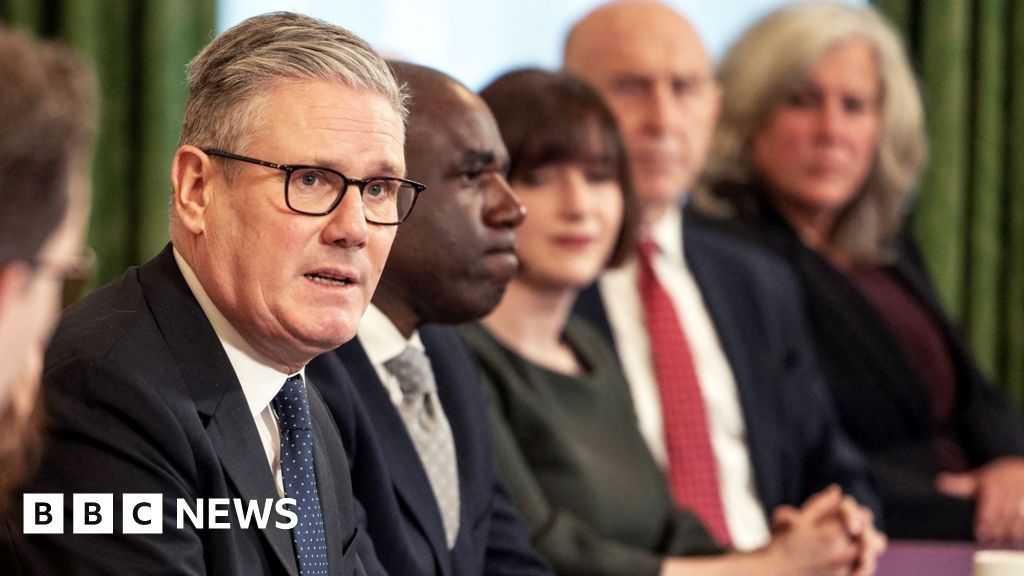
Prime Minister Keir Starmer narrowly fended off a potential leadership crisis after Scottish Labour leader Anas Sarwar called for his resignation, with a rapid show of support orchestrated by a 'war room' and a public endorsement from Deputy PM David Lammy. The episode exposed fractures with senior figures (notably tensions around Health Secretary Wes Streeting), led to immediate senior departures in Number 10 (chief of staff Morgan McSweeney and the communications director) and signals imminent further turnover (Cabinet Secretary Sir Chris Wormald expected to depart), leaving short-term policy direction and cabinet cohesion uncertain. Upcoming by-elections and May polls are highlighted as near-term risk points that could crystallise momentum for further change, creating modest political risk for investors with UK exposure given potential shifts in governance and policy priorities.
Market structure: Short-term winners are UK-exporters and large-cap global earners (sterling weakness would boost reported revenues) while domestically exposed suppliers to public services (Capita, Serco, local-build contractors) and regulated utilities face margin and policy risk. Expect rotation from FTSE 250/SmallCaps into FTSE 100 defensives if political noise persists; pricing power for domestic contractors could weaken 5-15% vs peers over 4–12 weeks as councils delay spend. Cross-asset: political wobble should lift 2–10y Gilt yields by ~20–30bp in an acute episode and push GBPUSD 2–4% lower; commodity impact minimal except for energy if policy shifts on price-capping are signalled.
Risk assessment: Tail risks include a protracted leadership contest that forces fiscally expansionary pledges (worse for gilts) or a lurch left triggering regulatory action against utilities and private providers (high impact, low prob). Immediate (days): volatility spikes in gilt futures/GBP; short-term (weeks–months): sector re-rating of domestic services and healthcare suppliers; long-term (quarters+): potential re-pricing of UK sovereign curve if policy credibility weakens beyond May local elections. Hidden dependencies: civil service turnover amplifies execution risk on government contracts and procurement timing; social-care/SEND reforms are binary policy catalysts.
Trade implications: Tactical plays: short 5–10y Gilt futures targeting +25–35bp move within 2–6 weeks (stop if move <10bp in 10 days), buy 3M GBPUSD 3% OTM put spread to hedge currency, and buy FTSE 250 1–3 month put spreads to protect domestic exposure. Relative-value: pair long Unilever (ULVR.L) and Diageo (DGE.L) vs short Capita (CPI.L) and Serco (SRP.L) — exporters likely to outperform domestics by 5–10% if GBP weakens or domestic spending is delayed.
Contrarian angles: Consensus assumes prolonged weakness; market may underprice rapid consolidation if Starmer secures a new chief of staff and signals business-friendly pragmatism — that would tighten gilts (yields -15–25bp) and strengthen GBP within 4–8 weeks. Historical parallel: short-lived UK leadership crises that ended with market rallies once clarity returned (e.g., short-term sterling moves in past internal party tussles). Unintended consequence: heavy short-gilt positioning could trigger sharp snap-back if fiscal credibility is reasserted, so size and stop discipline are critical.
AI-powered research, real-time alerts, and portfolio analytics for institutional investors.
Request DemoOverall Sentiment
moderately negative
Sentiment Score
-0.30
