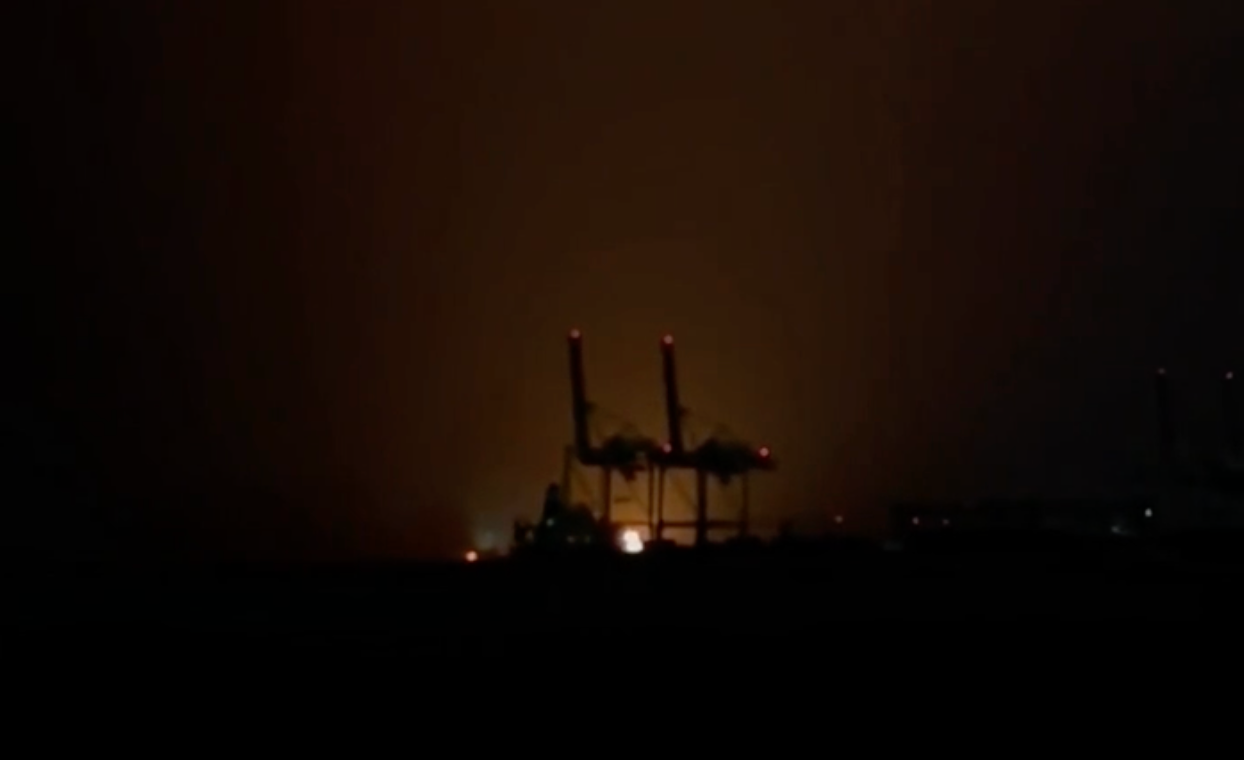
On March 29 Ukrainian long‑range drones struck the Ust‑Luga oil and gas terminal, causing "serious damage" and fires; regional authorities reported 36 Ukrainian drones were downed over Leningrad Oblast overnight. Ust‑Luga is a major Baltic export hub for Russian crude and petroleum products, and Reuters estimates repeated strikes have halted at least ~40% of Russia's oil shipping capacity — a material supply shock that raises upside pressure on global energy prices and complicates sanctions‑era shipping solutions (noting a U.S. Treasury temporary license on March 12).
This disruption acts like a seaborne friction shock rather than a pure supply shock: cargoes are re-routed, voyages lengthen and more ship-to-ship transfers occur, which increases ton-mile demand disproportionally to volumes lost. Historically, a 10-20% reduction in accessible loading capacity in a region lifts Aframax/Medium range TCEs by 25-70% within 2-8 weeks; expect a similar velocity and magnitude given Baltic chokepoints and winter storage cycles.
Second-order winners are owners of flexible tanker capacity and storage — the market pays for mobility and optionality when ports become intermittent. Conversely, players with large fixed-cost port & logistics footprints in NW Europe (regional terminals, short-haul barges) face margin compression as product arbitrage windows widen and spot jet/diesel cargoes fetch higher freight.
The insurance and operational cost envelope will rise: P&I and war-risk premia for Baltic voyages should reprice within weeks, favoring brokers/reinsurers who can expand margins; port repair capex and defensive spending by state operators (including coastal air defenses) creates demand for industrial suppliers and defense contractors over a 3–12 month horizon.
Catalysts that could reverse this regime are material: a rapid up-tick in air-defense effectiveness, negotiated tacit stabilisation of maritime routes, or a reallocation of Russian flows to pipelines/Asian buyers that normalises European seaborne supply. Monitor Baltic spot freight, Urals/Brent spreads, and insurance premium notices for early signs of mean reversion (likely visible within 4–12 weeks).
AI-powered research, real-time alerts, and portfolio analytics for institutional investors.
Request DemoOverall Sentiment
moderately negative
Sentiment Score
-0.55
