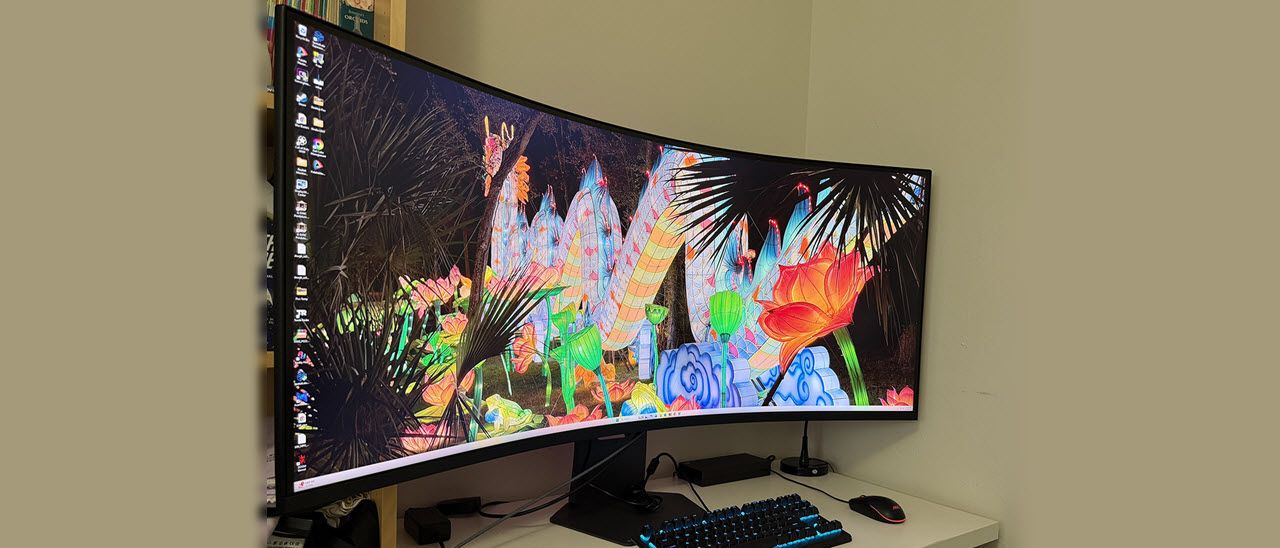
LG's UltraGear 52G930B is a $1,700 premium gaming monitor with a 52-inch 5K2K (5120 x 2160) VA panel, 240 Hz refresh rate, DisplayHDR 600 support, and very strong out-of-the-box color accuracy. The review is broadly favorable on image quality, motion handling, input lag, and audio, but flags drawbacks including no remote, no backlight strobe, and very expensive system requirements. The product appears niche rather than market-moving, but it reinforces LG's push into high-end gaming displays.
This is less a pure monitor review than a signal that the premium PC display market is bifurcating: buyers are increasingly paying for form-factor novelty and near-perfection in motion handling, even when the underlying panel tech is not the fashionable one. That matters for OLED because it shows the market is still willing to absorb a high-ticket, non-OLED desktop product if it solves a specific use case better than OLED can: burn-in avoidance, sustained brightness, and “all-day” productivity. In other words, OLED is not winning every premium share pocket on specs alone; workflow anxiety and large-format immersion still leave room for differentiated LCD execution.
The second-order read-through is that this kind of product pressures panel makers and assemblers to defend the premium ASP bucket without waiting for perfect-cost mini-LED or microLED economics. If large-format gaming displays keep selling at this price point, the industry can justify more niche halo launches, but the ceiling is still constrained by GPU affordability and power draw. That creates a natural demand limiter: this is a showcase product for a small cohort of enthusiasts, not a broad replacement cycle, so the revenue impact is reputational and margin-accretive rather than volume-driven.
For OLED specifically, the contrarian point is that the market may be overestimating the inevitability of OLED dominance in desktop monitors. Burn-in remains a real behavioral tax for productivity users, and the premium gaming segment can tolerate LCD if motion, input lag, and color are strong enough. The risk to the OLED bull case is not that LCD becomes the mainstream winner, but that the high end fragments into multiple defensible niches, slowing OLED’s ability to monopolize ASP expansion over the next 12-24 months.
AI-powered research, real-time alerts, and portfolio analytics for institutional investors.
Request DemoOverall Sentiment
moderately positive
Sentiment Score
0.55
Ticker Sentiment
