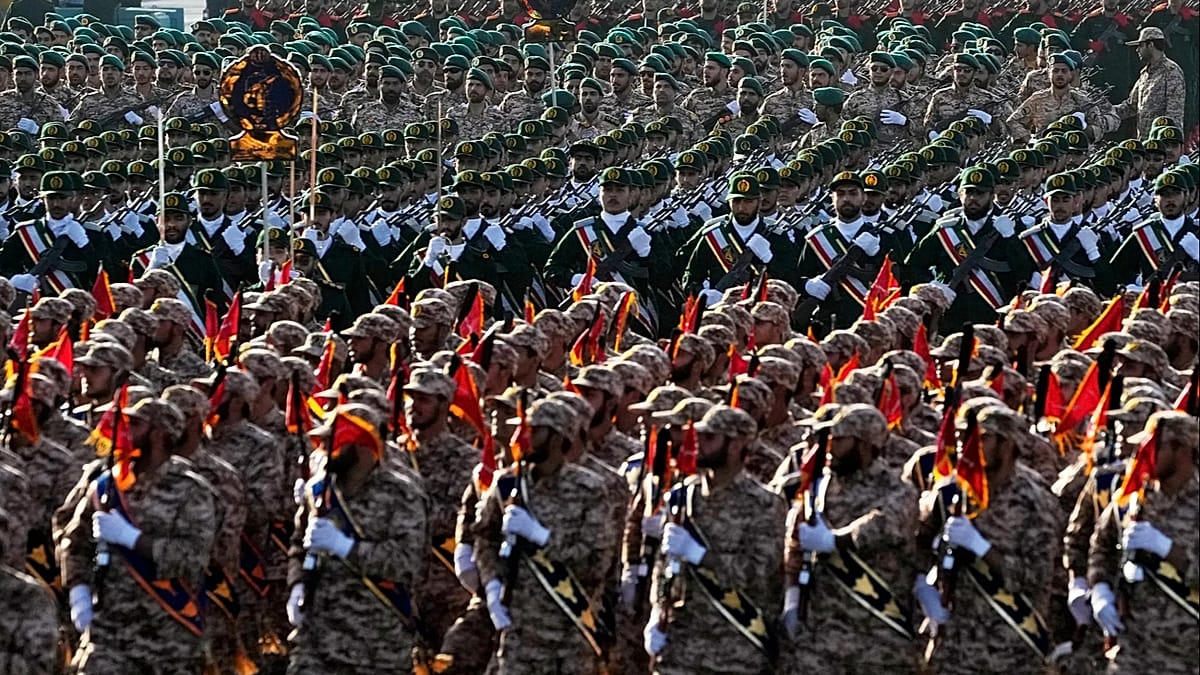
EU ministers are weighing a proposal to designate Iran’s Islamic Revolutionary Guard Corps (IRGC) as a terrorist organisation, a move that would impose travel bans, asset freezes and prohibitions on providing funds and sit alongside listings for IS, al-Qaeda and Hamas; the proposal requires unanimity among member states. The debate follows a violent nationwide crackdown on protests that began on Dec. 28 after the rial plunged to record lows, with US-based HRANA reporting nearly 6,000 deaths and Iran giving an official toll of 3,117; the EU has already restricted exports of components for drone and missile manufacture and plans further bans. The measure — backed by several EU states and already adopted by the US, Canada and Australia — would heighten sanctions risk and geopolitical tensions, with potential implications for regional stability, energy markets and defense-related trade exposures.
Market structure: an EU designation of the IRGC raises sanction and export-control risk that mechanically favors defense suppliers and safe-haven assets while hurting regional EM risk premia and niche European exporters of dual‑use components. Expect a rotation: 3–6 month demand uplift for aerospace & defense (pricing power +5–15% vs. baseline) and short, volatile spikes in oil and insurance premiums for Persian‑Gulf shipping. Financial plumbing (trade finance, correspondent banking) for Iran/adjacent counterparties tightens, raising EM credit spreads by 100–300bp in stressed scenarios.
Risk assessment: immediate (days) = risk‑off repricing; short term (weeks–months) = sanctions cascade and secondary sanctions risk; long term (quarters–years) = structural higher defense budgets and de‑risking of supply chains from Europe. Tail risks include kinetic escalation (closure of Strait of Hormuz → +$10–$30/bbl shock) and regional cyber/terror blowback to Western assets. Hidden dependency: EU unanimity is required — failure to agree would trigger mean reversion and a fast unwind of defense and commodity rallies.
Trade implications: overweight US large-cap defense (LMT, NOC, RTX or ITA ETF) and convex tail hedges in oil and gold (GLD); underweight EM equities (EEM) and EU small/mid cap industrial exporters sensitive to export controls. Use options to buy asymmetric protection: low-cost out-of-the-money call spreads on Brent or XLE for supply shocks and long-dated puts on EEM to protect portfolio risk.
Contrarian angles: markets may overprice a permanent escalation — past Iran episodes (2019–20) saw short oil spikes and rapid mean reversion within 4–8 weeks absent kinetic escalation. If EU fails to reach unanimity in 30–60 days, defense and commodity rallies will likely retrace 30–50%. Conversely, an unexpected EU designation plus secondary sanctions could be a multi‑quarter positive for defense revenue and margin forecasts.
AI-powered research, real-time alerts, and portfolio analytics for institutional investors.
Request DemoOverall Sentiment
moderately negative
Sentiment Score
-0.45
