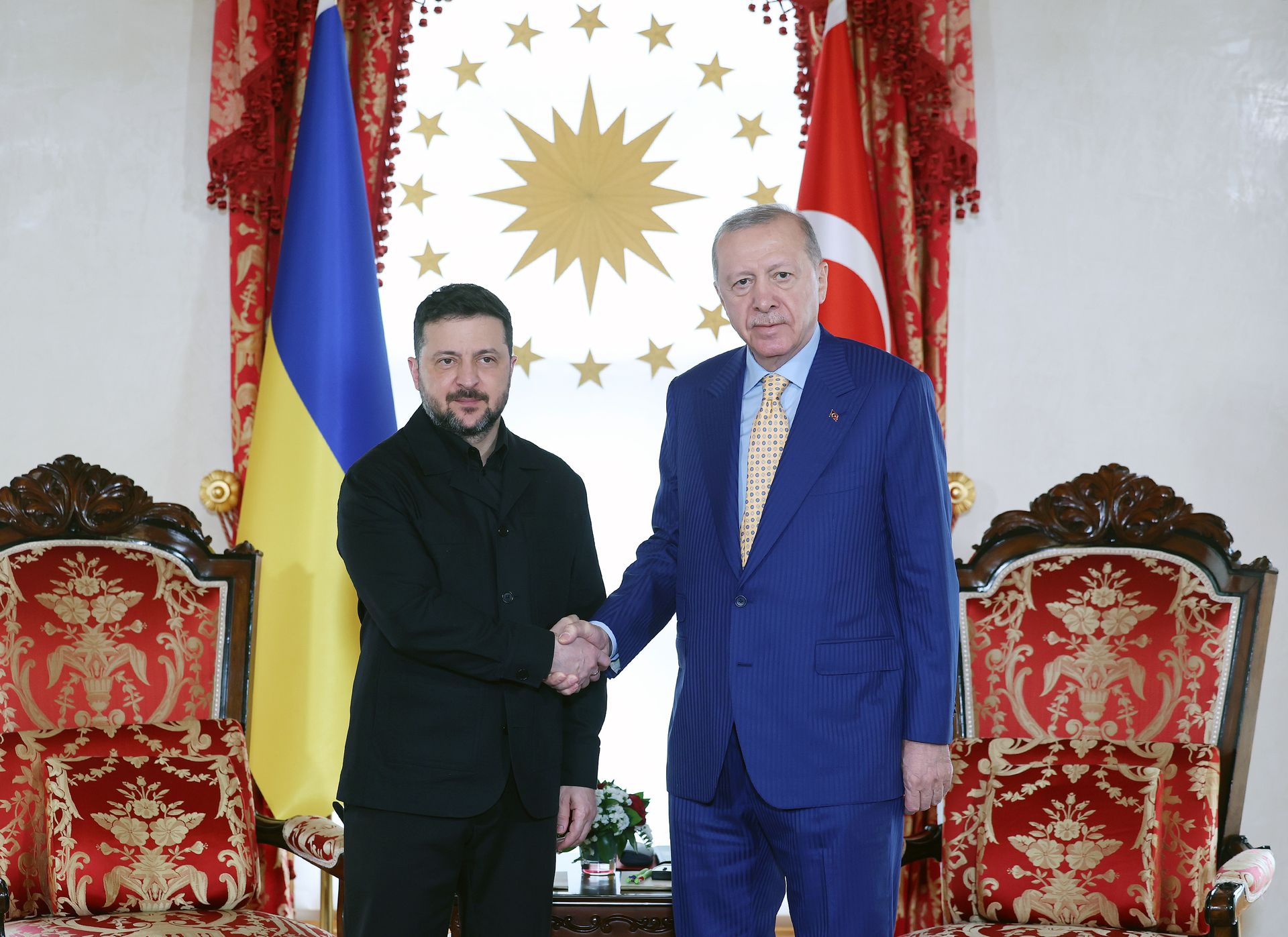
President Zelensky met Turkish President Erdogan in Istanbul on April 4 and agreed on "new steps in security cooperation," including plans to finalize details for cooperation on gas infrastructure and potential joint development of gas fields. The visit follows Zelensky’s recent 10-year defense agreements with Saudi Arabia, Qatar, and the UAE for joint arms production and training, with Ukraine supplying weapons and defense technology (including systems to help unblock the Strait of Hormuz). These developments modestly raise the likelihood of enhanced Ukraine–Turkey energy and security collaboration and could have limited positive implications for regional energy project approvals and defense-sector contracts, while reducing some short-term geopolitical escalation risk in the Black Sea and Gulf corridors.
This Turkey–Ukraine outreach is best read as a strategic hedging play that reconfigures regional bargaining power rather than an immediate commodity shock. If Ankara and Kyiv move from MoUs to coordinated upstream projects, they create a new optionality corridor: incremental Black Sea gas production + Turkish transmission capacity can shave months off any European supply shortfall during winter, but meaningful output requires 18–36 months and $500M–$2B+ per field in capex and subsea works, so price impact will be gradual and front-loaded into equipment and services demand.
Second-order winners are specialized defense contractors, offshore engineering and subsea-services companies, and Turkish shipbuilding/ports that handle increased naval/security activity; losers include midstream players that rely on Russian transit rents and any LNG offtakers dependent on status-quo routes. The geopolitical hedging also amplifies demand for air-defense and C4ISR systems across the Gulf — a revenue stream that Ukraine’s tech transfer can accelerate but will be lumpy and contingent on export control clearances over 6–18 months.
Key tail risks: (1) domestic Turkish macro (lira/debt) or a deterioration in Ankara–Moscow ties that reverses cooperation (days–weeks), (2) financing setbacks or Western export control frictions that stall joint gas projects (months–years), and (3) a sharp de-escalation in regional tensions that reduces urgency for defense procurement (quarters). Watch bilateral implementation notes in the coming 7–30 days as high-probability catalysts; material capital deployment and supply-chain reallocation would show up in vendor tendering and shipyard bookings in the next 3–9 months.
AI-powered research, real-time alerts, and portfolio analytics for institutional investors.
Request DemoOverall Sentiment
mildly positive
Sentiment Score
0.15
