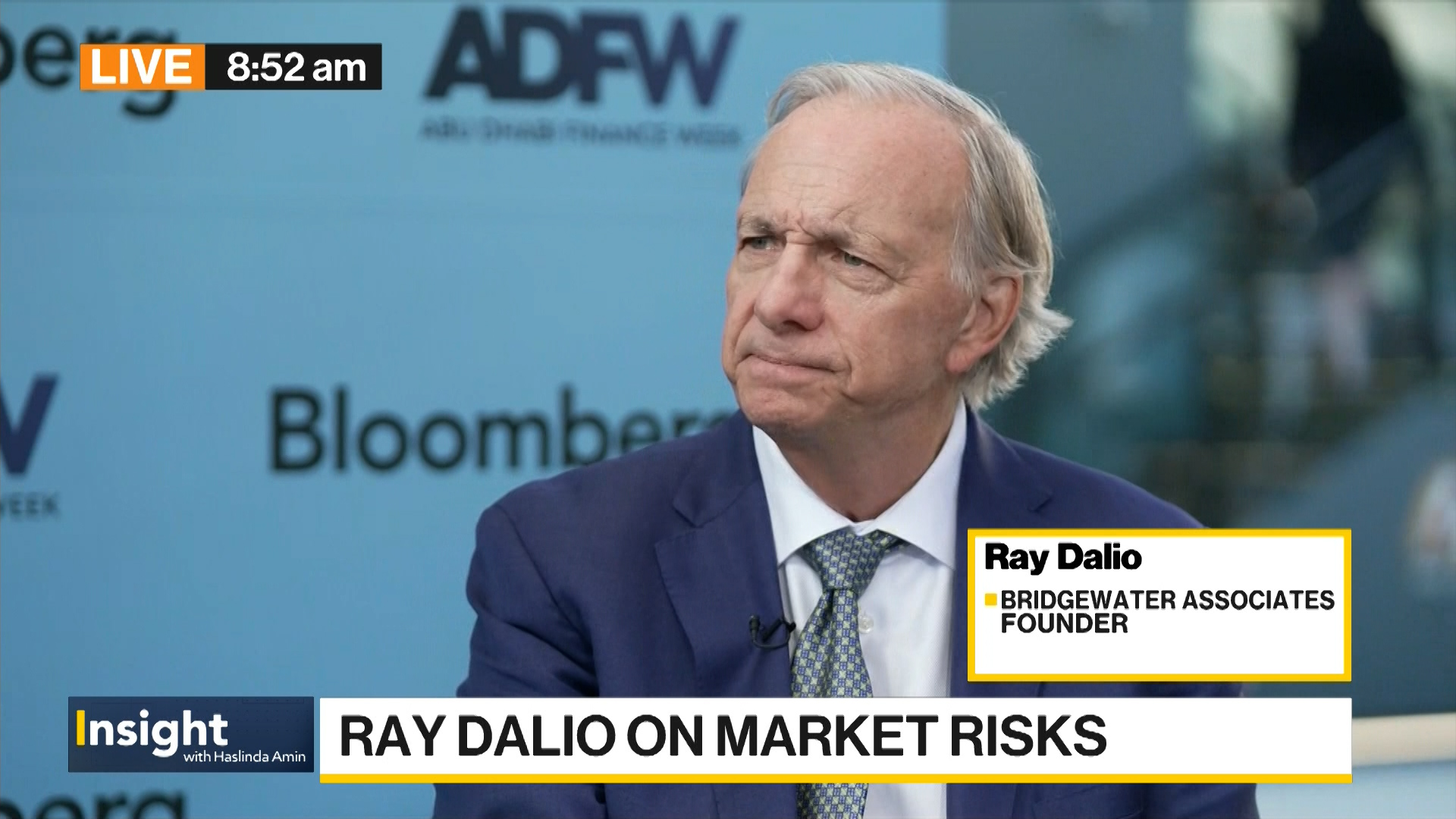
The speaker warns of a historic shift driven by AI, excessive debt, political polarization and geopolitical fragmentation, identifying government debt service and rollover risk as the most underappreciated threat to markets ahead of upcoming election cycles. He highlights Abu Dhabi's emergence as an asset-management hub bolstered by local capital and AI partnerships, is active in AI ventures, and recommends defensive positioning including gold as money and a diversifier (normal optimizer allocation 5–15%, noting prior discussion of a 50% combined gold/Bitcoin stance).
Market structure is bifurcating: beneficiaries are hard-money stores (gold, crypto as non-sovereign caches), AI infrastructure leaders (NVDA, MSFT, GOOGL) and defense/reshoring plays; losers are long-duration sovereign bonds, highly-levered growth, and peripheral sovereign borrowers. Rising debt service costs and political pressure compress fiscal flexibility — expect higher term premia and wider sovereign CDS for high-debt issuers over 6–18 months.
Risk profile is skewed to a tail where sovereign rollovers and politicized taxation trigger stop-loss cascades in credit markets; a plausible 1–2% global GDP shock from a China slowdown or risk-premium shock could push 10y UST >4.5% and force rating stresses in Europe within 12 months. Hidden dependencies include central bank forbearance (printing vs. hiking) and election outcomes (US 2026 swing) that can rapidly change policy trajectories; catalysts include large sovereign auctions, a China fiscal shock, or a major AI productivity leap.
Trading implications: bias to real assets and short-duration credit; favour concentrated long positions in AI infra blue-chips while hedging macro exposure with gold and duration shorts. Use options to asymmetrically protect against debt-rollover spikes (buy puts on long-duration ETFs, buy calls on GLD/IAU). Rebalance actively around sovereign auctions and US CPI/PCE prints over the next 3–12 months.
Contrarian view: consensus underprices persistent higher real yields and the monetary-financial spiral — markets assume orderly rollovers; that is underdone. Conversely AI winners are clustered — avoid broad tech beta; prefer a narrow handful of moated AI infrastructure names and hedge with credit/duration shorts to capture the likely re-pricing in 6–18 months.
AI-powered research, real-time alerts, and portfolio analytics for institutional investors.
Request DemoOverall Sentiment
moderately negative
Sentiment Score
-0.35
