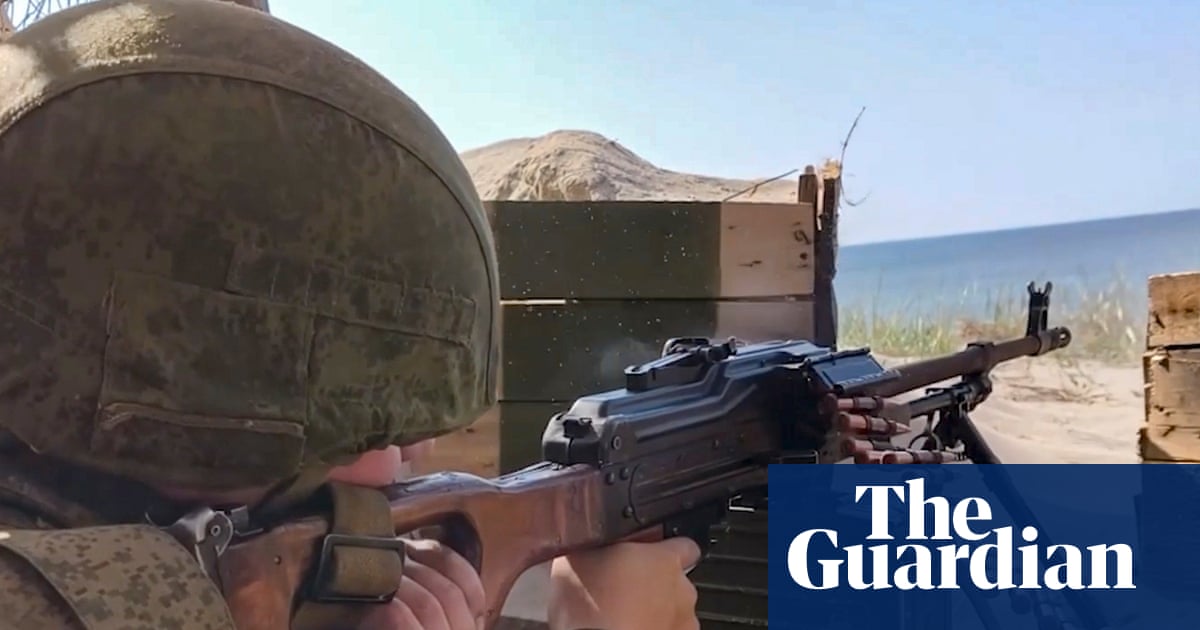
The Zapad-2025 military drills in Belarus, involving Russian and Belarusian forces, are officially defensive but have intensified European unease, particularly after recent Russian drone incursions and considering Zapad-2021 preceded the Ukraine invasion. Although significantly scaled down this year, possibly due to Russia's commitments in Ukraine, the exercises highlight deepening military integration between Russia and Belarus, with Minsk slated to host Russian intermediate-range missiles. The presence of US military officials at the drills has also raised European concerns regarding Washington's resolve, prompting Poland to deploy 40,000 troops and close its border with Belarus, signaling escalating regional geopolitical risk and potential shifts in alliance dynamics.
The Zapad-2025 military exercises, while officially framed by Belarus as defensive, are escalating geopolitical tensions in Eastern Europe. The drills are significantly smaller in scale than the 2021 iteration, with only about 1,000 Russian troops participating alongside 7,000 Belarusian forces—a stark reflection of Russia's manpower constraints due to the war in Ukraine. Despite the reduced size, European capitals remain on high alert, viewing the exercises as a probe of NATO's defenses, especially following recent Russian drone incursions into Poland and Romania and the precedent set by Zapad-2021, which served as a staging ground for the Ukraine invasion. Poland has responded forcefully by deploying 40,000 troops and closing its border with Belarus, a move that inflicts economic damage on Minsk by disrupting a key transit route for Chinese and Russian goods. Concurrently, the surprise attendance of US military officials has fueled European concerns about a potential softening of Washington's stance toward Moscow, creating uncertainty about transatlantic policy cohesion. The drills also underscore the deepening integration of Belarus into Russia's military structure, with analysts describing its armed forces as an extension of Russia's western military district, evidenced by a new security treaty and plans to host Russian Oreshnik intermediate-range ballistic missiles. While analysts deem a new invasion from Belarus unlikely due to Ukraine's heavy border fortifications, the overall environment points to sustained regional instability and increased risk.
AI-powered research, real-time alerts, and portfolio analytics for institutional investors.
Request DemoOverall Sentiment
moderately negative
Sentiment Score
-0.60
