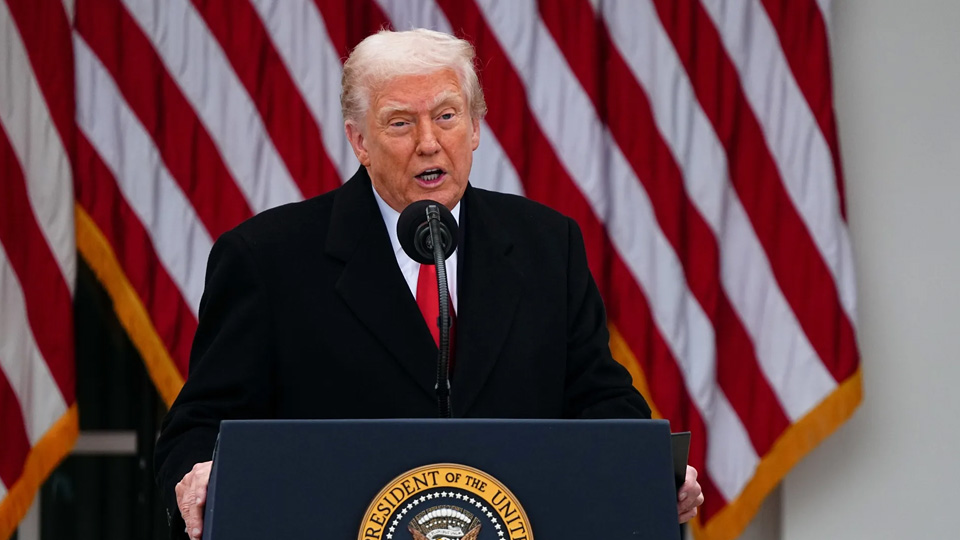
President Trump issued lengthy social media posts announcing a tougher immigration stance — including a proposal to permanently pause immigration from 'third world' countries and measures on naturalization, reverse migration and removal of those deemed 'incompatible with Western civilization.' The escalation follows a D.C. shooting that wounded two National Guard members, allegedly by an Afghan national admitted under the U.S. evacuation program that resettled roughly 190,000 Afghans after Kabul's fall in 2021; the administration has already suspended issuing green cards and demanded an investigation. The moves signal a continuation and hardening of second-term immigration policy, heightening political and policy risk but with limited direct near-term market implications.
Market structure: A credible US policy to pause immigration and accelerate removals favors homeland-security and defense contractors (LMT, RTX, GD, LHX) and detention/logistics providers (GEO, CXW) via incremental DHS spending and detainee transport demand, while hurting labor-intensive sectors—agriculture, meatpacking, construction, hospitality and lower-end restaurants—which rely on immigrant labor (seasonal farm labor could drop 20–40% if enforced). Pricing power will tilt to automation vendors and large-scale employers able to absorb higher wages; expect 3–9 month upward pressure on labor-cost-sensitive input prices (food, processing).
Risk assessment: Tail risks include mass deportations triggering nationwide litigation, state countermeasures, and violent unrest with 1–3 month spikes in equity vols and flight-to-safety flows into US Treasuries (TLT) and USD; worst-case (legal/operational) could knock 5–10% off restaurant & regional bank earnings next 4 quarters. Hidden dependencies: H-1B tech flows and state-level farm visa programs can blunt effects; catalysts are federal court injunctions (0–60 days), Congressional moves (3–6 months), and further security incidents.
Trade implications: Tactical plays: 3–5% trade allocations in defense (LMT/RTX/GD equally weighted) for 3–12 months; 1–2% exposure to GEO/CXW for 6–12 months with tight 30% stop; buy 1–2% exposure to corn/soy via Teucrium CORN/SOY or Dec-2025 futures as a 3–9 month inflation hedge expecting 10–25% upside if labor inflows fall materially. Use options: buy 6–12 month call spreads on LMT/RTX and buy 1–3 month put spreads on XLY to hedge consumer discretionary exposure.
Contrarian angles: Consensus overstates immediate supply shock—court challenges and farm-visa carveouts make a >30% labor hit unlikely; downside to consumer names may be overdone in first 2–6 weeks. Historical parallels (2017–18 rhetoric) show policy spikes often fade, capping defense/detention rallies; unintended consequence is faster capex into automation (DE, FAN, IRBT), which is a 12–36 month structural long.
AI-powered research, real-time alerts, and portfolio analytics for institutional investors.
Request DemoOverall Sentiment
mildly negative
Sentiment Score
-0.28
