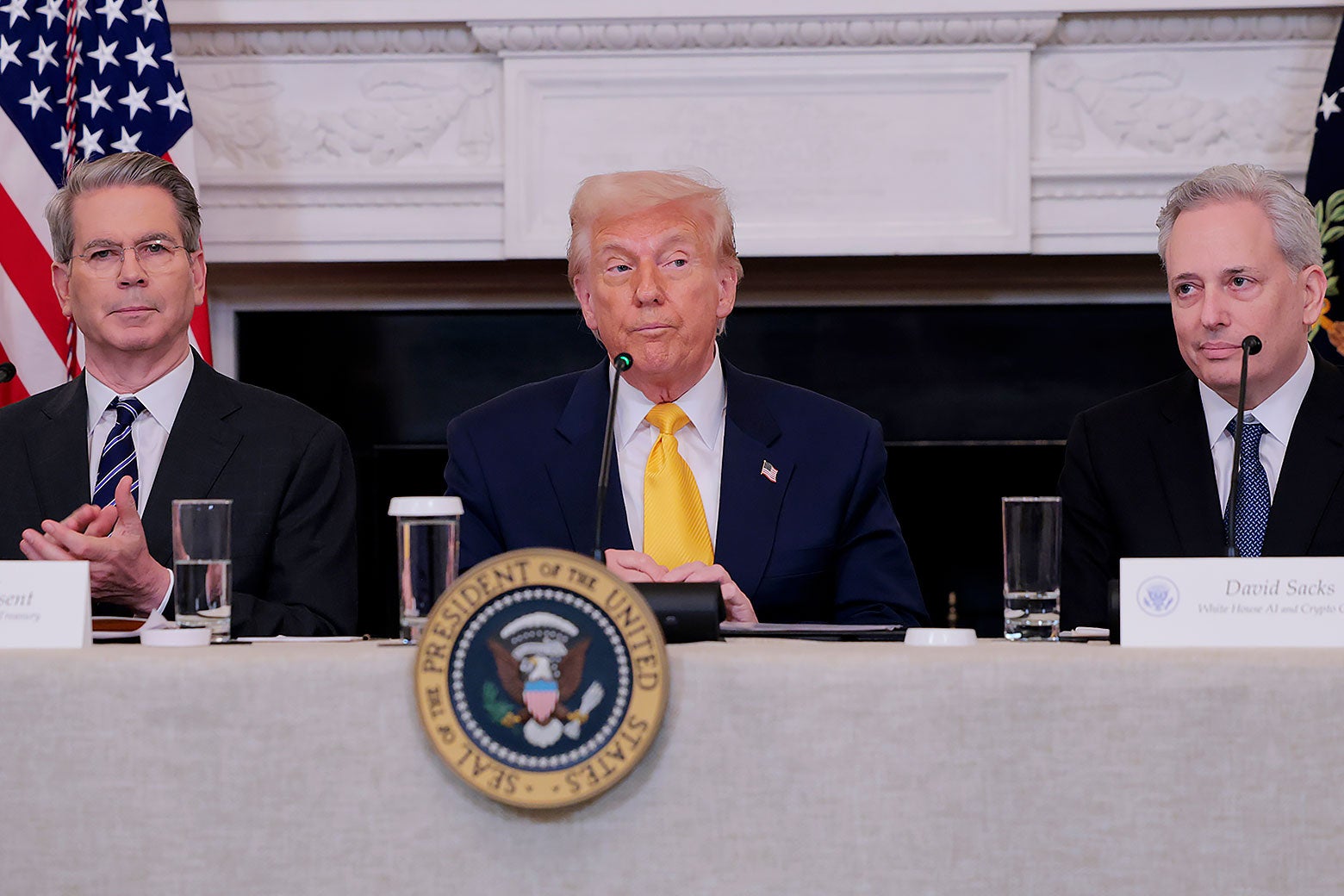
The GENIUS Act, a bill to regulate stablecoins, passed a Senate cloture vote with bipartisan support, despite concerns it benefits the crypto industry after significant lobbying efforts and could financially benefit Donald Trump, who has ventures in crypto including stablecoins. The bill aims to establish consumer protections by requiring stablecoin issuers to hold liquid reserves and prioritizing customer repayment in case of bankruptcy, while also including money laundering rules. However, critics argue the bill legitimizes stablecoins, a gateway to broader crypto adoption, and rewards the crypto industry's political spending, with some Democrats expressing concerns about Trump's potential enrichment but ultimately supporting the bill for its regulatory aspects.
The GENIUS Act's advancement through the Senate, with bipartisan support including 16 Democrats joining Republicans in a cloture vote, marks a significant move towards establishing the first federal regulatory framework for stablecoins. The bill mandates stablecoin issuers to maintain liquid reserves, grants stablecoin holders priority in bankruptcy scenarios, and incorporates anti-money laundering provisions. Despite these seemingly reasonable policy ideas, the legislation is contentious, widely perceived as a return on investment for the crypto industry's extensive lobbying campaign, which reportedly involved hundreds of millions of dollars in 2024. A key provision, celebrated by the industry, explicitly states that stablecoins are not "securities," a notable development for entities like Coinbase (ticker: COIN), which has historically contended with the Securities and Exchange Commission over this classification and currently offers stablecoin-based loan programs. Critics argue the bill primarily serves to legitimize stablecoins, potentially increasing their adoption as a gateway to the broader crypto market and thereby generating more transaction fees. Furthermore, the legislation faces criticism due to the potential for Donald Trump to financially benefit from it, given his involvement in crypto ventures including stablecoins. While some Democrats, such as Senator Mark Warner, acknowledged concerns about Trump's enrichment, they supported the bill citing the importance of its regulatory aspects, viewing it as a "meaningful step forward." The overall sentiment towards the bill, as reflected in the article's critical tone, highlights the tension between establishing necessary regulation and rewarding significant political influence, alongside concerns of potential self-enrichment by political figures.
AI-powered research, real-time alerts, and portfolio analytics for institutional investors.
Request DemoOverall Sentiment
Negative
Sentiment Score
-0.30
Ticker Sentiment
