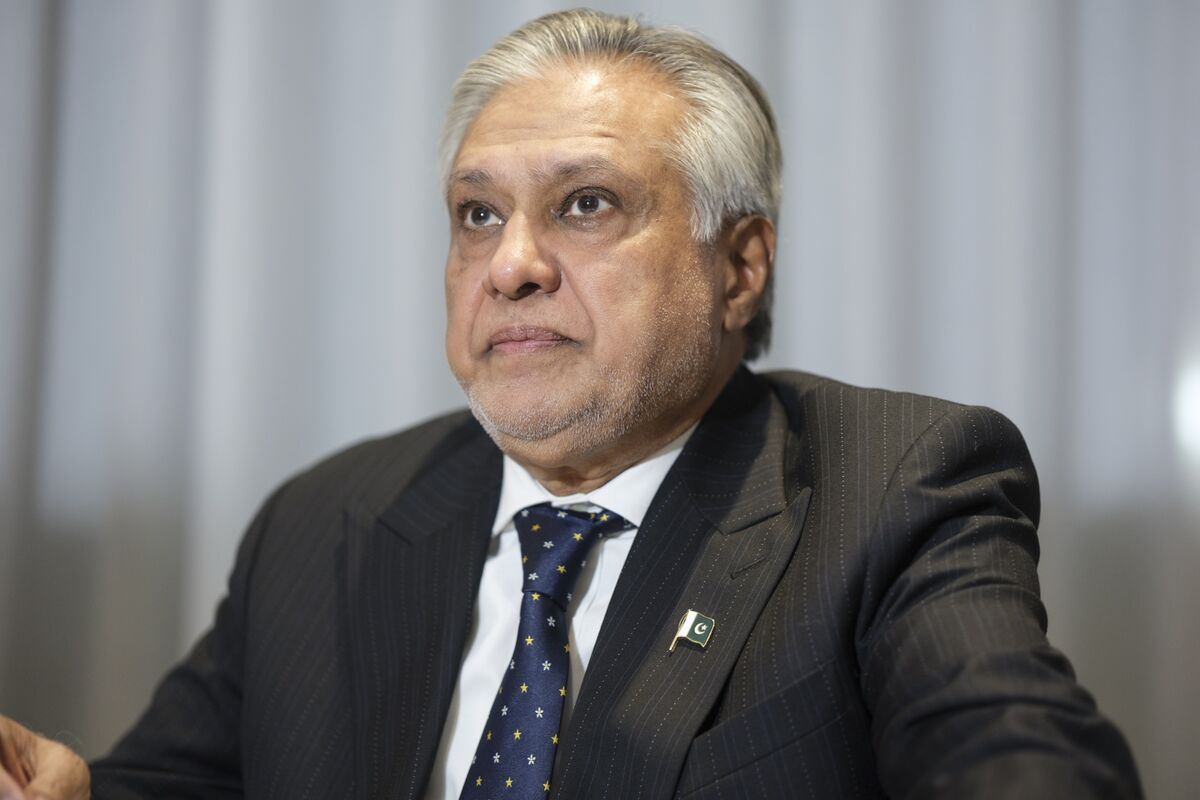
Pakistan Foreign Minister Ishaq Dar will visit China on Tuesday at the invitation of Chinese FM Wang Yi to discuss regional developments and bilateral matters. The trip comes as the Iran war enters its fifth week and US-Iran talks remain nebulous with no clear end in sight. The announcement is primarily diplomatic and likely has limited immediate market impact, although continued regional uncertainty could sustain elevated geopolitical risk premia for emerging-market assets.
This Pakistan-China engagement is best read as a strategic rehearsal rather than an immediate market mover: it lowers the political friction cost for China to deepen bilateral economic support to Islamabad, which can substitute for Western financing in the 3–18 month window. Second-order beneficiaries are Chinese state-linked infrastructure contractors and logistics operators that can win accelerated Belt & Road projects (ports, rail, energy corridors) — expect incremental Chinese project announcements to be the main channel that moves markets, not the diplomatic visit itself.
For financial markets, the more direct mechanism is through risk premia: the trip signals a subtle reallocation of geopolitical risk toward a China-led mitigation axis, which tends to widen USD‑EM sovereign spreads and depress frontier FX on headline volatility. Practically, in a 1–3 month stress episode tied to US‑Iran ambiguity, we’d model a 40–80bps widening in JPM EMBI spreads and a 3–7% hit to broad EM equity indices absent offsetting macro support.
Commodity/shipping transmission is the largest macro lever: prolonged ambiguity in US‑Iran talks combined with closer China‑Pakistan coordination raises the odds of supply‑route friction (Strait of Hormuz insurance costs, rerouting). Quantitatively, a durable regional escalation could add ~$5–12/bbl to Brent over 1–6 months and lift tanker/insurance spreads, which benefits energy producers and shipping rate plays while pressuring energy‑intensive industrials and regional importers.
Catalysts and reversals are binary and calendared: near‑term headlines (days) create knee‑jerk vol spikes; a diplomatic breakthrough (US‑Iran ceasefire or US‑China détente) would reverse spreads within weeks; conversely, a China‑backed financing package for Pakistan or visible military logistics cooperation materially shifts sovereign credit dynamics over 6–24 months. Monitor sovereign bond auctions, CDS levels, Chinese state bank PR statements, and maritime insurance rate cards as high‑signal readouts.
AI-powered research, real-time alerts, and portfolio analytics for institutional investors.
Request DemoOverall Sentiment
neutral
Sentiment Score
0.00
