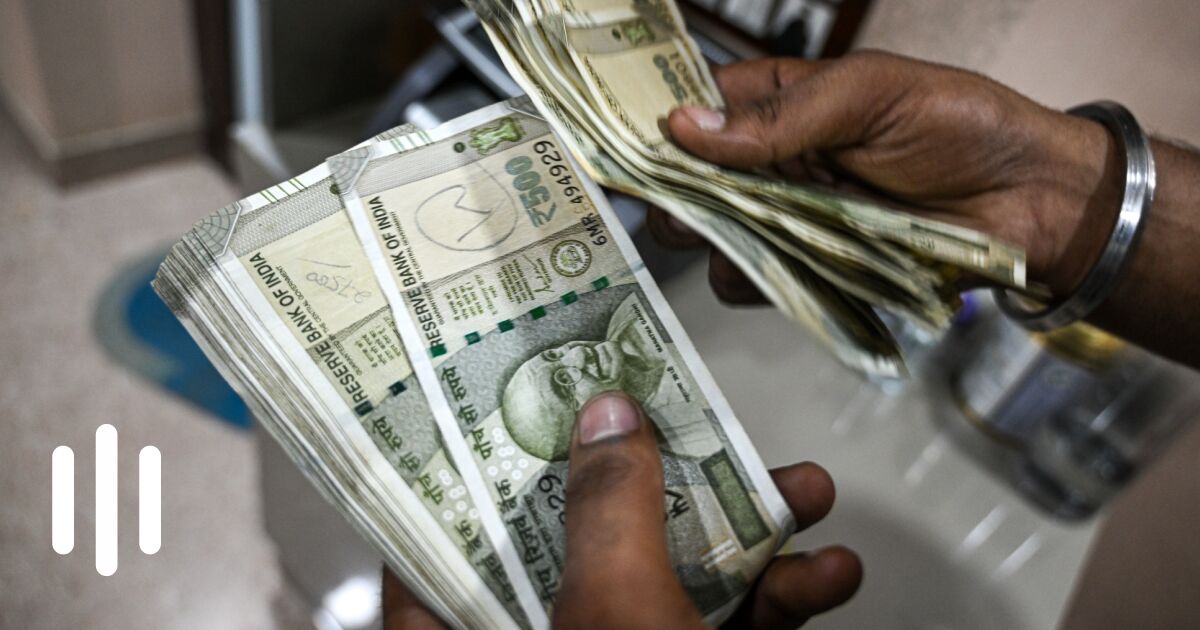
The Indian rupee is Asia’s worst-performing currency in 2025 and slid to 89.4812 per US dollar on Nov. 21, heading for its largest annual decline since 2022 amid higher US tariffs on Indian exports and a wave of foreign investor outflows. To defend the currency the Reserve Bank of India has sold more than $30 billion of foreign-currency assets since the end of July, according to Bloomberg Economics estimates, signaling active monetary intervention and pressure on reserves that could affect local liquidity and investor positioning.
Market structure: A weaker rupee disproportionately hurts importers, oil refiners and corporates with USD debt while providing a partial offset to exporters through translation gains; expect negative earnings pressure for Reliance-scale refiners and consumer discretionary importers within 1-2 quarters. Foreign institutional investor (FII) outflows compress local equity bids (NIFTY/NSE liquidity), shifting pricing power away from domestic equity markets and increasing equity risk premia by an estimated 150–250bp in implied volatility near term.
Risk assessment: Key tail risks are (1) accelerated reserve depletion forcing capital controls (low-probability, high-impact) if RBI reserves fall another $30bn within 3 months; (2) escalation of US tariffs further cutting export volumes over 6–12 months. Immediate (days) risk = FX spot spikes and liquidity squeezes; short-term (weeks–months) = higher INR volatility and rising G-sec yields; long-term (quarters) = potential policy tightening or structural export re-routing.
Trade implications: Lean USD/INR long via NDFs or futures with a 2–3% notional exposure and buy 3M call spread (long 90 / short 95) to cap premium; short-INDA (iShares MSCI India ETF) 1.5–3% or buy 3M puts on INDA if spot flows continue, rotate into gold (GLD) 1–2% as local-currency hedge. Hedge corporate USD exposures by buying USD/INR calls sized to 50–100% of outstanding FX debt; trim export-tilted names (INFY) only if tariffs materially reduce orderbooks in next 60–90 days.
Contrarian angles: The market is likely overpricing reserve depletion and ignoring RBI options (rate hikes, FX forwards, sovereign bond issuance) — a 2013-style recovery is plausible within 3–6 months if policy credibility is restored. Watch FX reserves (threshold: <8 weeks import cover) and FII net flows; if both stabilize, consider covering short-INDA positions and taking profits on USD/INR longs above 90.
AI-powered research, real-time alerts, and portfolio analytics for institutional investors.
Request DemoOverall Sentiment
moderately negative
Sentiment Score
-0.55
